cpeditor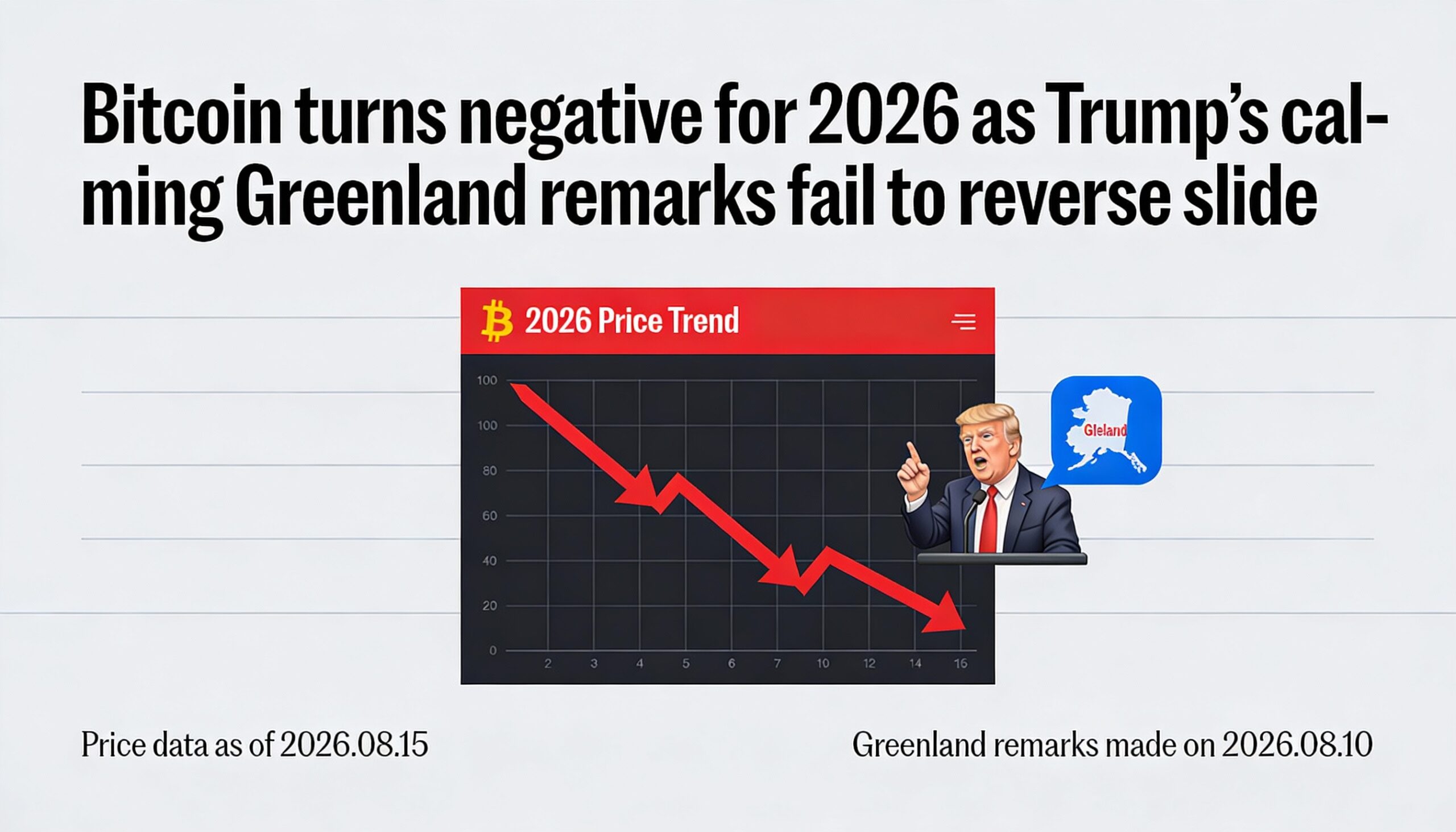
Bitcoin’s brief rebound faded on Wednesday as selling pressure returned, leaving the cryptocurrency negative for 2026. BTC fell below $87,586 during midday U.S. trading, down roughly 3% over the past 24 hours after briefly climbing above $90,000 earlier in the session.
The dip followed remarks from former President Donald Trump at the World Economic Forum in Davos, where he said the U.S. had no plans to take Greenland by force and expressed optimism about the eventual passage of a crypto market structure bill. The comments provided only temporary relief for traders.
Other major cryptocurrencies, including ether, XRP and Solana, also extended losses, while traditional markets held modest gains. The Nasdaq and S&P 500 retreated from session highs but remained in positive territory.
Safe-haven assets continued to attract demand. Gold rose 1.5% to a record above $4,800 per ounce, while silver remained flat after hitting a record high on Tuesday.
Markets have been rattled by geopolitical tensions over Greenland and a sharp sell-off in Japan’s government bond market earlier this week. Although Japanese bonds and equities recovered modestly on Wednesday, the effects continue to ripple through global markets.
Crypto and macro strategist Arthur Hayes described the spike in Japanese government bond yields as “the match” that could ignite a broader global risk-off cycle. “Let’s see how big the fire gets,” he said.