cpeditor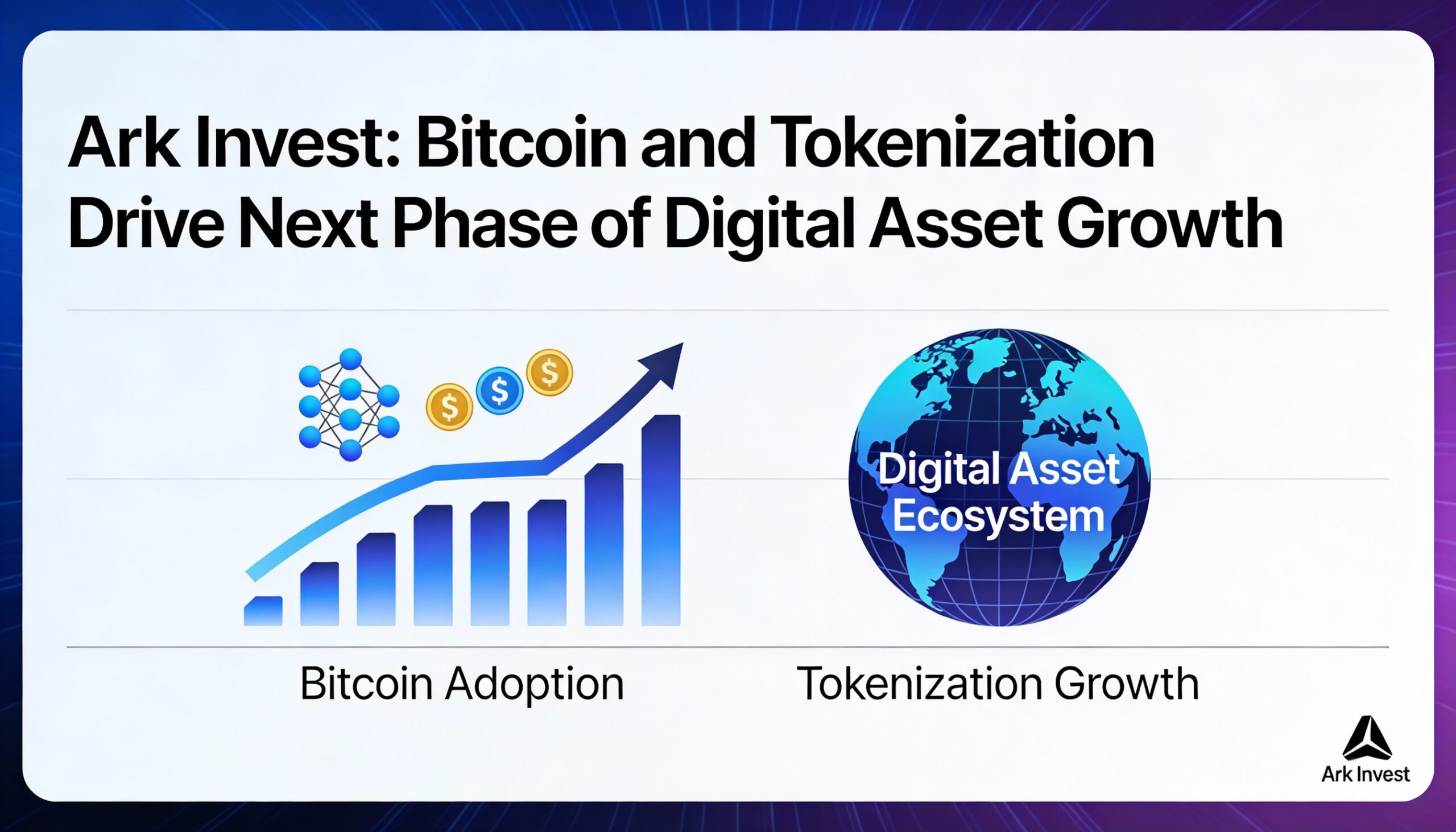
Ark Invest said rising institutional participation in bitcoin and the rapid expansion of asset tokenization are pushing digital assets toward global scale, potentially lifting the sector’s value into the tens of trillions of dollars by the end of the decade.
In its Big Ideas 2026 report, the asset manager said the combination of blockchain innovation, clearer regulation and growing institutional demand is transforming digital assets from a speculative corner of markets into core financial infrastructure.
Ark characterized the shift as a step-change rather than gradual progress, arguing that bitcoin, smart contract platforms and tokenized real-world assets are moving from early experimentation to mass adoption faster than commonly expected.
The firm highlighted bitcoin’s emergence as a maturing institutional asset. It said U.S. exchange-traded funds and public companies increased their combined bitcoin holdings to roughly 12% of total supply in 2025, up from less than 9% the year before. Over the same period, bitcoin generated stronger risk-adjusted returns than most major cryptocurrencies and broad crypto benchmarks, while drawdowns from record highs became less severe.
Ark expects bitcoin to remain the largest digital asset by market capitalization. The firm estimated that bitcoin and smart contract networks together could grow at an annualized pace of about 60% to reach roughly $28 trillion by 2030, with bitcoin accounting for around 70% of that total.
The report projected bitcoin’s market value could rise from about $2 trillion today to roughly $16 trillion by the end of the decade, supported by its positioning as “digital gold” and deeper institutional adoption.
Ark also identified stablecoins and tokenized real-world assets as critical drivers of broader adoption. The firm said improved regulatory clarity in the U.S. has prompted banks and asset managers to reassess stablecoin issuance and tokenization strategies, pushing stablecoin transaction volumes to levels that rival or exceed major legacy payment networks.
Tokenized U.S. Treasuries, commodities and, eventually, equities were cited as early signs of a broader migration of financial assets onto public blockchains. While the tokenized asset market remains relatively small today, Ark forecast it could surpass $11 trillion by 2030 as sovereign debt, bank deposits and public equities increasingly move on-chain.
The firm added that decentralized finance platforms and crypto-native issuers are steadily closing the gap with traditional fintech firms in assets under management, operating efficiency and institutional relevance.
Taken together, Ark said these developments point to a future in which public blockchains serve as foundational infrastructure for money, contracts and ownership at global scale. While adoption is expected to be uneven, the firm said investors and institutions that identify the shift early may be better positioned as digital assets become more deeply embedded in the financial system.