cpeditor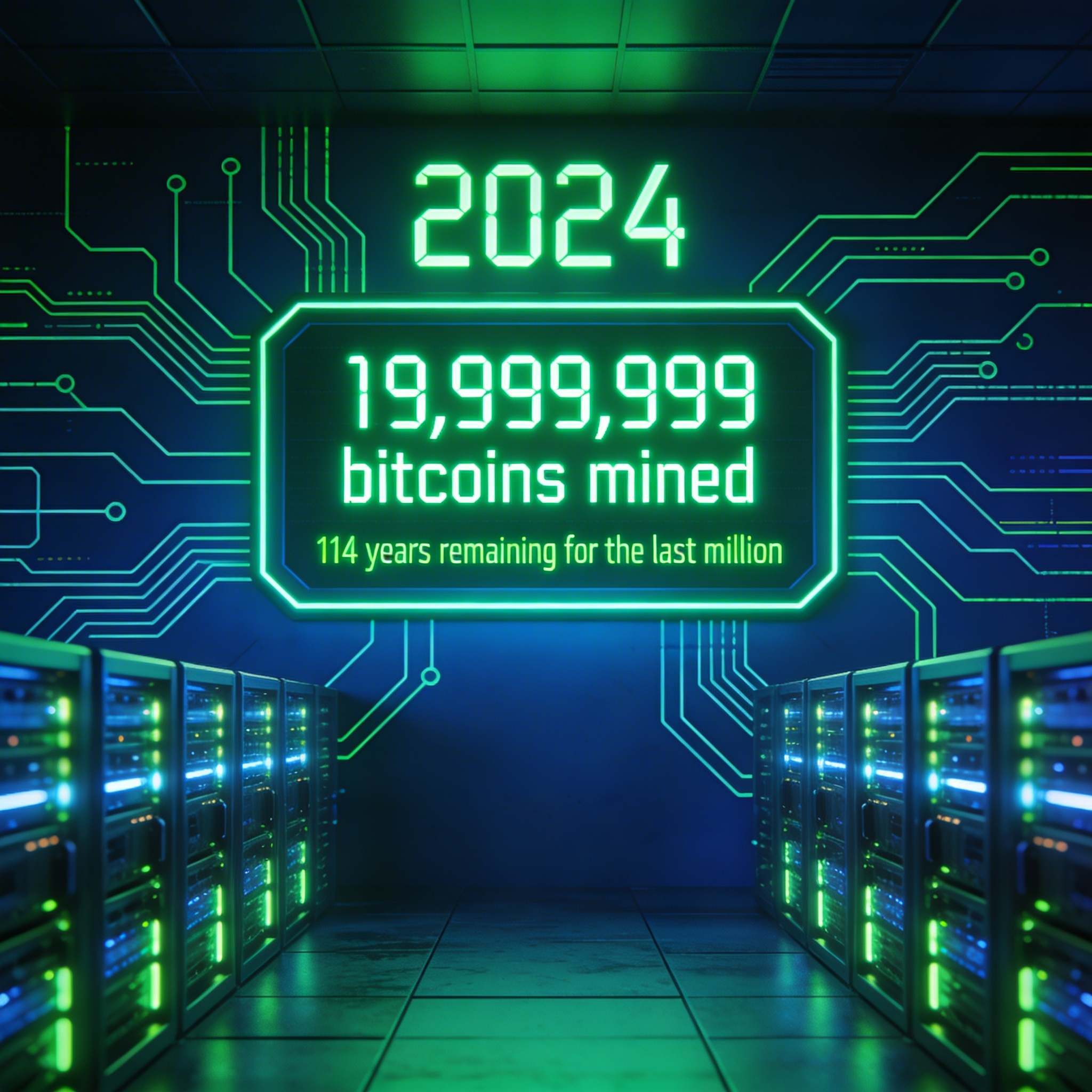
Bitcoin is approaching a significant milestone, with the total number of coins mined nearing 20 million out of its fixed maximum supply of 21 million.
More than 95% of all bitcoin that will ever exist is already in circulation. With the cryptocurrency trading around $71,225, the network is expected to soon reach the issuance of its 20 millionth coin.
Data from the Clark Moody Dashboard indicates that about 19,996,979 BTC have been mined so far, leaving roughly 3,000 coins before the 20 million threshold is reached. At the current pace of issuance, that milestone could arrive in about a week. Once it is crossed, only around 1 million bitcoin will remain to be mined over the next century.
Bitcoin’s pseudonymous creator, Satoshi Nakamoto, built the 21 million supply cap into the protocol to establish a monetary system defined by strict scarcity. The hard limit stands in contrast to fiat currencies, whose supply can be expanded through central bank policies. Although Nakamoto never fully explained the reasoning behind the exact number, the cap created a predictable supply schedule that has become central to bitcoin’s appeal.
For many bitcoin supporters, the supply limit is a fundamental principle. Any proposal to change it is often seen as undermining bitcoin’s identity as a form of “hard money.”
Bitcoin’s scarcity is often compared to commodities such as gold or oil. However, unlike physical resources—where higher prices can encourage increased production or new discoveries—bitcoin’s issuance cannot accelerate. Its supply curve is predetermined and transparent.
The rate of new supply has slowed through the network’s halving cycles, which cut mining rewards roughly every four years. As a result, bitcoin’s inflation rate has fallen below 1%, with about 450 BTC currently mined each day.
At this pace, around 99% of bitcoin’s total supply is expected to be mined by January 2035. The final whole bitcoin is projected to be issued around 2105, while small fractional amounts will continue to be mined until roughly 2140.
Once block rewards eventually disappear, miners will rely entirely on transaction fees for revenue. For supporters, the approach of the 20 million milestone reinforces bitcoin’s narrative of digital scarcity, while for miners it highlights the long-term transition toward a fee-based revenue model that will ultimately support the network’s security and economics.