cpeditor
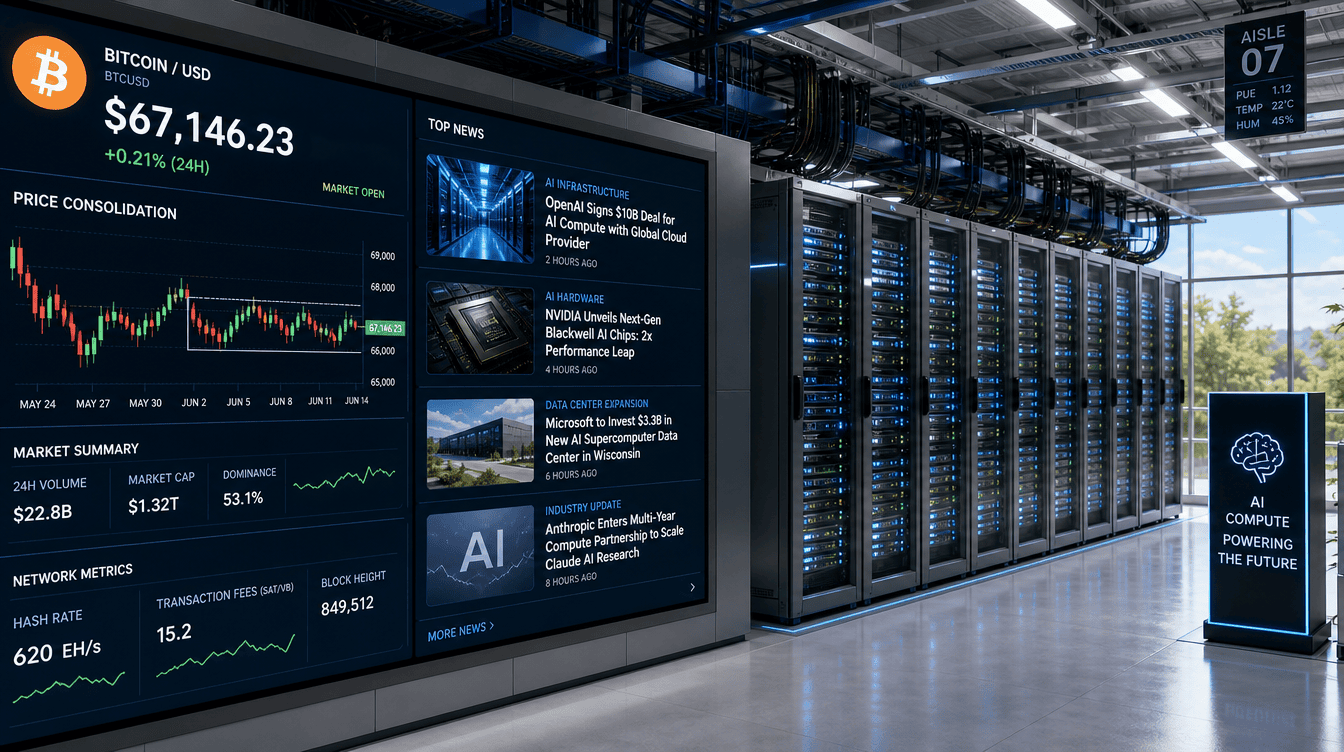
Bitcoin continues to move sideways around $67,000, extending a tight trading range that has been in place since early February, even as parts of the altcoin market see brief bursts of strength.
A handful of altcoins rallied during thin Asian trading hours, with tokens such as ALGO and RENDER posting double-digit gains over the past day. Despite this, the broader market structure remains unchanged. Crypto is still in a macro downtrend that began in October, defined by a pattern of lower highs and lower lows.
In traditional markets, U.S. equities were little changed, with volatility easing after recent remarks from Donald Trump suggesting a possible resolution to tensions with Iran. However, Brent crude prices near $109 per barrel signal that geopolitical risks remain elevated.
Derivatives positioning
Activity in derivatives markets has been subdued, with the holiday period keeping volumes light. Open interest in bitcoin and ether futures has remained largely flat, reflecting a lack of strong directional conviction among traders.
Solana stands out, with futures open interest rising above 65 million SOL—its highest level since early February. Combined with negative funding rates and weak cumulative volume delta, this points to increasing bearish positioning, with traders building short exposure. Similar trends are emerging in TRX and BCH.
Zcash, however, is showing a different pattern. Open interest in ZEC futures has stabilized near 1.7 million tokens, while cumulative volume delta remains among the strongest across major assets, suggesting consistent buying pressure and clearer bullish conviction.
Volatility continues to decline across the board. Bitcoin’s 30-day implied volatility has dropped to roughly 51%, its lowest since February, while ether’s volatility has also eased to multi-week lows. Despite ongoing macro and geopolitical uncertainty, options markets show little sign of stress.
That said, a defensive bias persists. On Deribit, put options for bitcoin and ether remain more expensive than calls, indicating continued demand for downside protection.
Glassnode data highlights a key risk: dealer gamma exposure is negative between $68,000 and $50,000. This means market makers may be forced to sell into price declines to hedge their positions, potentially amplifying downward moves.
Altcoin rotation
While bitcoin remains rangebound, certain segments of the altcoin market—particularly DeFi and AI-related tokens—have outperformed. The DeFi Select Index (DFX) has gained around 1.3%, while the Computing Select Index (CPUS) has risen about 1.5%, both outpacing broader benchmarks like the CoinDesk 20.
This divergence is typical during consolidation phases. When bitcoin lacks direction, traders often rotate into smaller, lower-liquidity tokens in search of higher returns. However, these rallies tend to fade once bitcoin breaks out of its range and reestablishes a clear trend.
For now, the crypto market remains in a holding pattern—characterized by low volatility, selective altcoin strength, and derivatives positioning that suggests traders are quietly preparing for potential downside risk.