cpeditor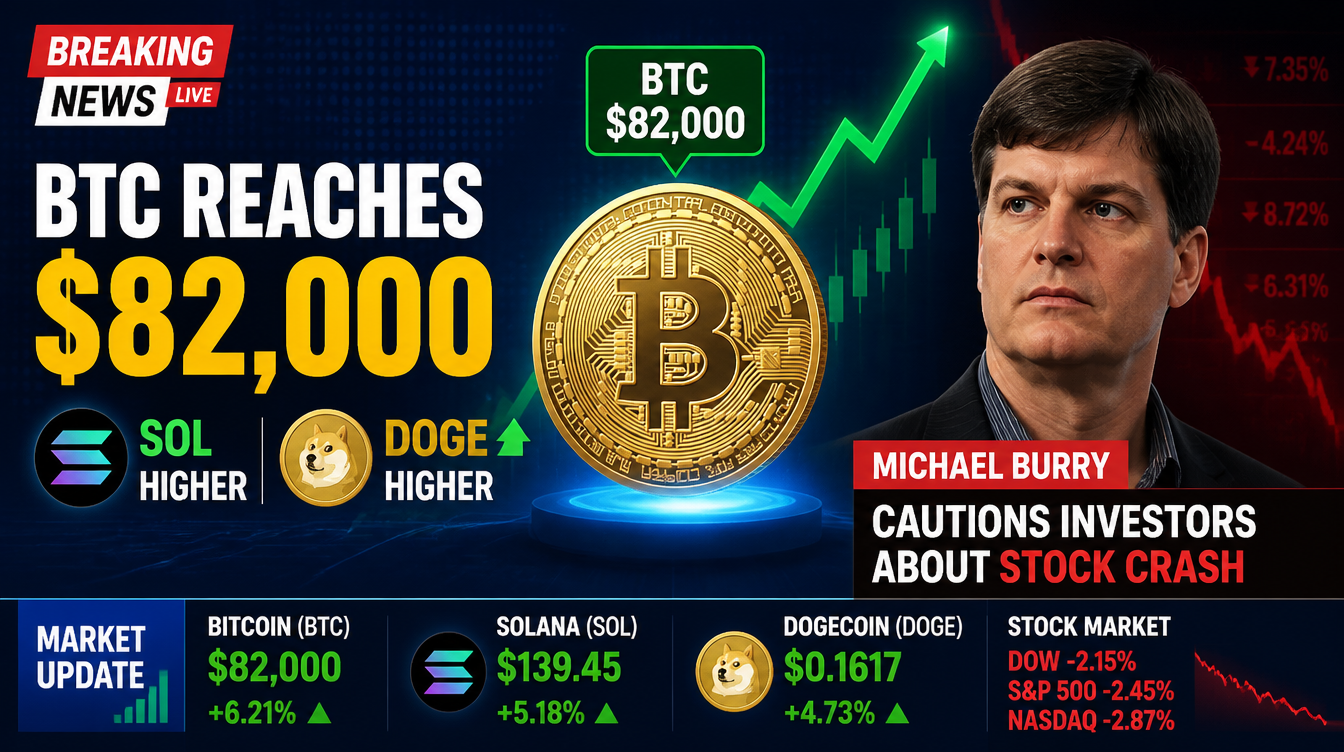
Bitcoin continued to trade above the $81,000 level after briefly reaching $82,026 overnight, holding firm even as global macro conditions turned less supportive for risk assets.
During Tuesday’s Asian session, BTC hovered just over $81K. Among major altcoins, Solana and Dogecoin led the gains, each rising by as much as 2%. BNB climbed 1.7% to around $662, while XRP edged up करीब 1% to $1.46. Ether lagged slightly, declining about 0.8% on the day.
Despite crypto’s relative stability, broader market sentiment weakened. Investor Michael Burry—widely known for predicting the 2008 financial crisis—warned that U.S. equities may be entering bubble territory. He noted that the Nasdaq 100 is currently trading at roughly 43 times earnings, significantly above a more typical level near 30, and compared the setup to a crash waiting to happen.
He also pointed to the Philadelphia Semiconductor Index, which has surged nearly 70% since late March, calling it a key example of a parabolic rise in tech valuations. Burry cautioned that earnings expectations, particularly in AI-related sectors, may be overstated and advised investors to scale back exposure.
Geopolitical tensions added further pressure. Brent crude rose close to 1% to trade above $105 per barrel after renewed doubts emerged over a potential ceasefire with Iran. Remarks from U.S. President Donald Trump heightened concerns that disruptions in the Strait of Hormuz could persist, supporting oil prices and raising inflation risks.
In response, investors shifted toward safer assets. The U.S. dollar strengthened against major currencies, while the 10-year Treasury yield climbed to 4.42%, signaling reduced appetite for risk.
Equity markets across Asia retreated from recent highs. South Korea’s Kospi fell as much as 5.1% intraday after proposals to tax AI-driven profits triggered volatility. The broader MSCI Asia Pacific index fluctuated between gains and losses, while European futures pointed to a weaker open. U.S. stock futures also edged lower after the S&P 500 closed at a record high, capping a six-week rally of more than 16%.
Attention now turns to upcoming U.S. inflation data, which could be pivotal for market direction. Investors are watching closely to see how rising oil prices and geopolitical tensions are feeding into consumer inflation—and what that could mean for Federal Reserve policy.
A stronger-than-expected inflation reading, combined with elevated oil prices and Burry’s bearish stance, could weigh on risk assets, particularly the AI-driven equity rally. Conversely, a softer print may provide short-term support for both traditional markets and cryptocurrencies