cpeditor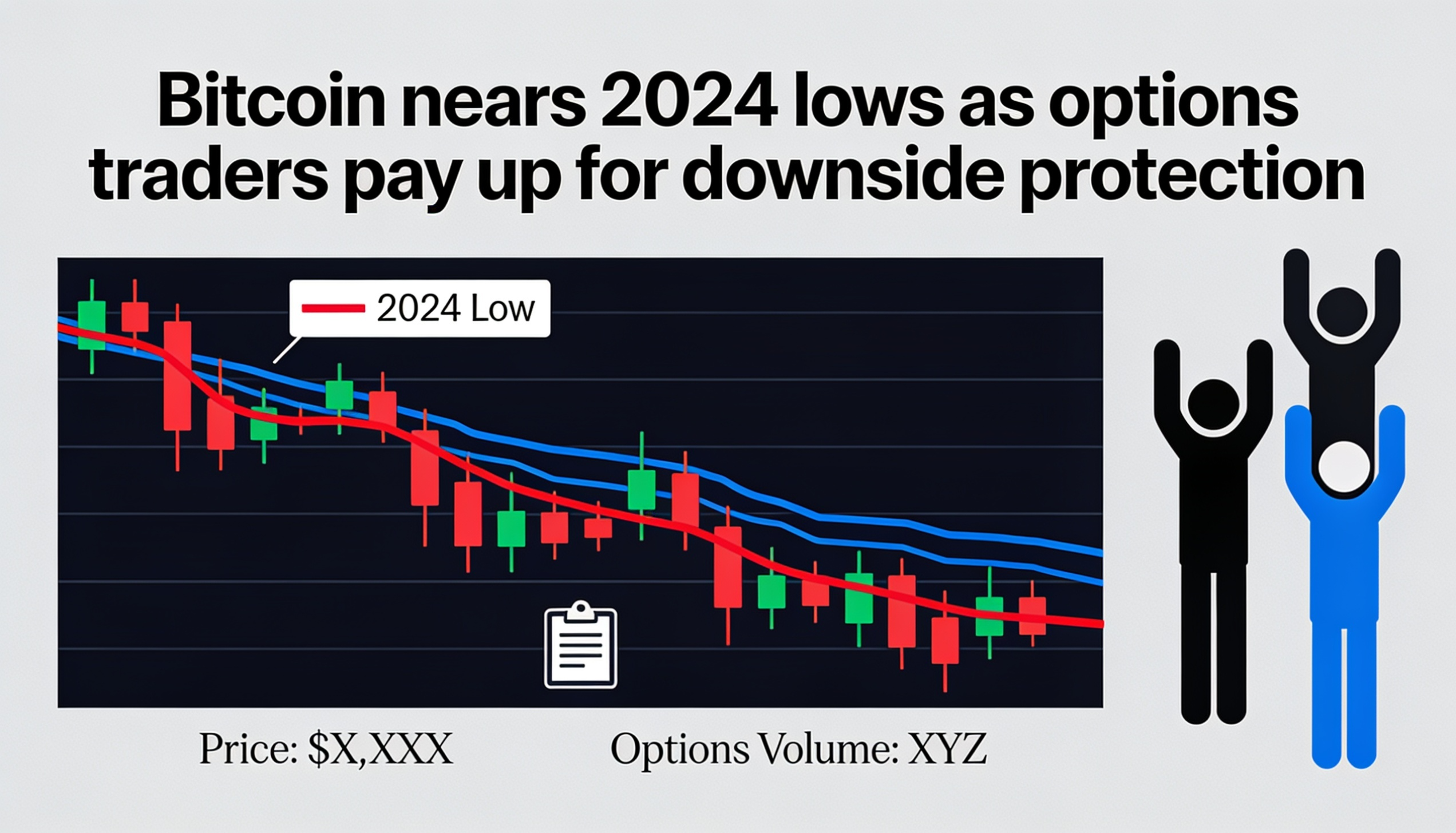
Bitcoin and ether declined on Tuesday, slipping toward key support levels, while DeFi tokens led the broader market downturn. Still, a handful of assets, including XLM and LIT, managed to outperform amid the weakness.
Bitcoin (BTC) dropped 1.5% after failing to hold above $60,000 on Monday and is now trading near $59,250, nearing weekend lows around $58,800. Ether (ETH) fell 1.73% since midnight UTC to about $1,580 after once again failing to break past resistance near $1,640.
Both assets are now testing crucial multi-year support zones. Ether has previously rebounded from similar levels in October 2023 and April 2025, while bitcoin is hovering close to its lowest levels since late 2024. A breakdown below these levels could leave the market without a clear support base.
Altcoins recorded steeper losses, especially in the DeFi sector, where tokens like Ethena (ENA), Jupiter (JUP), and Ether.fi (ETHFI) dropped between 3.3% and 7.5% as risk appetite continued to weaken.
This crypto weakness contrasts with traditional markets, where U.S. equity futures remained stable, with the S&P 500 and Nasdaq 100 each inching up around 0.03%. The U.S. Dollar Index (DXY) also rose 0.25%.
In derivatives markets, Hyperliquid’s HYPE stood out, gaining more than 4.3% over the past 24 hours and remaining the only major token in positive territory. The move appears to be driven by spot demand, while futures open interest has stayed flat at around 40 million tokens since June 22. Positioning remains slightly bullish, with funding rates near 10%, indicating perpetual futures trading above spot prices.
Dogecoin (DOGE) saw the biggest jump in open interest among major tokens, climbing to 16 billion tokens—its highest level since the October 10 crash and up from 13 billion a day earlier. However, positioning signals remain bearish, with negative funding rates and a negative 24-hour OI-adjusted cumulative volume delta pointing to aggressive selling.
Elsewhere, futures positioning in bitcoin, ether, and XRP remains largely unchanged, while Solana (SOL) continues to show elevated open interest near record highs, signaling potential volatility ahead.
Volatility indicators remain subdued. Bitcoin’s 30-day implied volatility (BVIV) fell 11% to 44% and has held steady at that level, while Ether’s EVIV shows a similar pattern.
On Deribit, bitcoin put options continue to trade at a premium of more than 10% over calls across maturities, highlighting ongoing demand for downside protection. Ether options show a similar short-term bias, with weekly puts priced higher than calls, while longer-dated contracts appear more balanced.
Options activity also included a bitcoin short straddle, a strategy typically used when traders expect low volatility and range-bound price action.
Across the broader market, DeFi tokens underperformed, while AI-related tokens such as FET, TAO, and RENDER also declined. Privacy coins ZEC and XMR were also under pressure.
Even Hyperliquid (HYPE), despite recent strength, slipped about 2.2% to $65.3, suggesting consolidation following its recent rally rather than a deeper correction.
On the upside, Stellar Lumens (XLM) gained after news that DTCC plans to integrate its tokenized securities platform with the Stellar network by 2027, maintaining bullish momentum from its strong May rally.
Lighter (LIT) also stood out, benefiting from growing interest in decentralized perpetual exchanges. The token has climbed 23% over the past week, including strong double-digit gains in the last 24 hours.