cpeditor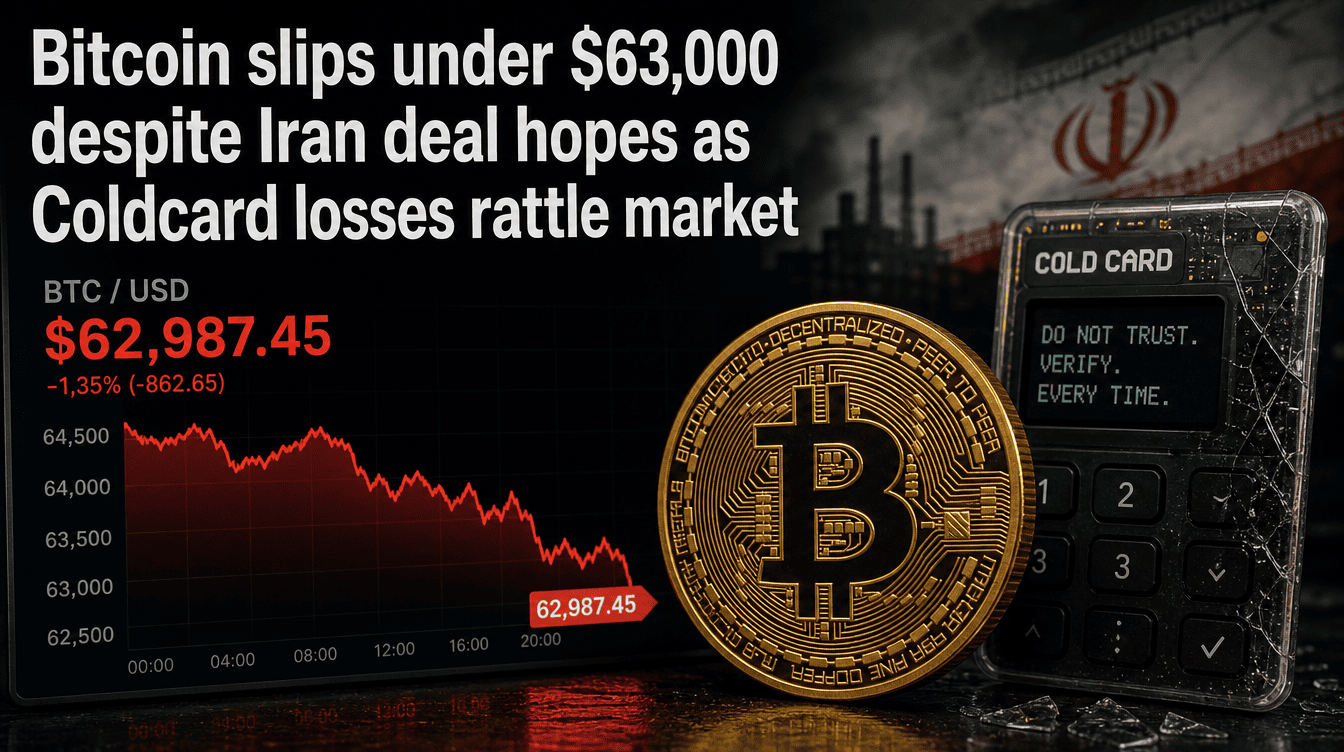
Bitcoin and ether remained under pressure on Monday despite a more favorable macro backdrop, as easing oil prices and falling Treasury yields failed to offset concerns from the ongoing Coldcard wallet exploit, which has now resulted in nearly $89 million in identified losses.
Major cryptocurrencies declined even as fresh U.S.-Iran discussions helped reduce concerns over inflation and geopolitical risks. The market continued to face pressure from the Coldcard hardware wallet incident, with new wallet sweeps suggesting the issue remains unresolved.
Bitcoin fell from a Sunday high of about $63,600 to around $62,800 on Monday, marking a 1% daily decline and a 4% drop over the previous week. Ether dropped more than 1% to $1,858, remaining below $1,900 and extending its seven-day loss to 5%. XRP declined nearly 1% to $1.07, while Solana slipped about 0.5% to roughly $73. Dogecoin also fell around 0.5%, trading just below the $0.07 level.
BNB was the only major cryptocurrency showing resilience, remaining unchanged on the day and gaining 1.6% over the past week. Hyperliquid’s HYPE token dropped 1% to $52.52, marking the largest weekly decline among the top 10 cryptocurrencies at 12.8%.
Traditional markets, meanwhile, benefited from improving sentiment. Brent crude futures for October dropped as much as 7.3% to $81.55 per barrel after President Donald Trump said he had called off planned action against Iran and would begin renewed talks. Saudi Arabia and other allies were reportedly encouraging negotiations aimed at restoring activity through the Strait of Hormuz.
The decline in oil prices eased inflation concerns and supported bond markets. The 10-year Treasury yield fell four basis points to 4.69% after reaching its highest level since January 2025 last week. Nasdaq 100 futures and European stock futures advanced 0.8%, while gold gained 0.3% to about $4,060 per ounce.
Typically, lower oil prices, falling yields, and stronger equity markets create a supportive environment for crypto assets. However, bitcoin did not benefit from the improved conditions, with investors instead focused on risks linked to the Coldcard security breach.
The latest wave of activity connected to compromised Coldcard-generated addresses pushed total tracked losses to 1,367 BTC, valued at nearly $89 million, across 4,585 addresses.
The size of individual losses has declined with each successive wave, suggesting the attacker may have already accessed larger wallets and is now moving through smaller balances.
The initial wave on July 30 drained 1,083 BTC from 1,196 addresses. The third wave affected 1,912 wallets but removed only 208 BTC, showing that the number of targeted wallets increased while the amount stolen decreased.
Crypto fund flows also showed a rare divergence, with ether investment products receiving modest inflows on Friday while bitcoin products saw outflows. This contrasts with the usual pattern where bitcoin leads broader market movements.
Traders are now monitoring whether bitcoin can defend the $62,000 level as U.S.-Iran negotiations continue. A successful agreement that puts further pressure on oil prices could offer crypto markets another chance to recover. However, continued weakness despite improving macro signals would suggest that crypto-specific concerns are driving the current downturn.