cpeditor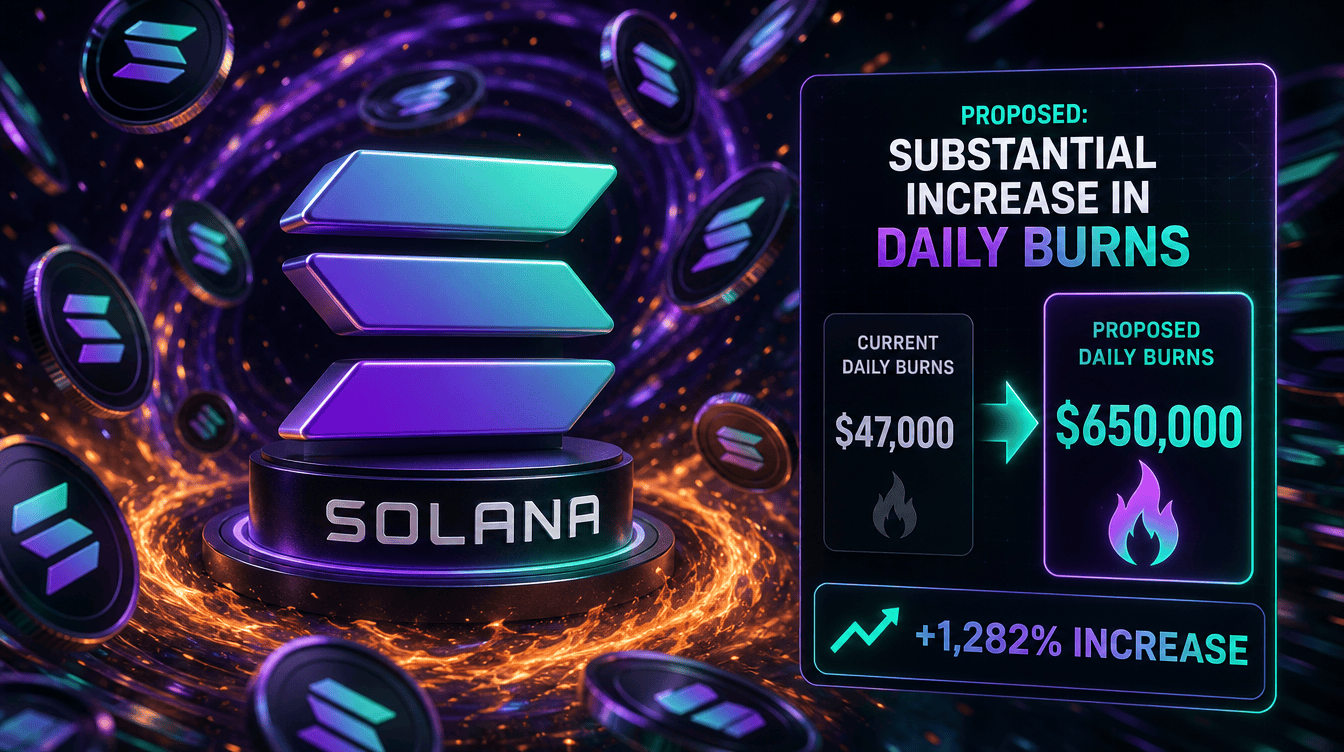
Here is another rewritten version with a more concise, market-focused style:
Solana’s latest governance initiative combines a new fee model with a faster reduction in token emissions, but it still needs nearly 40 million more SOL in validator support within the next two weeks to reach a formal vote.
The proposals could reshape SOL’s supply dynamics by increasing the amount of tokens removed from circulation while reducing the pace of new issuance.
The first proposal, SIMD-0553, introduces a resource-based fee system that adjusts transaction costs based on the network resources consumed. If approved, the change could increase daily SOL burns from roughly 650 SOL, valued at about $47,000, to between 7,500 and 9,000 SOL per day — potentially pushing daily burns toward $650,000.
A second proposal, SIMD-0550, aims to accelerate Solana’s disinflation schedule by doubling the annual reduction rate to 30%. The change would move the network’s 1.5% inflation floor to 2029 instead of 2032 and eliminate an estimated 18.9 million SOL in emissions over six years, worth around $1.36 billion at current prices.
SIMD refers to Solana Improvement Documents, the technical proposal framework used for protocol upgrades, while SGP stands for Solana Governance Proposal, the newer validator-based voting system for major network decisions.
Together, the proposals are designed to tighten SOL supply from both ends — increasing fee-driven burns while limiting future token creation. Solana’s inflation rate is currently around 3.8%, down from its original 8% level under a schedule that cuts inflation by 15% each year.
Validator Support Remains the Main Challenge
The proposals currently have backing from 24.94 million SOL, equal to roughly 5.8% of the 432.65 million SOL staked on the network. That represents about 38% of the required support needed to trigger a formal vote.
An additional 39.95 million SOL in validator support, worth approximately $2.9 billion, is needed before signaling ends on August 18.
So far, 16 validators have supported the proposals. Infrastructure provider Helius leads the group with 16.03 million SOL, accounting for nearly two-thirds of total support. Blueshift follows with 3.6 million SOL, while Temporal Emerald has contributed 1.24 million SOL.
Supply Impact Still Depends on Emission Cuts
Although the proposed burn increase is significant, it would not be enough on its own to make SOL deflationary. Even at 9,000 SOL burned per day, the figure remains below the estimated 60,000 SOL entering circulation daily through inflation.
That is why both proposals are being advanced together. SIMD-0553 increases the burn rate, while SIMD-0550 reduces the amount of new SOL entering the market.
Helius, the largest supporter of the proposals, also employs the engineer responsible for SIMD-0550.
The 15% approval threshold was introduced by the Solana Foundation in July to ensure that only major ecosystem decisions move to validator-wide voting, while standard technical improvements continue through the SIMD process.