cpeditor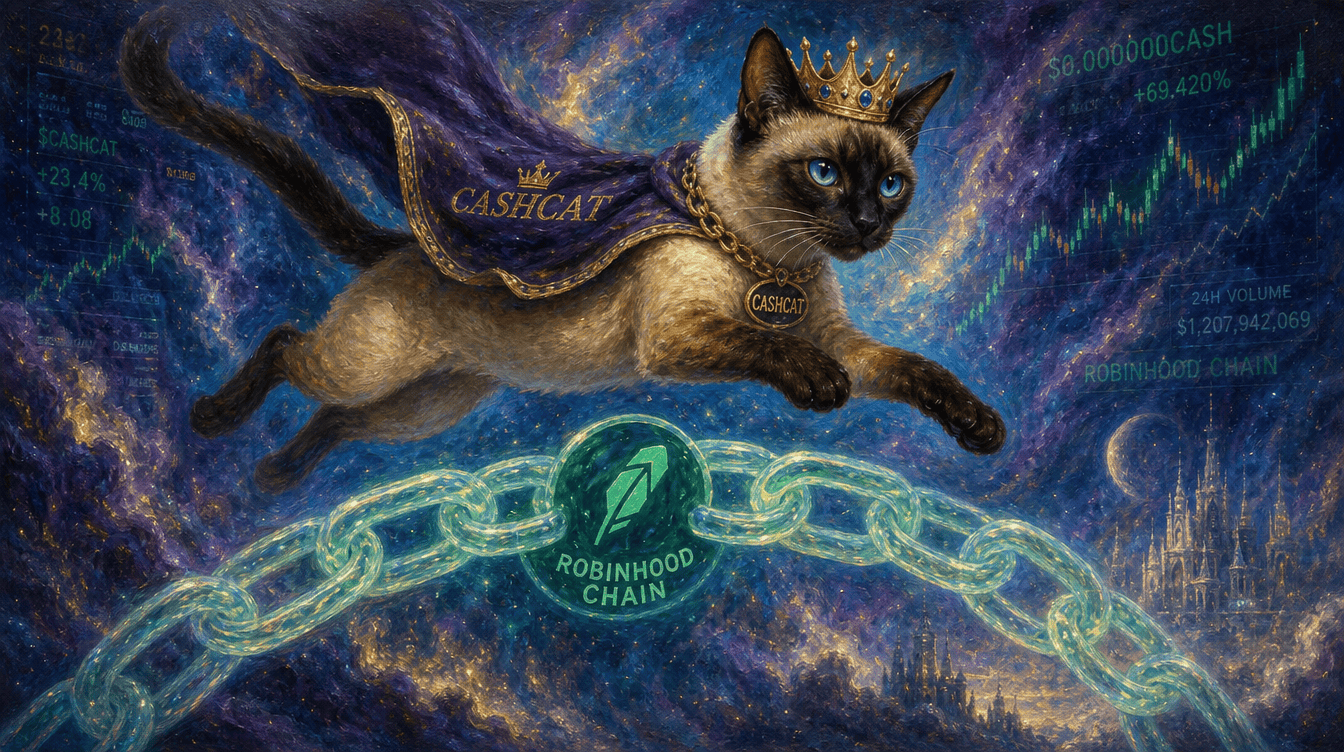
CASHCAT, the memecoin that became the standout performer during Robinhood Chain’s early rollout, has recovered to an $86 million market capitalization, while tokenized assets — the network’s main focus — currently hold a market value of roughly $27.6 million.
The cat-themed cryptocurrency has climbed 120% over the past seven days, rebounding from the sharp decline that followed the initial excitement around the chain’s July launch. The gains come even as many other tokens introduced during the same period have lost momentum.
CASHCAT is trading around 8.7 cents, up 22% in the last 24 hours, with a market cap near $86 million and daily trading volume of approximately $9 million. The token remains below its mid-July high, when it reached nearly 22 cents.
The asset was created by independent developers using a cat-with-cash theme that Robinhood had previously used before rebranding. Its website describes the project as “fan fiction with a ticker.” Within days of Robinhood Chain’s July 1 mainnet debut, CASHCAT became the first major breakout token on the network, delivering significant gains for several early holders.
The token’s rise also drew attention from Robinhood CEO Vlad Tenev, who had earlier criticized cryptocurrencies without practical use cases but later said the chain could support meme-based projects as well.
However, many of the tokens launched during the same wave have since faded. Noxa, the launch platform behind much of July’s token activity, stopped accepting new deployments on July 11 and went offline two days later after reportedly earning around $12 million in fees.
Token creation activity on Robinhood Chain has fallen sharply, declining from about 35,000 launches per day in mid-July to approximately 10,000. Noxa continues to hold roughly $137,000 worth of CASHCAT and has not sold its position, with its balance unchanged over the past week despite the token’s price increase.
CASHCAT’s ownership structure has become more distributed over time. DEXTools data shows the token has around 41,200 holders, with the entire 989 million supply circulating and no locked tokens.
The largest holder is the Uniswap liquidity pool, which represents 2.47% of the total supply. Other large wallets each control between 1.3% and 1.5%.
The liquidity pool currently contains about $5 million, down from the $6.6 million that supported a $105 million valuation during the token’s July peak. Even with the decline, it remains the largest liquidity pool among memecoins operating on Robinhood Chain.
At the ecosystem level, Robinhood Chain has continued attracting deposits. Total value locked has increased to $774 million, representing a 20% gain over the past week.
Lending platforms account for roughly 43% of the network’s locked value, while asset management makes up about 41.5%. Morpho leads with around $332 million in deposits and provides the lending infrastructure behind Robinhood’s on-chain earning service. Ethena follows with approximately $236 million through its yield-generating dollar-pegged asset.
Stablecoin balances on the network have also grown to $575 million, up 14% compared with the previous week.
Tokenized real-world assets, which represent Robinhood Chain’s intended use case, now have an active market value of around $100 million, rising from approximately $70 million in late July. During that period, some tokenized stocks recorded more than $500,000 in daily trading volume, while GameStop-linked assets reached $26 million.
Robinhood is currently covering transaction costs on the network until around late September. The key test will come after that support ends, when users begin paying their own fees and the ecosystem’s organic demand becomes easier to measure.