cpeditor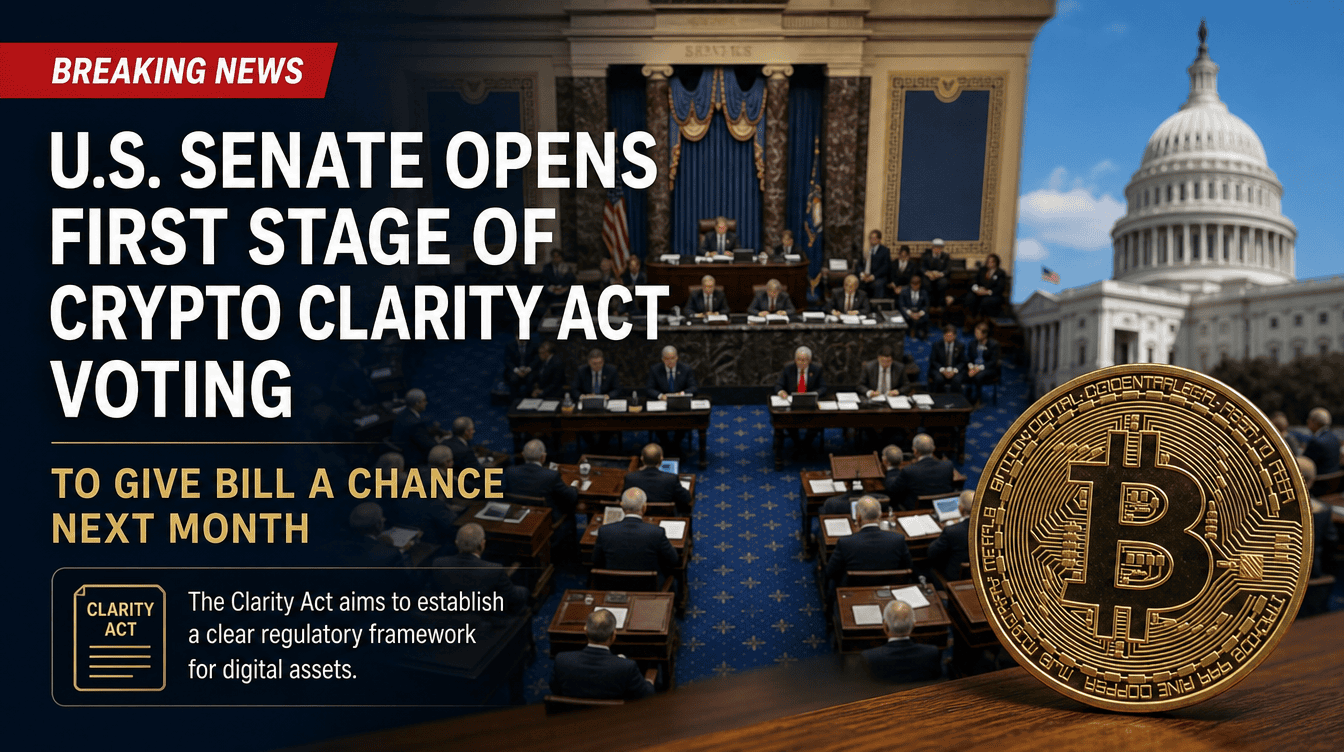
The U.S. Senate has initiated the first procedural steps for the crypto Clarity Act, keeping the legislation alive and potentially setting the stage for a vote in September.
Senate leadership moved early Saturday to formally begin floor action on the Digital Assets Market Clarity Act, marking the furthest the legislation has advanced so far in the industry’s effort to establish clear federal rules for digital assets.
The development came after lawmakers failed to bring the bill to a vote before the summer recess, leaving only a slim opportunity for it to advance when the Senate returns in September. Without this initial procedural move, the legislation would have been effectively sidelined for the rest of 2026.
The Senate clerk read a motion seeking to end debate and proceed with H.R. 3633, a measure designed to establish a regulatory framework for digital commodities under the jurisdiction of the Securities and Exchange Commission and Commodity Futures Trading Commission.
The bill must now go through the Senate’s cloture process, which involves multiple procedural stages and waiting periods before a final vote can be held. It will also compete with other pending measures for floor time during the Senate’s three-week September session.
That period is expected to be the final significant legislative window before lawmakers turn their attention to the November midterm elections. Majority Leader John Thune’s move means the Senate could hold its first procedural vote soon after returning from recess, potentially as early as the second day of the September session.
Lawmakers now have several weeks to settle unresolved disagreements over the bill. The main issues include measures addressing illicit finance, the treatment of stablecoin rewards, and government-ethics restrictions.
The legislation is expected to need at least 10 Democratic votes to reach the 60-vote threshold required in the Senate. Democratic support remains uncertain, particularly over a provision that would prevent senior government officials, including President Donald Trump, from supporting cryptocurrency projects.
Bipartisan senators have drafted revised language on that provision, but the proposal has reportedly been waiting for a White House response for more than a week. Trump’s approval could be necessary to maintain sufficient bipartisan support.
Negotiations remain ongoing, and lawmakers and industry participants continue to believe a September vote is possible if the remaining disputes are resolved. From a procedural standpoint, the Senate would need only a few days during its three-week session to complete the necessary votes.
Thune had previously warned that the Clarity Act was unlikely to receive a final vote before the August recess. Other priorities, including government funding, Russia sanctions, and nominations, took precedence during Friday night’s extended voting session.
By beginning the process now, however, Senate leadership has left the door open for the bill to return to the floor in September.
The motion to proceed allows senators to begin the formal debate process for legislation establishing a regulatory structure for the U.S. crypto market. Because the measure is unlikely to receive unanimous support, it must clear the cloture procedure.
The first procedural vote could lead to two outcomes. A last-minute agreement could bring enough Democrats behind the bill and allow it to continue toward a final vote.
If negotiations break down, the vote could instead force lawmakers to publicly record their positions. That could turn the legislation into a major political issue ahead of the midterm elections and provide crypto-focused political groups such as Fairshake with information for future campaign spending.
If the partisan divide remains unresolved, the Clarity Act is unlikely to become law in 2026. A new Congress will take office next year, potentially changing control of one or both chambers and forcing the crypto industry to restart its legislative push.