cpeditor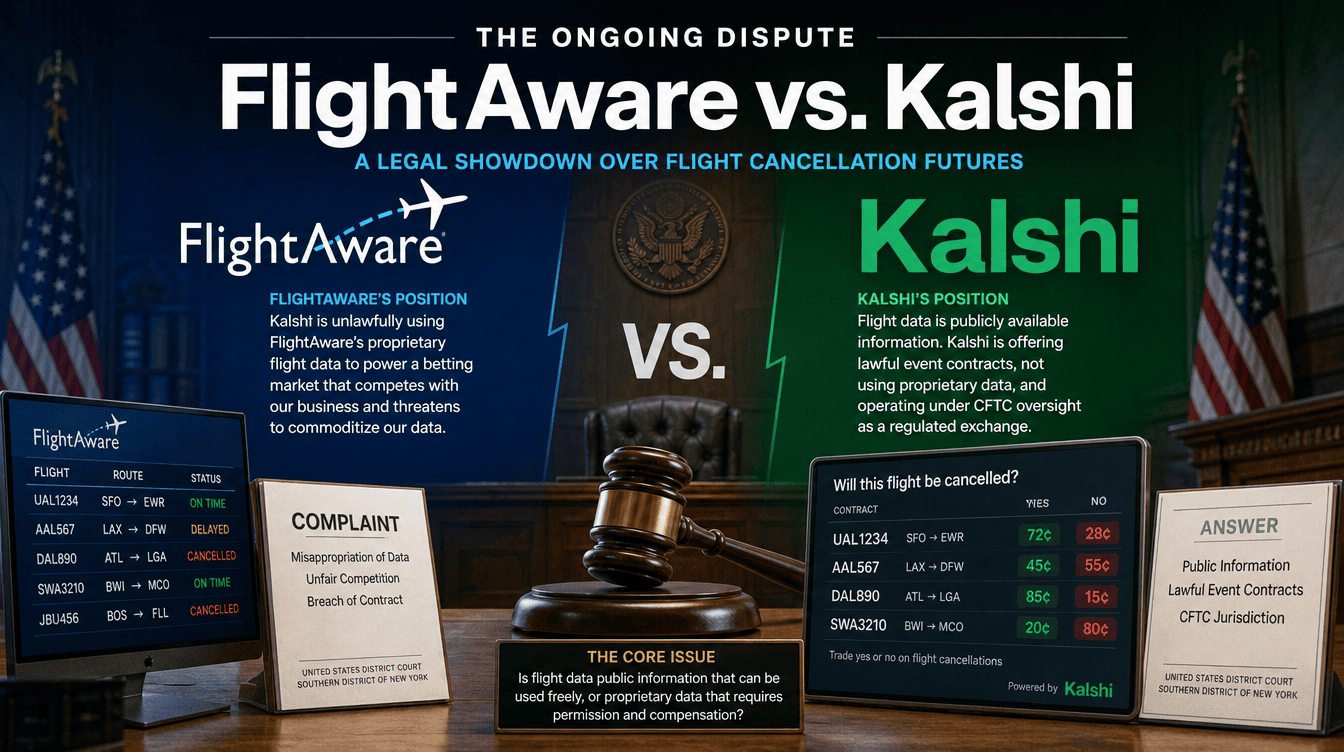
FlightAware has sued prediction-market platform Kalshi in federal court, alleging that Kalshi relied on FlightAware’s proprietary flight data and trademark without permission to settle contracts based on airline cancellations.
The lawsuit was filed Monday in the U.S. District Court for the Southern District of New York. FlightAware is seeking monetary damages and an injunction that would prevent Kalshi from continuing to use its data and logo.
FlightAware runs a major flight-tracking service used to monitor aircraft movements worldwide. Kalshi launched contracts tied to nationwide and regional flight cancellations on July 14, the same day it submitted a filing to the Commodity Futures Trading Commission (CFTC) seeking approval to list the contracts.
The products allow users to take positions on the percentage of scheduled flights that will be canceled during a defined period.
According to FlightAware, Kalshi’s use of its data violates licensing conditions that prohibit commercial use. The company said the restrictions applied to information accessed through a paid AeroAPI account registered by a Kalshi employee in 2022.
FlightAware later sent Kalshi a cease-and-desist demand, but Kalshi denied the allegations. The company said it had not breached FlightAware’s data license or infringed its trademark and argued that its references to FlightAware were protected as nominative fair use.
FlightAware said Kalshi subsequently added a disclaimer explaining that its flight-cancellation markets were not endorsed by FlightAware. However, the company argues that the disclaimer does not resolve the dispute because Kalshi continued to rely on FlightAware data to determine contract outcomes.
The flight-tracking company has also raised a separate safety concern, arguing that cancellation-based prediction markets could potentially give participants financial incentives to interfere with flight operations or influence whether services are delayed or canceled.
The complaint says Kalshi has identified U.S. Department of Transportation flight information as another possible source for settling its contracts.
The case adds to a growing wave of litigation involving Kalshi and prediction markets. New York sued Kalshi last month, alleging that the company was offering sports and event contracts without a state gaming license. Kalshi and other prediction-market firms are facing comparable legal challenges in Wisconsin and Nevada.
FlightAware’s complaint takes a different approach. Rather than primarily challenging whether Kalshi’s products amount to gambling, it focuses on whether a prediction-market operator can use a third party’s proprietary data and trademark to settle contracts without securing a commercial licensing agreement.