cpeditor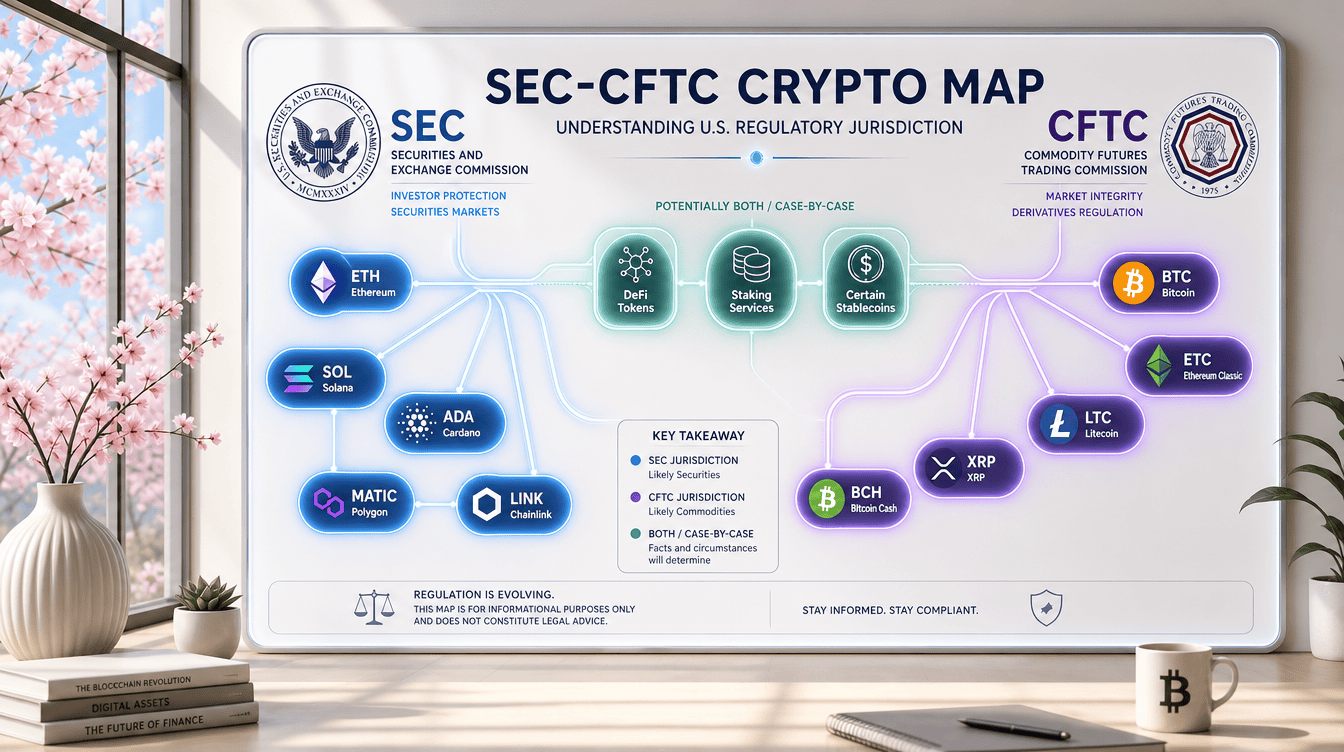
SEC-CFTC Crypto Roadmap Advances as CLARITY Act Remains Stalled
The SEC and CFTC have taken steps to establish clearer rules for the digital-asset industry by jointly introducing a five-part classification system covering digital commodities, digital collectibles, digital tools, stablecoins and digital securities.
The initiative indicates that federal regulators are moving ahead with their own crypto framework while the Senate continues to struggle with the CLARITY Act.
For crypto exchanges, issuers and investors, the new framework offers a practical indication of how regulators may categorize various digital assets. Still, the guidance does not carry the same permanence as legislation because it represents an agency interpretation rather than a law enacted by Congress.
The development arrives as traders await the latest U.S. CPI figures. Bitcoin has been trading near $64,000, and the inflation data could determine whether the cryptocurrency breaks out of its current consolidation.
SEC-CFTC Taxonomy Offers Temporary Clarity
Under the agencies’ framework, digital commodities, digital collectibles, digital tools and stablecoins are generally treated as falling outside securities regulation. Digital securities remain the asset class most directly associated with SEC oversight.
However, the SEC has indicated that it may still claim jurisdiction over particular assets that do not normally qualify as securities, depending on the circumstances. That qualification means some regulatory uncertainty remains.
The unresolved jurisdictional question is one reason Congress has been working toward comprehensive market-structure legislation. The CLARITY Act is intended to establish more permanent boundaries between the SEC and CFTC, making the current guidance more of an interim framework.
Ian Katz, managing partner at Capital Alpha, said regulators appear determined to continue making progress rather than wait indefinitely for lawmakers to act.
SEC Chair Paul Atkins also defended the approach at the DC Blockchain Summit, presenting the new framework as an overdue effort to provide the industry with greater direction.
Atkins has separately outlined potential measures including exemptions for startups and fundraising activities, as well as a safe harbor for crypto assets that evolve beyond securities status. Making those provisions permanent would likely require congressional action.
Senate Disagreements Continue to Delay CLARITY Act
The House approved the CLARITY Act last July, but the bill has encountered continued resistance in the Senate.
The Agriculture Committee has advanced its portion without Democratic votes, while negotiations in the Banking Committee have faced additional setbacks, including the loss of Coinbase’s support.
Stablecoin rewards remain one of the main areas of disagreement. Banking groups are pushing for tighter restrictions, while crypto companies contend that such measures could make the sector less competitive.
President Trump has criticized banks over their approach to the GENIUS Act and has called on lawmakers to move more quickly on broader crypto market-structure legislation.
Senators Angela Alsobrooks and Thom Tillis have reportedly reached a bipartisan agreement involving stablecoin rewards, although the details have not been fully revealed.
David Carlisle of Elliptic said the SEC-CFTC guidance gives market participants some additional confidence while Congress works through its disagreements.
The Next Steps for U.S. Crypto Regulation
Even if the Senate Banking Committee advances its bill, lawmakers would still need to reconcile it with the Agriculture Committee’s version. The final Senate measure would then have to clear the 60-vote threshold before being reconciled with the House-passed CLARITY Act.
The approaching midterm elections could make the legislative timeline even tighter, potentially limiting the time available for lawmakers to reach a final agreement.
Sen. Bernie Moreno has warned that failure to pass the CLARITY Act by May could push comprehensive digital-asset legislation further into the future.
For crypto investors, the difference between agency guidance and legislation remains crucial. The SEC or CFTC can modify an interpretation without congressional approval, whereas statutory rules generally provide a more stable and lasting foundation.
The latest SEC-CFTC framework therefore gives the crypto industry a clearer near-term roadmap, but it does not eliminate the need for congressional action. Until the CLARITY Act or similar legislation becomes law, questions surrounding long-term regulatory jurisdiction are likely to remain a key factor for digital-asset markets.