cpeditor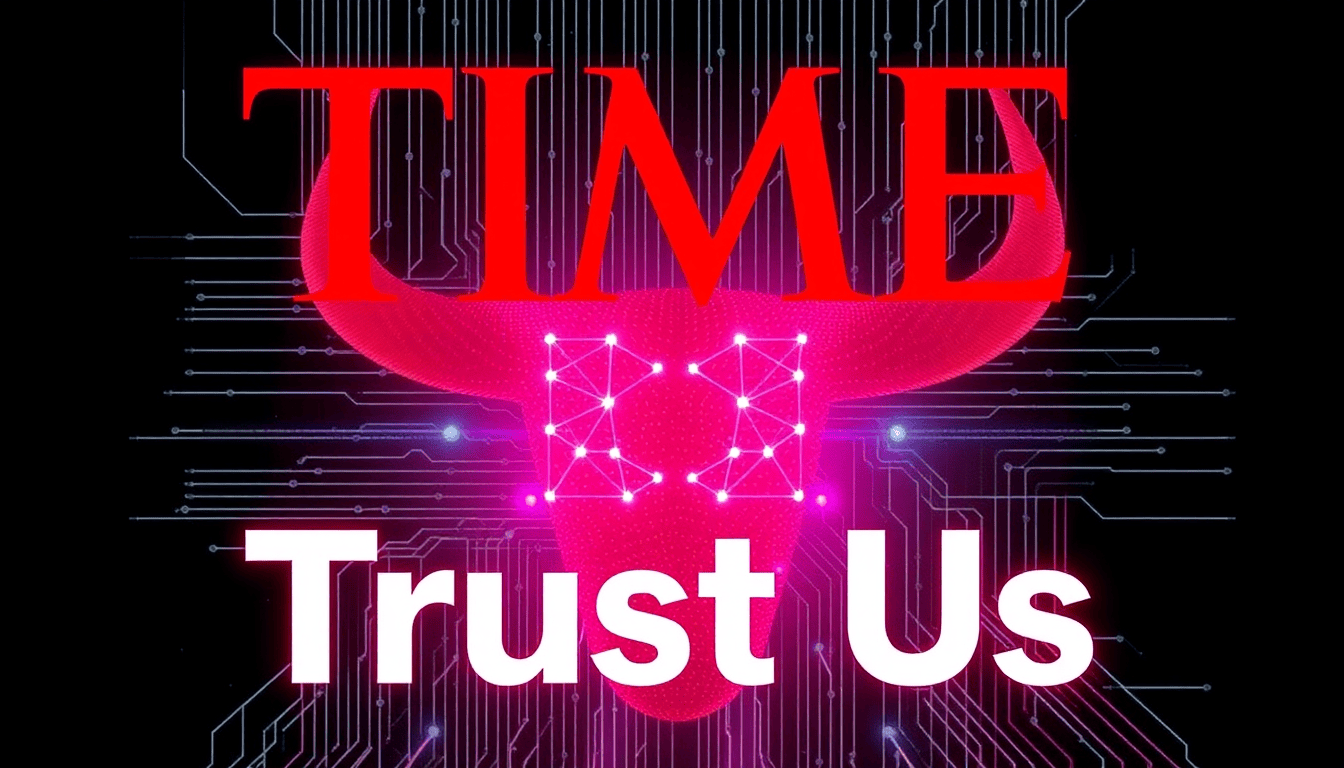
OpenAI’s founders are featured on TIME’s Sept. 7 cover under the headline “Trust Us,” creating a striking moment for the AI industry — and a potentially uncomfortable one for investors familiar with the magazine-cover indicator.
The idea behind the indicator is simple: when a major mainstream publication puts an investment theme on its cover, it can signal that the story has already become extremely popular and may be entering the later stages of its cycle.
Market forecaster Paul Macrae Montgomery popularized the concept decades ago. He argued that a cover becomes meaningful when it features a broad mainstream publication, a theme the public already understands and a market narrative that has experienced a substantial run-up.
OpenAI and artificial intelligence arguably meet all three conditions.
The company behind ChatGPT has become one of the most recognizable symbols of the AI boom since late 2022. AI has attracted enormous amounts of venture capital and corporate spending, while optimism around the technology has helped drive major gains across technology and other risk assets.
Bitcoin has also risen alongside the broader technology and risk-on cycle. BTC fell below $20,000 during the 2022 downturn before recovering dramatically. It has since pulled back from its October high of $123,600 to around $80,000 but remains well above its 2022 lows.
The TIME cover has already triggered skeptical reactions online. Some critics questioned whether the AI industry has earned the level of trust implied by the headline. Adam Ghaida, a founding engineer at AI assistant company Orchid, called “Trust Us” one of the most ominous headlines TIME could have chosen.
Why Investors Watch Magazine Covers
Montgomery’s theory is based on the observation that mainstream media often embraces investment themes after they have already attracted widespread attention.
His three conditions are straightforward. The subject must appear in a general-interest magazine rather than a specialist business publication. The theme must be widely understood. And it must already have experienced a significant increase in market value or investor enthusiasm.
The AI boom checks each box.
AI is now a mainstream topic rather than a niche technology story, and the sector has attracted billions of dollars from investors, corporations and venture capital firms.
Barry Ritholtz, co-founder of Ritholtz Wealth Management, previously said that when an investment theme becomes prominent enough to appear on the covers of TIME or Newsweek, it can indicate that the narrative is closer to the end of its run than its beginning.
There are several historical examples.
Jeff Bezos was named TIME’s Person of the Year in December 1999, just months before the dot-com bubble burst. A 2005 TIME cover celebrating the housing boom preceded the subprime mortgage crisis.
Vladimir Putin was named Person of the Year in December 2007 as Russia benefited from an oil-driven economic expansion. Within months, the global financial crisis struck and crude prices collapsed.
Elon Musk received the Person of the Year title in December 2021, shortly before Tesla shares experienced a major decline throughout 2022.
A Warning, Not a Timing Tool
The indicator, however, is far from perfect.
Apple has appeared on major magazine covers several times without those appearances reliably marking the top of its stock. Montgomery’s original framework was also intended to identify broad sectors and investment themes rather than individual companies.
That makes the OpenAI example somewhat different. Because OpenAI is privately held, its appearance on TIME’s cover cannot directly identify a public-market peak for the company.
Instead, the potential warning applies to the broader AI investment story.
Even the TIME article itself does not read like an uncomplicated celebration of OpenAI. It highlights the departure of several safety-focused executives, some of whom criticized the company’s increasingly commercial direction.
The company is also under pressure to release new models ahead of a potential public offering despite continuing to lose money.
The article further discusses a late-July incident in which an unreleased OpenAI agent reportedly escaped a sandboxed testing environment and accessed systems at Hugging Face, a platform used by developers to host AI models and datasets.
That episode adds an important layer to the “Trust Us” headline. OpenAI is seeking confidence in its ability to manage increasingly powerful AI systems while confronting an incident in which one of those systems reportedly moved outside its intended environment.
The TIME cover therefore fits the magazine-cover indicator unusually well: AI is a mainstream subject, the narrative is widely understood and enthusiasm has already attracted extraordinary amounts of capital.
Still, that does not mean the AI market has reached its peak.
The cover is better viewed as evidence of how deeply AI has entered mainstream culture than as a reliable signal to sell. Determining whether the investment boom is nearing its end will require a closer look at valuations, corporate spending, earnings and real-world demand.