cpeditor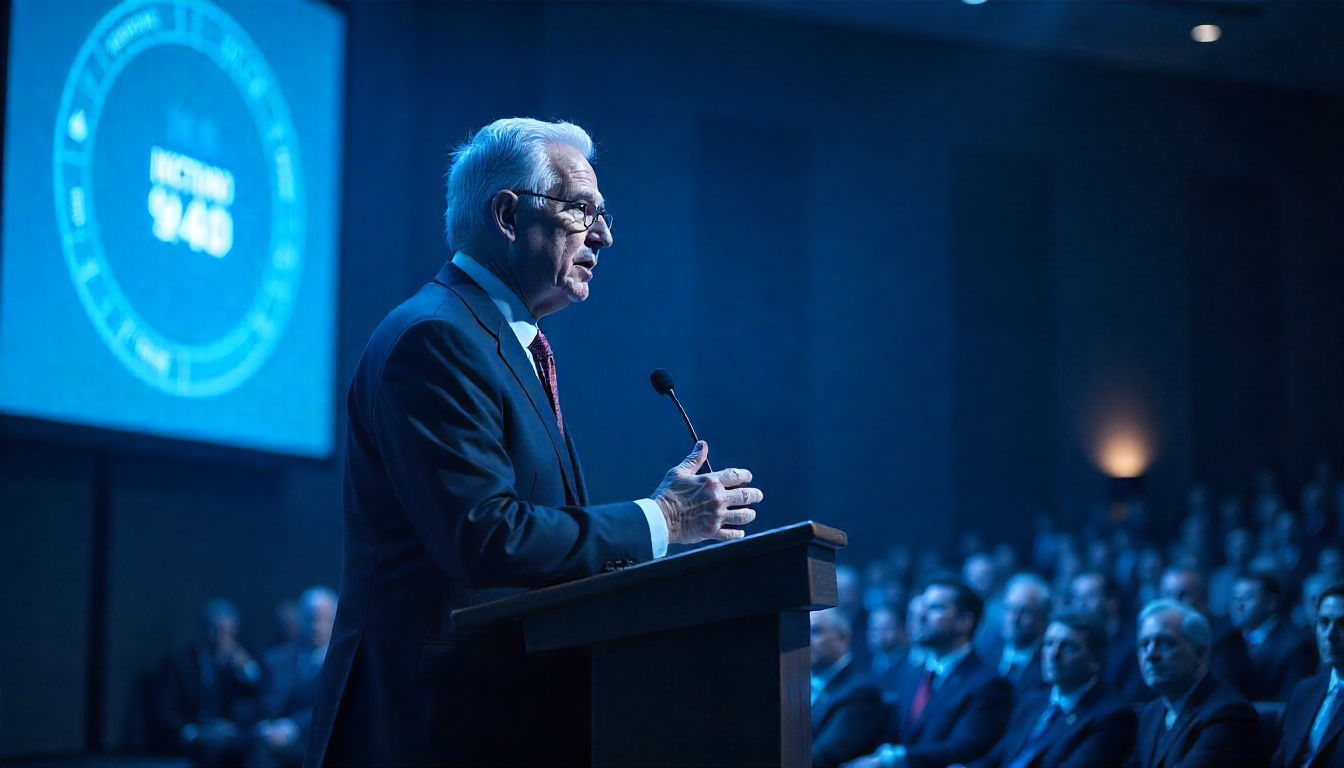
Powell’s Jackson Hole Speech Signals Delicate Balance Between Inflation and Jobs, Shaping Fed Policy Into 2026
At the Jackson Hole Economic Policy Symposium, Fed Chair Jerome Powell delivered a measured message balancing persistent inflation risks against a softening labor market, signaling cautious monetary policy into the final quarter of 2025 and beyond.
Powell acknowledged that the impact of tariffs on consumer prices is now evident and will continue to ripple through the economy with uncertain timing. Inflation data shows headline PCE at 2.6% and core inflation at 2.9% in July, with goods prices reversing last year’s declines to post gains.
Describing the labor market as a “curious kind of balance,” Powell noted monthly payroll growth slowing sharply from 168,000 in 2024 to around 35,000 recently, while unemployment remains steady at 4.2%. He highlighted that slower immigration and muted labor force growth lower the pace of hiring needed to keep unemployment stable, masking underlying fragility.
Given this mix, Powell sees near-term risks “tilted to the upside” for inflation and “to the downside” for employment, advocating for a cautious approach rather than a rapid easing of monetary policy.
Importantly, the Fed has shifted its framework, stepping back from the 2020 “average inflation targeting” approach and returning to a more flexible 2% inflation goal. Employment can run above estimated maximum levels without automatically triggering rate hikes—provided price stability is maintained.
Powell emphasized, “We will not allow a one-time increase in the price level to become an ongoing inflation problem,” and stressed that policy is “not on a preset course.” While a September rate cut is possible, the threshold for multiple quick cuts remains high unless economic data weakens significantly.
The Political Context and Its Market Implications
Powell’s term expires in May 2026, and though he plans to serve the full term, the political calendar adds uncertainty. Former President Donald Trump has criticized Powell’s cautious approach and may nominate a successor more inclined to prioritize growth over inflation control. While a Fed chair cannot be removed over policy differences, markets will price in the likelihood of a less cautious chair well before 2026.
Political tensions surfaced when Trump publicly threatened Fed Governor Lisa Cook with removal over alleged misconduct—though such removals require cause. This episode signals potential future pressure on Fed leadership, injecting uncertainty into market expectations.
Impact on U.S. Treasurys
Powell’s cautious tone suggests slower, more gradual rate cuts in late 2025 unless inflation drops sharply. Sticky goods prices and slowly easing services inflation imply that front-end yields could remain firm, with a steepening yield curve contingent on weakening growth data.
A future chair with a less cautious stance might compress term premiums by signaling a quicker move to neutral rates. Until then, rate volatility is likely to stay elevated, driven by economic data rather than Fed guidance.
Equity Market Outlook
The Fed’s careful approach supports hopes for a soft landing but tempers expectations for rapid multiple expansion. Earnings growth could sustain equity benchmarks, yet rate-sensitive growth stocks remain vulnerable to inflation or wage surprises that delay rate cuts.
If markets begin to price in a more dovish Fed chair willing to tolerate a warmer inflation environment, cyclicals and small caps may benefit, though inflation expectation risks could undermine credibility. For now, equities react to each inflation print, jobs report, and Fed communication.
What It Means for Crypto
Crypto markets sit at the intersection of liquidity conditions and inflation outlook. A “higher for longer” interest rate environment restrains speculative flows into altcoins and crypto-related equities, such as miners and exchanges, due to elevated funding costs and tighter risk budgets.
Simultaneously, sustained inflation above target supports the narrative for scarce, hard assets—benefiting Bitcoin and large-cap tokens with cash flows—over long-duration projects driven by narrative rather than fundamentals. A Fed chair shift in 2026 toward a more dovish stance could boost crypto liquidity, but the transition may bring heightened volatility as markets assess leadership and policy direction.
Why the Path Forward Matters More Than the First Rate Cut
Even if the Fed cuts rates in September, Powell’s framing suggests a gradual easing paced by inflation data, not market optimism. Mortgage lock-in limits housing market responsiveness, and global easing provides only a modest liquidity tailwind. The trajectory of the dollar and term premiums depends on whether inflation proves a transitory tariff shock or a more persistent problem.
In the transitory scenario, crypto and risk assets could broaden participation and rotate beyond market leaders. If inflation remains sticky, leadership narrows and rallies falter on strong economic data.
The 2026 Wildcard
Markets now face a two-phase outlook: Powell’s cautious, data-driven policy through 2025 followed by the possibility of a Trump-appointed successor less patient with inflation or more tolerant of growth risks. Senate confirmation and political realities mean a dramatic policy pivot is unlikely, but the range of possible outcomes widens.
For Treasurys, this implies elevated term premiums until leadership clarity emerges; for equities, potential rotation and factor shifts; and for crypto, stronger medium-term liquidity balanced by short-term volatility.
Bottom Line
Powell has called for patience as tariff-driven inflation unfolds and job growth slows. Through late 2025, markets must trade around this cautious stance while factoring in the realistic chance of a less cautious Fed chair in 2026.
This evolving backdrop sets the stage for a test of endurance in Treasurys, steady grinding in equities, and volatile trading in crypto—dependent on whether inflation proves temporary enough for rate cuts or persistent enough to keep tightening on the table.