cpeditor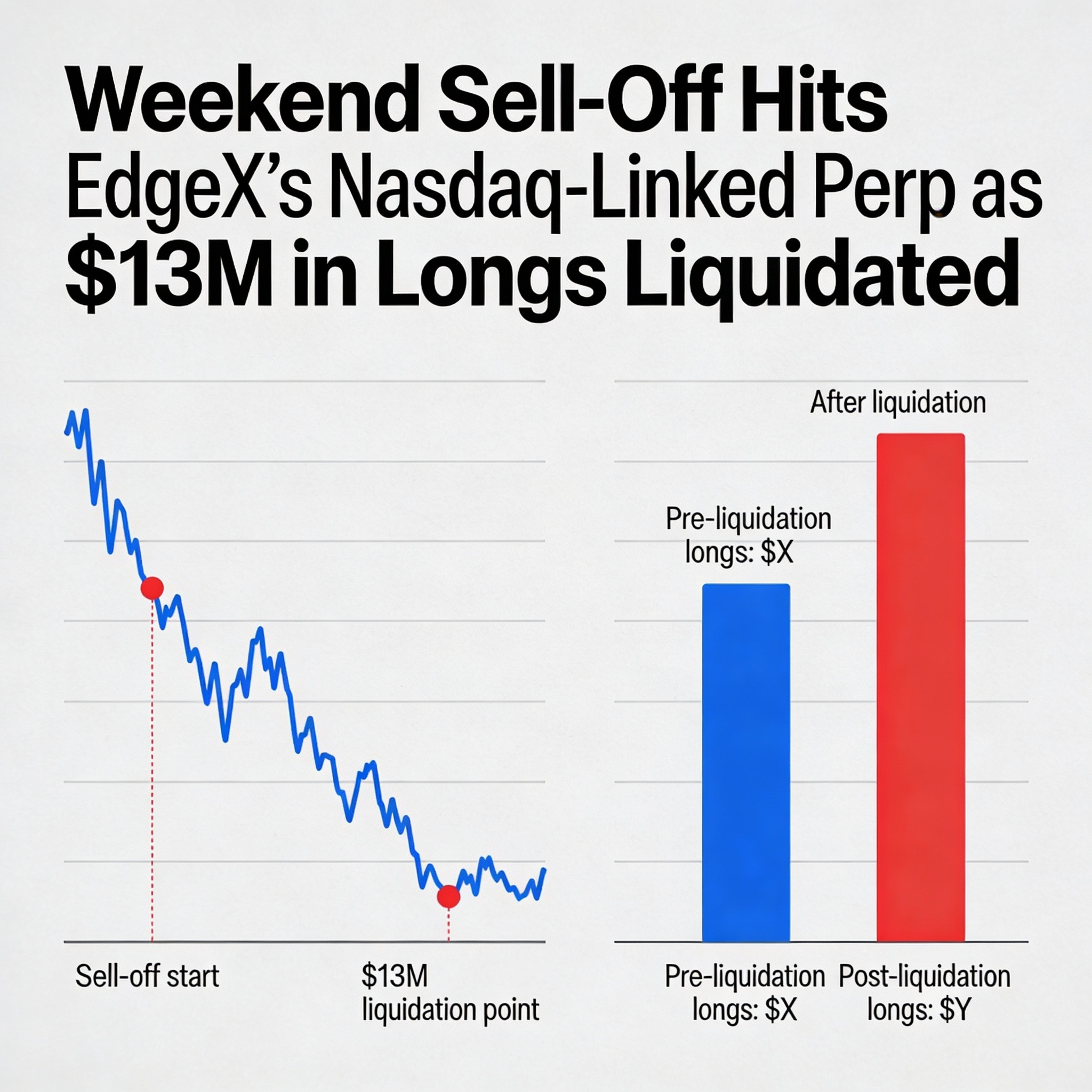
A large off-hours short position sent EdgeX’s Nasdaq 100–linked XYZ100 perpetual sharply lower over the weekend, exposing the risks of trading equity-index perps while traditional markets are closed.
The weekend sell-off triggered roughly $13 million in liquidations after a newly created wallet executed a sizable short position, according to onchain data from Hypurrscan. The episode underscores how thin liquidity during off-hours can amplify price moves in equity-linked crypto derivatives.
On Saturday, the wallet began placing a six-hour time-weighted average price (TWAP) order to short 398 XYZ100 contracts, valued at approximately $10 million. The sustained selling pressure pushed the price down more than 3.5% within minutes, sparking a cascade of forced liquidations.
Liquidations occur when leveraged positions are automatically closed after losses erode collateral below required maintenance levels. Blockchain data shows that one trader alone lost around $7.4 million in long positions, while another was liquidated for roughly $2.7 million, bringing total liquidations in the market to about $13 million.
The sharp move drew scrutiny from traders on X, with some questioning whether the market was vulnerable to manipulation during off-hours, noting that XYZ100 fell nearly 4% over the weekend despite the absence of any major macroeconomic or equity-market developments. Others countered that such volatility is an inherent risk of trading equity-linked perpetuals outside regular trading hours.
“On weekends, you’re not trading the Nasdaq anymore,” one trader wrote. “You’re trading whoever has the most capital on a thin order book.”
EdgeX has quickly emerged as one of the largest venues for perpetual futures trading. Data from DefiLlama shows the platform processed approximately $167 billion in perpetual trading volume last month, often rivaling established competitors such as Aster and Hyperliquid on a daily basis.
The incident highlights both the growing appetite for tokenized equity products and the structural risks of trading instruments designed to mirror markets that are c