cpeditor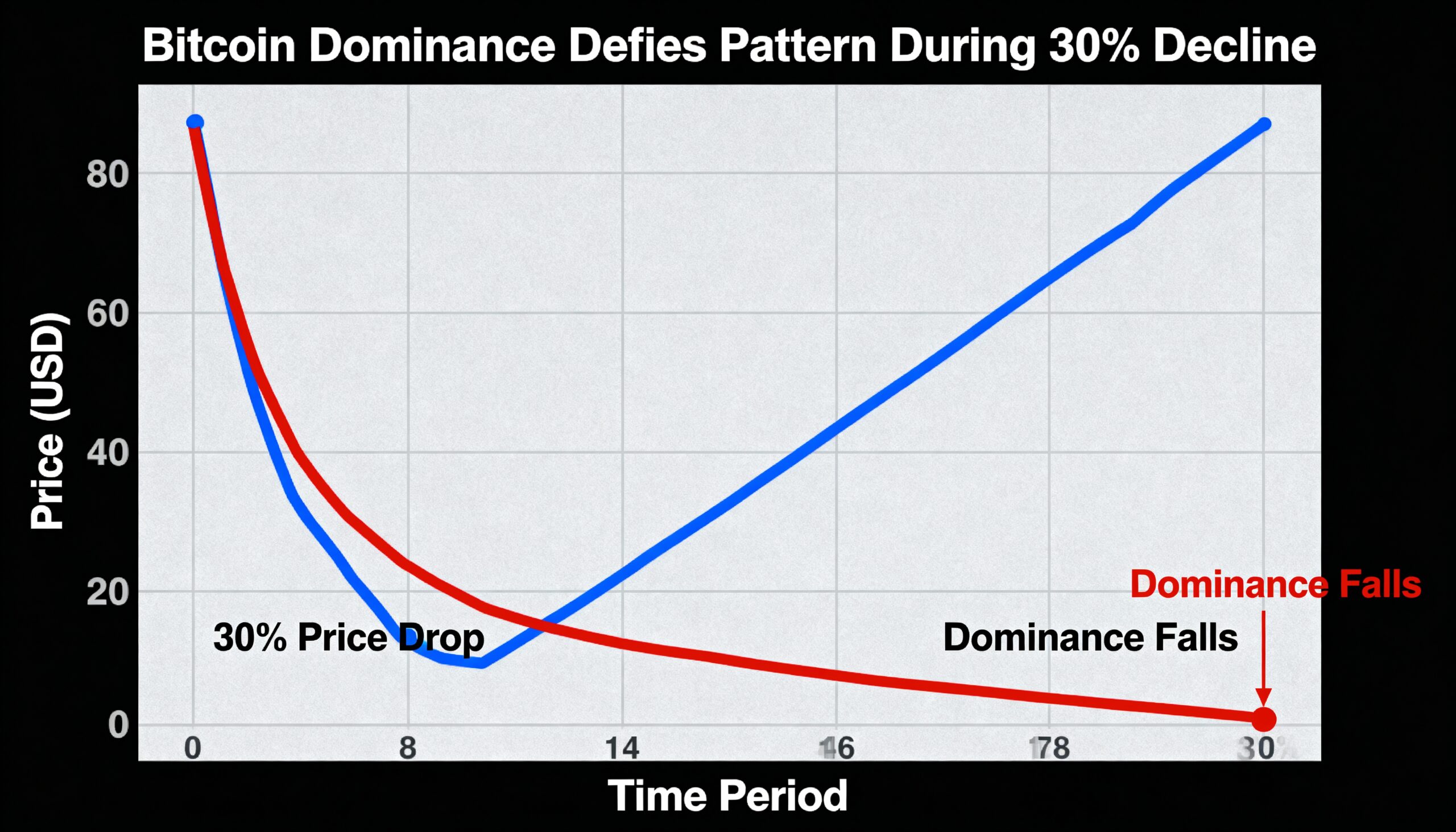
Bitcoin Suffers 36% Drop Amid Unusual Dominance Behavior and Market Deleveraging
Bitcoin (BTC) has now fallen 30% or more three times in the current cycle, but the latest correction stands out due to unusual behavior in BTC dominance. Unlike previous sell-offs, bitcoin’s market share fell rather than rose, signaling a deviation from typical risk-off patterns.
BTC dropped to nearly $80,000 last week, a 36% decline from October’s all-time high above $126,000. The pullback coincided with a broad market deleveraging, during which altcoins showed relative resilience.
Historically, bitcoin dominance—which measures BTC’s market capitalization relative to the total crypto market—tends to rise during sell-offs because riskier altcoins usually drop faster than bitcoin. This pattern was observed in October, but since early November, dominance declined. Even during BTC’s recent rally to $90,000, dominance fell from 61% to as low as 58.5%, recovering only slightly to just above 59%. In most risk-off scenarios, dominance typically climbs more decisively.
The contrast is clear when compared to prior corrections. During the February–May “tariff tantrum,” bitcoin dominance rose from 58% to 65%, while the August 2024 yen carry-trade unwind saw dominance climb from 56% to 60%. Despite a similar percentage drop this time, bitcoin’s market share rose much less, suggesting BTC was hit harder than the broader crypto market.
The speed of this correction also differs. The current drawdown took just 47 days from peak to trough, compared with 77 days during the tariff tantrum and 146 days in 2024, fueling heightened market fear.
Together, the rapid decline in price and unusual drop in bitcoin dominance indicate that this correction diverged from previous patterns in the cycle. As bitcoin approaches the end of its typical four-year cycle, the key question is whether falling dominance signals further weakness ahead.