cpeditor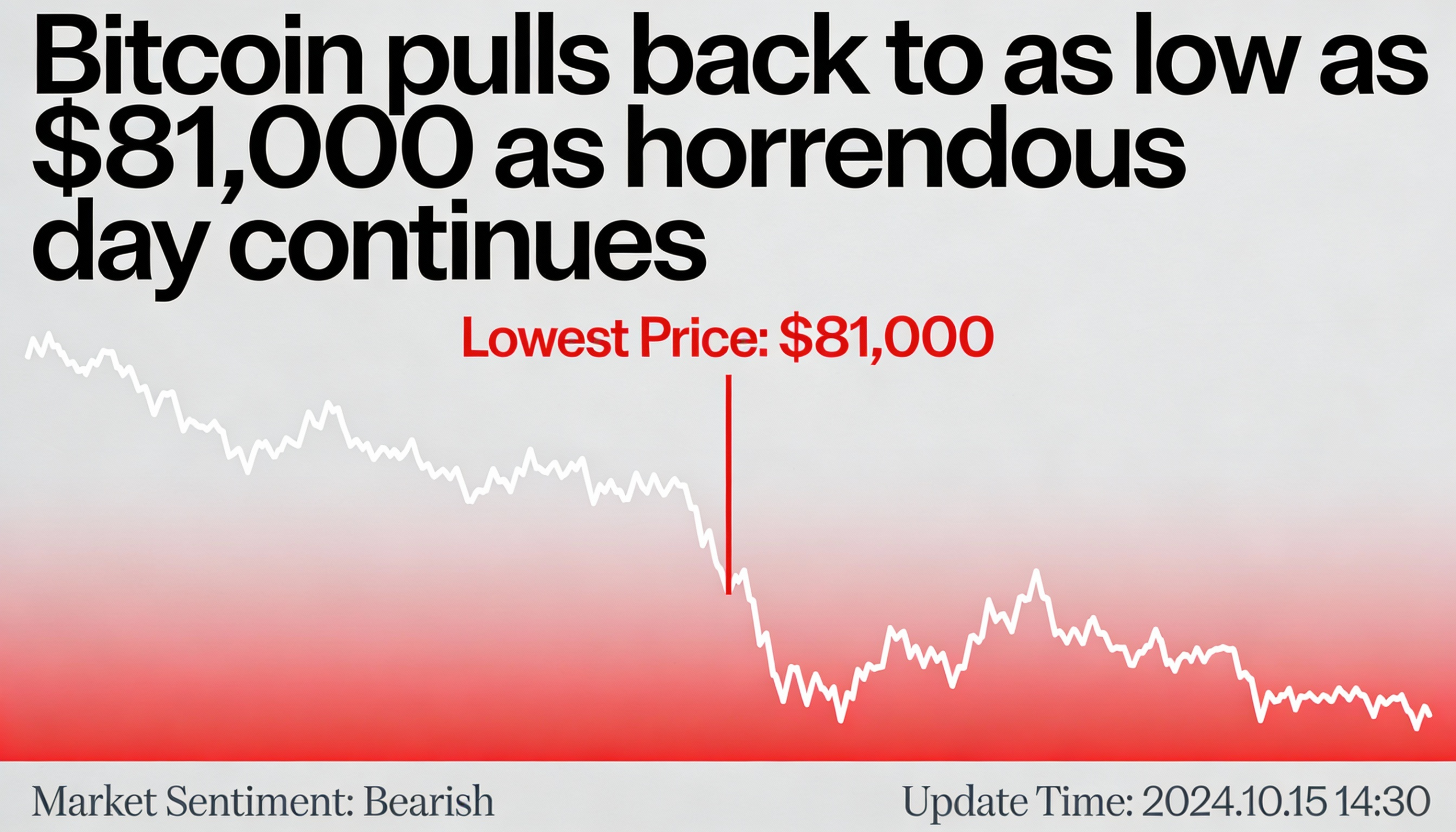
Bitcoin remained under heavy pressure late Thursday, sliding to a low near $81,000 during U.S. trading before stabilizing around $82,000.
The world’s largest cryptocurrency has now dropped nearly $10,000 over the past 24 hours, putting its November low just below $81,000 firmly in focus. The selloff sparked a wave of liquidations, with more than $777 million in crypto long positions erased in the past hour alone. Total liquidations over the last day have surged to about $1.75 billion, according to CoinGlass.
Losses were broad-based across the digital asset market, with major tokens falling between 7% and 9% over the same period. Ether was last trading near $2,700, BNB around $843, and XRP near $1.74.
From a technical standpoint, bitcoin is now hovering just above a key support level. A breakdown below the November low could pave the way for a move toward the next major support area near $75,000, a level last tested during the tariff-driven selloff in April 2025.
The downturn comes as markets react to reports that U.S. President Donald Trump is poised to nominate former Federal Reserve Board member Kevin Warsh as the next Fed chair. Trump said late Thursday that he would announce his pick Friday morning, following renewed criticism of Jerome Powell and the Federal Reserve for declining to cut interest rates.
Betting markets moved quickly on the news. Polymarket now shows an 87% chance that Warsh will be nominated, up sharply from 37% just two hours earlier. Before Warsh’s odds surged, BlackRock fixed-income chief Rick Rieder — seen by some as a more dovish option — had been viewed as a potential alternative.