cpeditor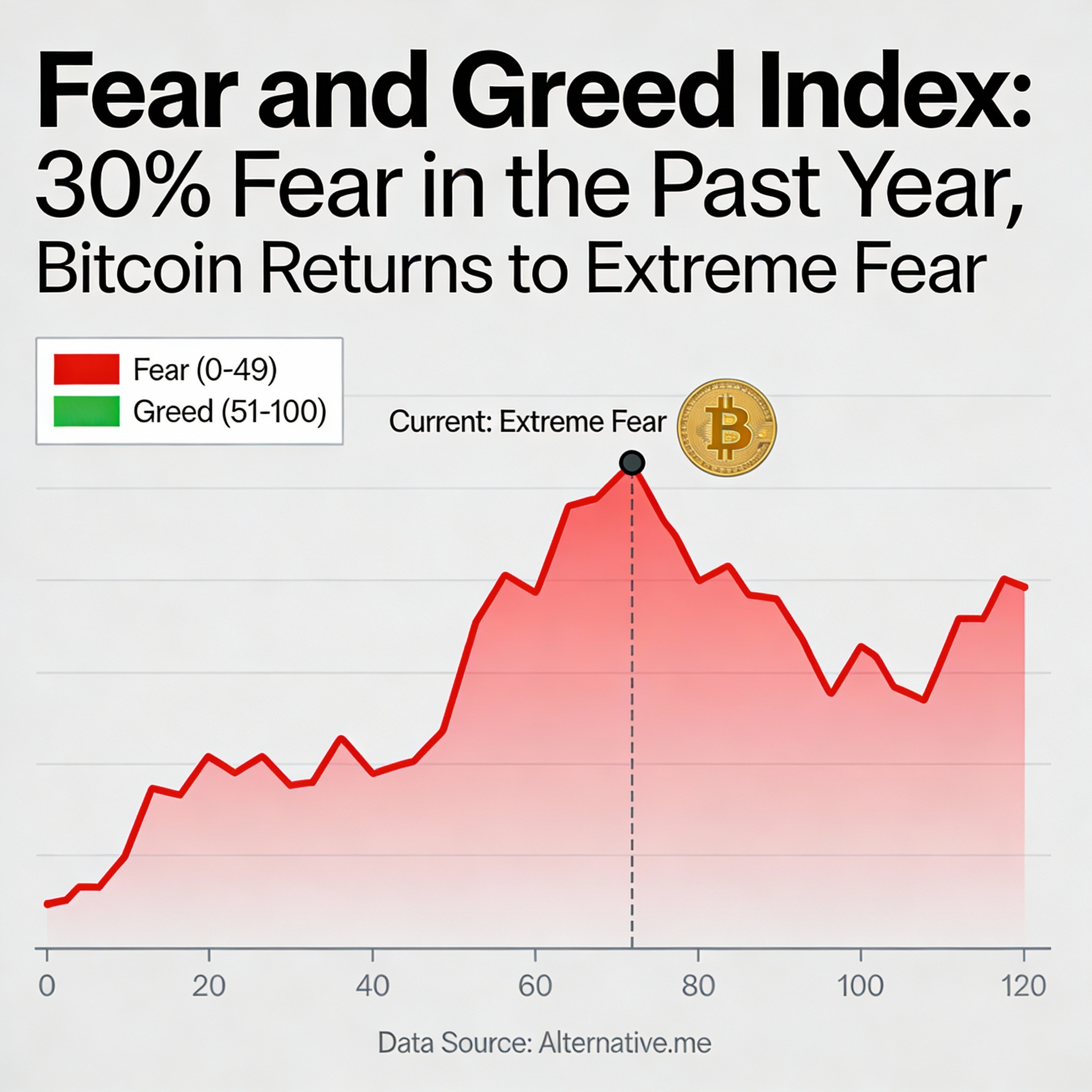
Bitcoin (BTC) is again struggling to maintain levels above $90,000, pushing market sentiment back into extreme fear territory.
Over the past 12 months, readings classified as fear or extreme fear have made up more than 30% of observations on the Crypto Fear and Greed Index. The gauge currently sits at 17, placing it firmly in the extreme fear zone.
Risk aversion has persisted since the October liquidation-driven selloff, when bitcoin fell roughly 36% from its all-time high. The broader crypto market has yet to mount a sustained recovery, with bitcoin still trading nearly 30% below its peak, keeping investor caution elevated.
A similar divergence is evident in U.S. equity markets. The CNN Fear and Greed Index is currently at 42—signaling fear—even as the S&P 500 trades near 6,827, just a few percentage points below record highs.
Across both equities and digital assets, investor psychology remains dominated by fear.
From a technical perspective, bitcoin entered a “death cross” in November, a pattern that occurs when the 50-day moving average drops below the 200-day moving average. In this case, the signal coincided with a local low near $80,000 on Nov. 21. Notably, every death cross during the current market cycle since 2023 has marked a meaningful local bottom, underscoring its role as a contrarian indicator in this cycle.