cpeditor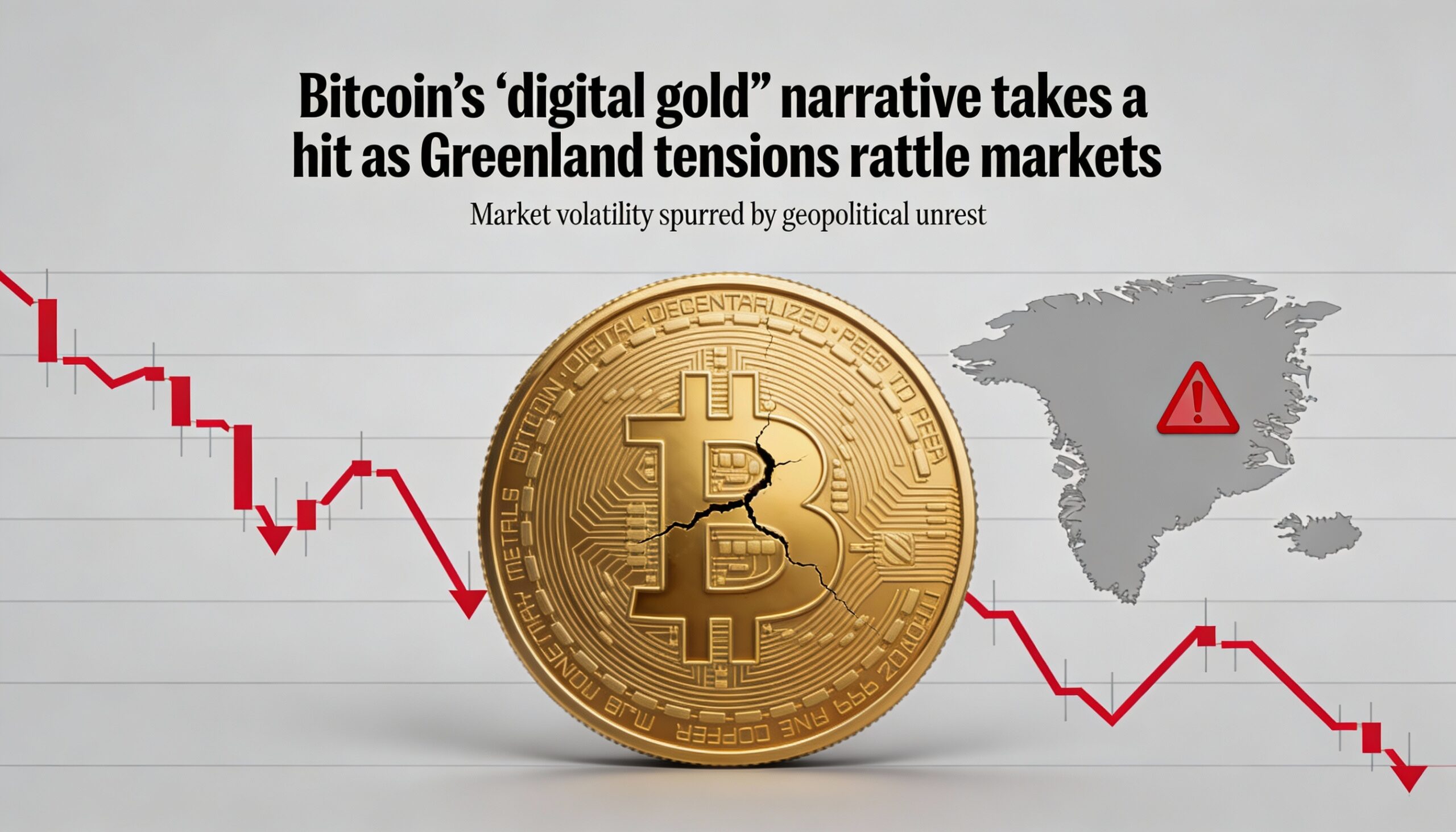
Bitcoin (BTC $90,427.02) saw its “digital gold” narrative take a hit on Monday as prices fell and traders scaled back expectations for a rapid rise to $100,000 by the end of January. The drop followed U.S. President Donald Trump’s threat of new tariffs on Denmark and seven other European nations.
Trump announced on Saturday that countries opposing his plan to acquire Greenland, an autonomous Danish territory near North America, would face a 10% tariff. The European Union pushed back, pledging to defend Greenland’s sovereignty and condemning the move as hostile to free markets and economic stability.
The geopolitical tension weighed on crypto sentiment. On the decentralized prediction platform Polymarket, the probability of bitcoin reaching $100,000 fell to 27%, down from nearly 50% on Friday and 72% on Jan. 15.
Bitcoin briefly dipped toward $92,000 early Monday, according to CoinDesk data. The selloff spread across crypto markets, with CoinDesk indexes for memecoins, metaverse, computing, DeFi, and culture & entertainment falling more than 7%. Asian and European stocks also declined, while gold surged to record highs, signaling a classic flight-to-safety move.
The selloff highlights bitcoin’s continued correlation with equities despite its “digital gold” image as a potential safe-haven asset.
“Bitcoin has fallen for a fifth consecutive day, retreating from November highs while struggling to hold above $92,000,” said Samer Hasn, senior market analyst at XS.com. He cited profit-taking and a broader risk-off shift amid rising U.S. political and trade tensions.
On the upside, bitcoin and ether spot ETFs drew $1.4 billion and $500 million in inflows last week, marking their strongest performance since October. Large holders, or “whales,” holding 1,000–10,000 BTC, increased activity by 28% over the past week, according to BGeometrics.
Analysts say sustaining these trends will be key for a meaningful rebound. Laser Digital noted that short-term price action will depend on U.S.–EU tariff developments, ongoing geopolitical tensions in the Middle East, and key events including the Davos forum, U.S. GDP and core personal consumption expenditures data, and a Supreme Court ruling on Trump’s tariffs.