cpeditor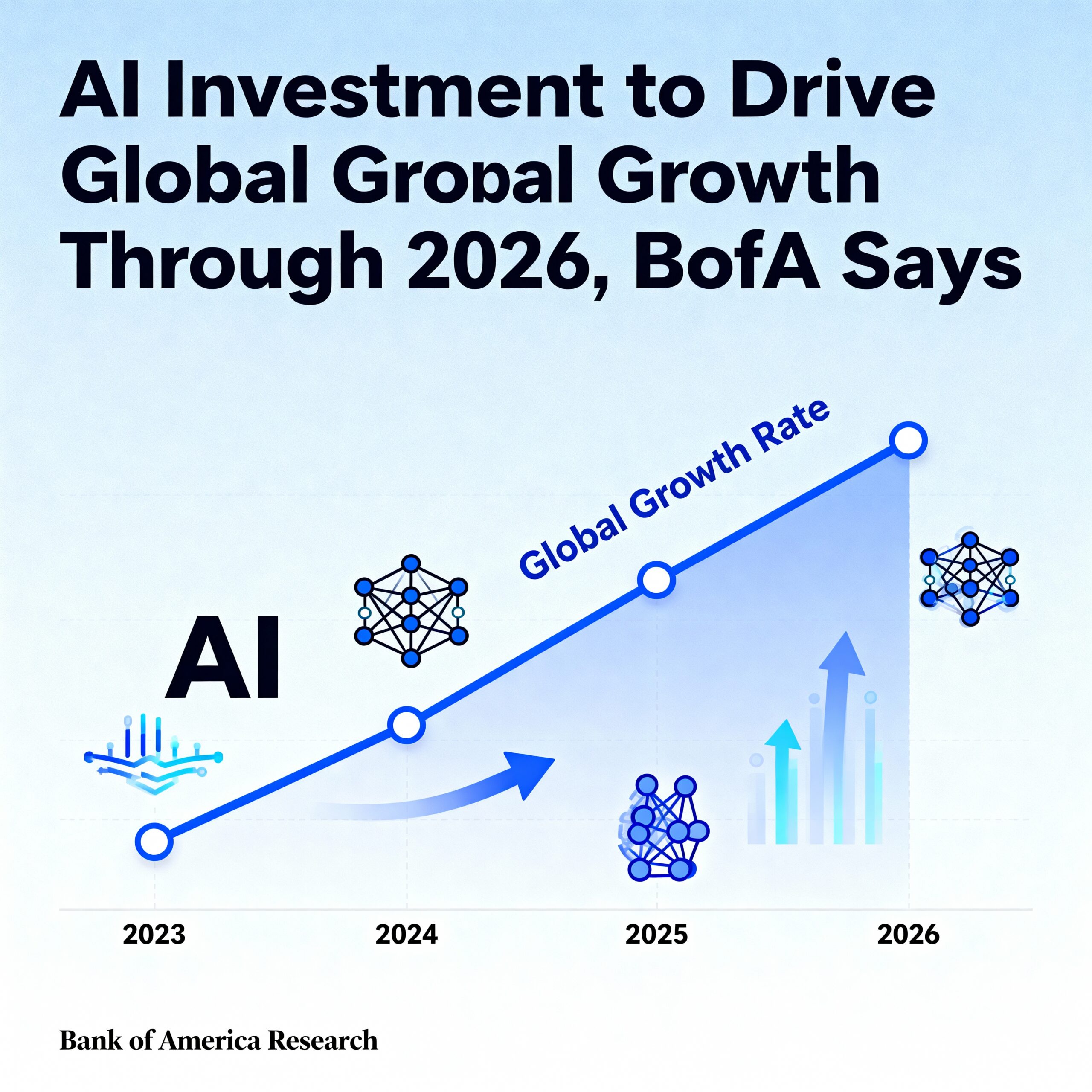
AI Investment Driving Global Growth — Bitcoin Miners Among Key Beneficiaries
Bank of America’s (BofA) 2026 market outlook highlights artificial intelligence (AI) as a major driver of global growth, though the bank cautions that volatility could rise as investors fully assess the technology’s economic impact.
The bank’s global research team projects U.S. GDP growth of 2.4% in 2026, above consensus, fueled by business investment, fiscal stimulus, and recent rate cuts. China is also expected to outperform, with growth forecasts of 4.7% in 2026 and 4.5% in 2027.
But AI spending stands out as the central force shaping these projections. According to Candace Browning, head of BofA global research, “Concerns about an imminent AI bubble are overstated.” Capital investment related to AI is expected to expand further next year, potentially sparking a new investment cycle and supporting continued productivity gains.
Bitcoin miners have been among the unexpected beneficiaries of this AI boom in 2025. Surging demand for high-performance computing has increased the value of mining infrastructure, with firms generating revenue not only from mining but also by leasing data center capacity to AI companies. Publicly traded miners have posted eye-catching gains: IREN (IREN) is up 337% year-to-date, Cipher Mining (CIFR) nearly 300%, and TeraWulf (WULF) 190%, despite bitcoin itself hovering around the $90,000 mark without a decisive breakout.
This reflects a broader shift in markets from a consumption-led recovery to one fueled by capital expenditure, infrastructure, and productivity. If sustained, the trend could extend into digital infrastructure, blockchain, and data monetization, areas where crypto projects already have a stake.
BofA does, however, warn of potential turbulence. As investors and policymakers better understand AI’s effects on inflation, labor markets, and supply chains, financial markets could experience sharp swings. The ongoing “K-shaped” recovery, where some sectors surge while others lag, adds complexity to this outlook. AI could amplify productivity in tech and finance while leaving slower-moving sectors behind, creating a two-speed economy that challenges traditional policy tools and increases the risk of sudden market revaluations.
Emerging markets could see near-term benefits, especially if the U.S. dollar weakens and oil prices remain low. Countries that skipped legacy infrastructure in favor of digital systems may gain opportunities from growing AI demand, particularly in alternative technologies.
Overall, the report strikes a cautiously optimistic tone. With two projected Fed rate cuts in 2026 and ongoing fiscal support, the economic backdrop remains generally supportive. Copper prices are rising amid supply constraints, and S&P earnings are expected to grow 14%, suggesting markets are primed for change.
Whether AI emerges as a productivity engine or a source of instability may become one of the defining economic questions of the next year. In that scenario, crypto—particularly infrastructure-focused projects—could play a supporting role, even if it’s not yet at the forefront of the conversation.