cpeditor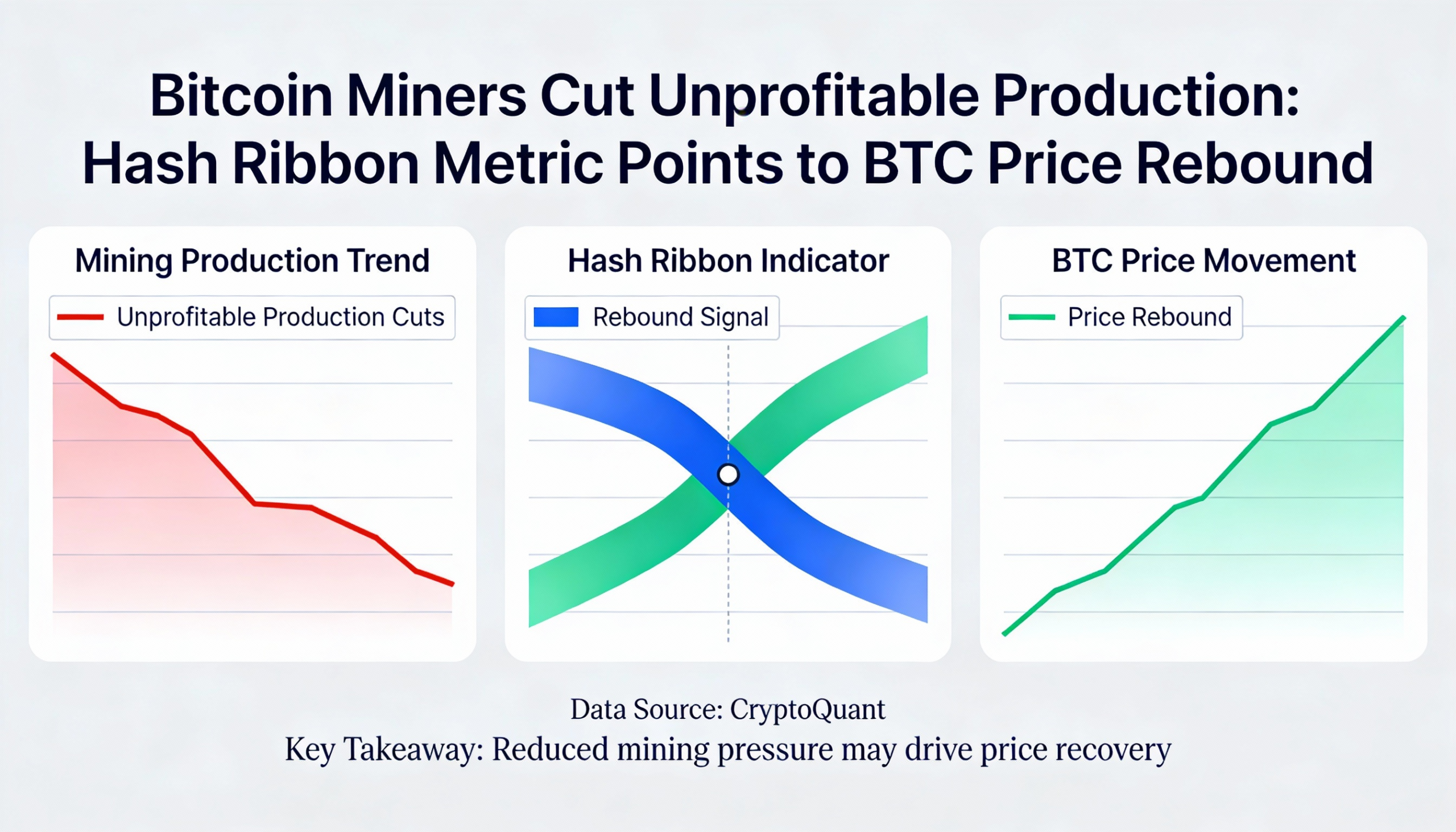
U.S. storm cuts bitcoin hashrate, reviving bullish Hash Ribbon signal
A weekend storm in the U.S. disrupted bitcoin (BTC $89,322.67) mining, raising operational costs and prompting miners to reduce computing power. The slowdown has put the Hash Ribbon indicator back in focus—a historically bullish on-chain signal that often marks long-term buying opportunities during miner capitulation.
The Hash Ribbon tracks the 30-day and 60-day moving averages of bitcoin’s hashrate on Glassnode. Capitulation occurs when the short-term average dips below the long-term average (light red), while recovery is flagged once the 30-day average rises above the 60-day (dark red). Historically, when this recovery aligns with a shift from negative to positive price momentum (dark red to white), it has coincided with major BTC rallies.
The storm caused the network hashrate to fall roughly 20%, from about 1.2 zettahash per second (ZH/s) to approximately 950 exahashes per second (EH/s). The next difficulty adjustment is projected to drop around 17%, the largest since July 2021, when China banned bitcoin mining.
The Hash Ribbon last showed capitulation in late November, when bitcoin bottomed near $80,000. BTC now trades around $88,000. Comparable patterns have preceded strong rallies: in mid-2024, bitcoin bottomed near $49,000 after a Hash Ribbon capitulation before climbing to $100,000 by January 2025. During the 2022 FTX collapse, BTC fell to roughly $15,000 amid miner capitulation before rebounding to around $22,000 once the indicator normalized.
The key question is whether the pattern will repeat. If hashrate and the Hash Ribbon recover, bitcoin could enter a renewed expansionary phase, presenting potential long-term buying opportunities.