cpeditor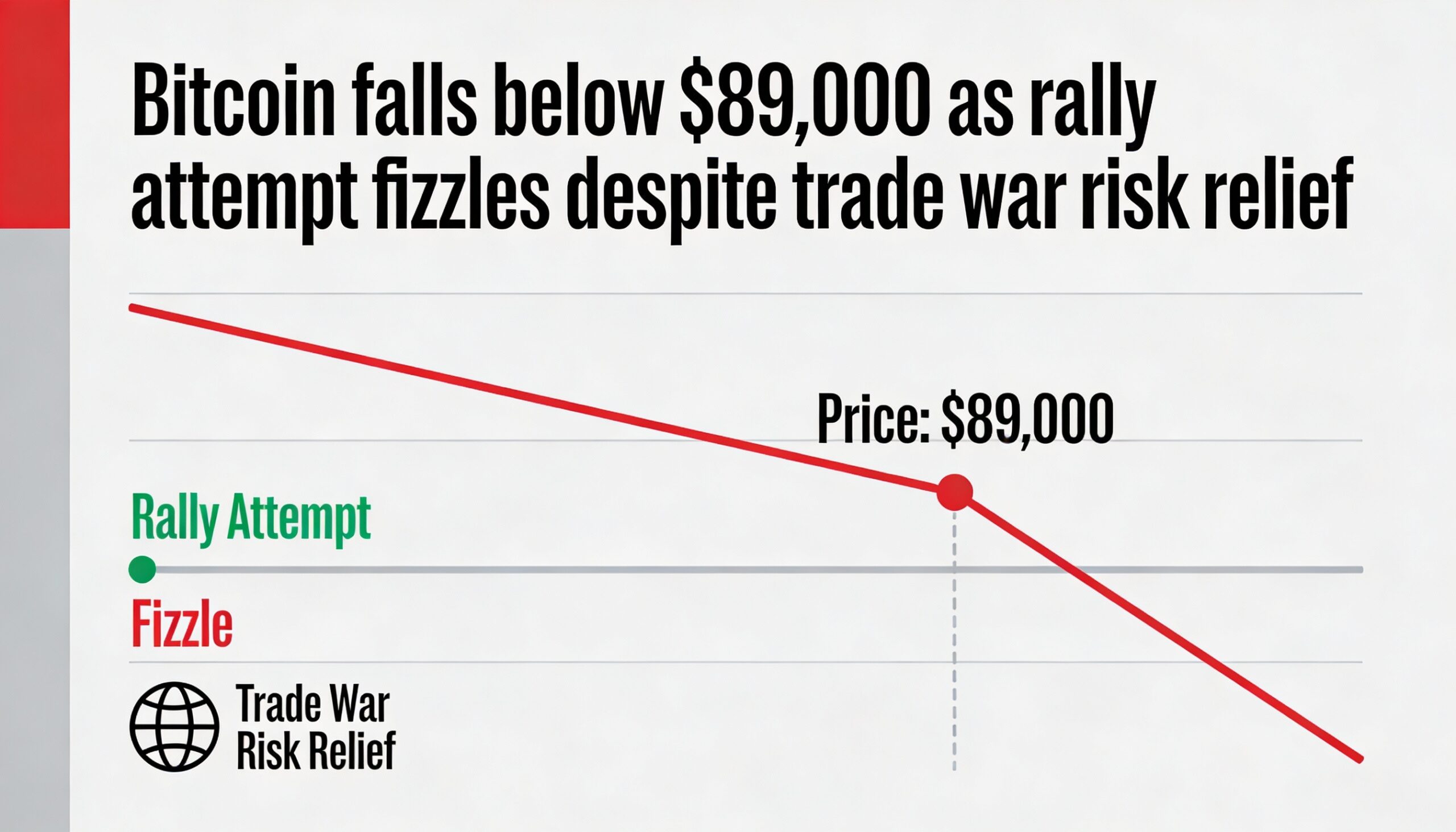
Bitcoin (BTC) at $89,205.79 and other cryptocurrencies were unable to sustain gains from Wednesday’s Greenland-related relief rally.
After briefly climbing above $90,000 over the past 18 hours, BTC retreated to around $88,500, down 1.5% over the past 24 hours. Ether (ETH) also slipped below $3,000, falling 2.5% to $2,955.52.
Crypto-focused stocks largely fell, even as broader equities rose, with the Nasdaq gaining 0.7%. Shares of Bullish (BLSH), Hut 8 (HUT), Galaxy Digital (GLXY), and XXI (XXI) declined between 2% and 4%.
“The consensus view is that crypto markets remain bearish until roughly September,” said Kaledora Fontana, CEO of Ostium, a platform for trading digitized commodities perpetual swaps. “Rate cuts aren’t expected until after a Fed Chair transition, and it takes time for policy shifts to reach risk-on assets. Meaningful upside will likely emerge only after these effects work through the system.”
Despite bitcoin’s struggle to hold $90,000 and its modest year-to-date gains, there are signs of risk appetite. This is reflected in the MicroStrategy (MSTR) to BlackRock iShares Bitcoin Trust (IBIT) ratio.
On a day when bitcoin traded lower, the MSTR-to-IBIT ratio remained slightly positive and is up roughly 5% year-to-date, indicating continued interest in what MicroStrategy Executive Chairman Michael Saylor calls “amplified bitcoin.” The ratio also appears to have broken a long-term downward trend in place since July.