cpeditor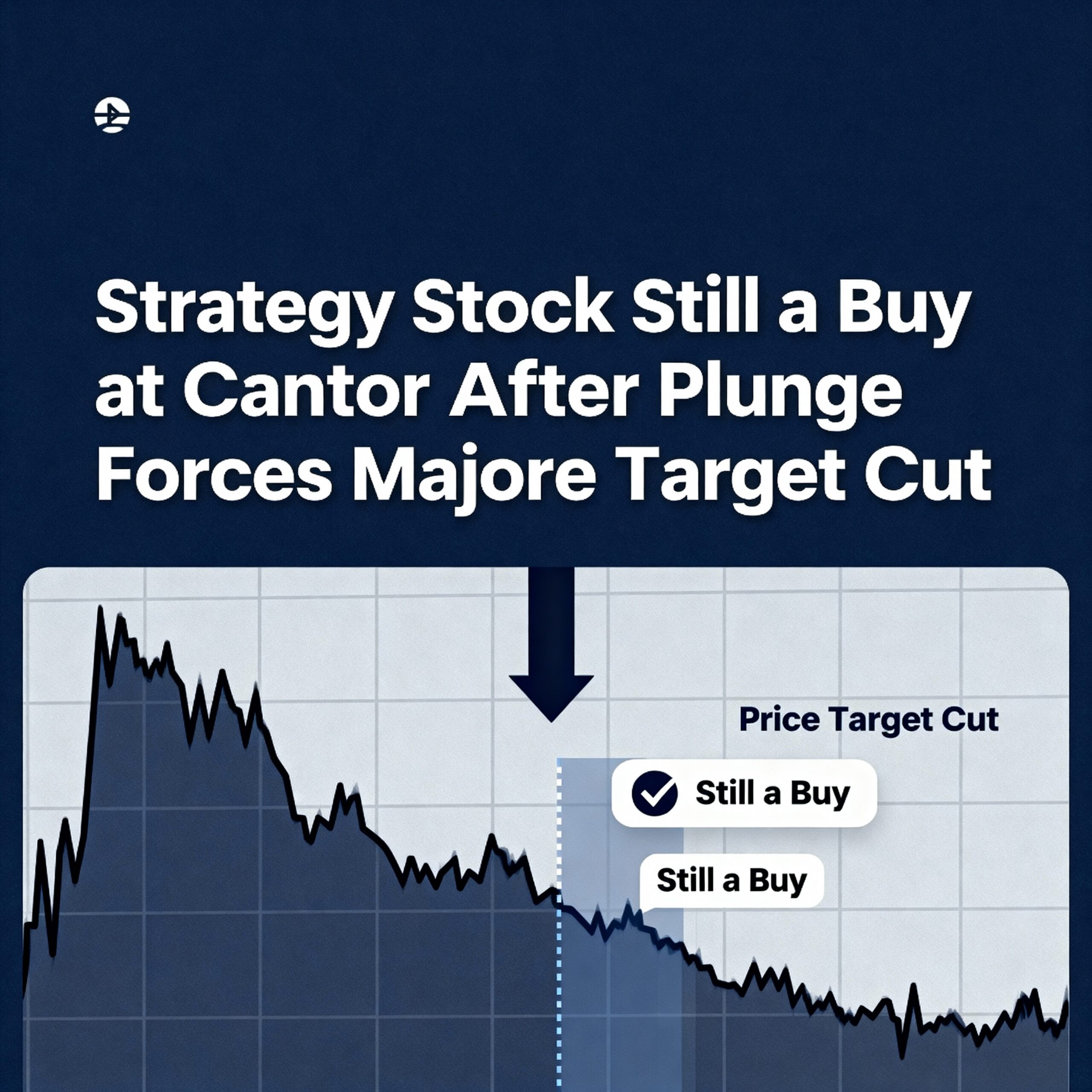
Cantor Fitzgerald analyst Brett Knoblauch has sharply reduced his 12-month price target for Strategy (MSTR) to $229 from $560, citing a weakening environment for bitcoin-linked capital raising and a drop in the company’s adjusted net asset value multiple. Despite the major cut, he maintained an overweight rating, noting that the new target still implies nearly 30% upside from Strategy’s current share price near $180.
Knoblauch said the compression in Strategy’s fully adjusted market net asset value (mNAV) multiple—now at 1.18x, down dramatically from prior elevated levels—means the company can no longer reliably issue stock at a premium. That undermines the long-standing flywheel at the core of Strategy’s business model: raising funds through common equity, preferred shares, and convertible debt and using the proceeds to purchase additional bitcoin.
The approach has delivered staggering returns since Strategy’s initial bitcoin purchase in 2020, but investor willingness to pay a premium for the firm’s bitcoin exposure has faded over the past year. Combined with bitcoin’s weak price action, Strategy’s stock has fallen roughly 70% from its late-2024 peak.
The lower mNAV multiple also restricts CEO Michael Saylor’s ability to raise capital without significant dilution. Knoblauch dramatically lowered his estimate for Strategy’s annual capital markets proceeds to $7.8 billion, down from $22.5 billion. As a result, his valuation for Strategy’s “treasury operations”—its potential upside from raising capital and buying bitcoin—collapsed from $364 per share to just $74.
Still, Knoblauch emphasized he has not lost faith in the company. The reset, he wrote, is “a function of both falling bitcoin prices and lower multiples.” His overweight rating signals a view that the model could regain momentum if bitcoin prices recover and investors once again seek leveraged exposure through Strategy.
A more upbeat assessment came from Mizuho, which highlighted Strategy’s strengthened near-term liquidity following its $1.44 billion equity raise. Analysts Dan Dolev and Alexander Jenkins noted the company now holds enough cash to cover 21 months of preferred dividend payments—giving it ample flexibility to continue accumulating bitcoin without being forced into sales.
At a recent Mizuho event, CFO Andrew Kang laid out a cautious capital-raising roadmap. He said Strategy has no intention of refinancing its convertible debt ahead of the first maturity in 2028 and will instead rely primarily on preferred equity to raise funds while preserving its bitcoin stack.
Kang also reiterated that the company will resume issuing new common equity only once its mNAV rises above 1.0, which would indicate the market is again valuing Strategy’s bitcoin exposure at a premium. If that threshold is not met and capital becomes constrained, selling bitcoin could be considered—but strictly as a last resort.
Analysts say the company appears to be reverting to a strategy similar to its approach in 2022, when it paused bitcoin purchases during a downturn and resumed once market conditions improved. Remaining patient and liquid, they argue, could position Strategy to navigate the current slump and re-accelerate once the macro backdrop turns more favorable.