cpeditor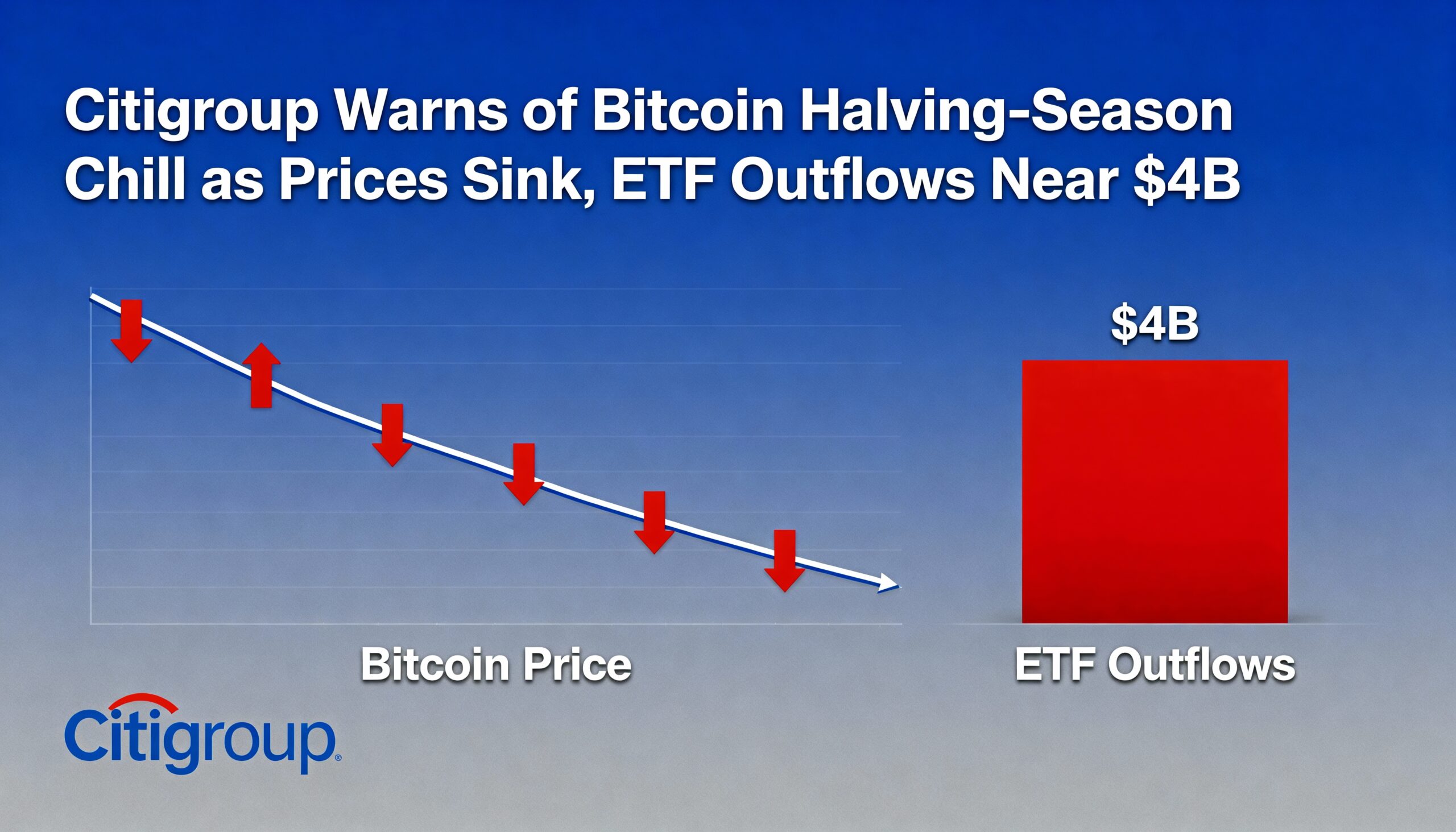
Citigroup says bitcoin is slipping deeper into a classic second-year post-halving cooldown, with shaken sentiment and accelerating ETF outflows pushing the market closer to the bank’s bear-case trajectory.
In a report published Friday, the bank said the October futures liquidation severely damaged confidence, triggering almost $4 billion in outflows from U.S. spot bitcoin ETFs and wiping out the asset’s year-to-date gains. With inflows drying up, bitcoin has drifted back toward the average cost basis of ETF buyers and is now behaving more like Citi’s downside scenario than its base case.
The bank also noted growing anxiety among long-term holders. On-chain data shows older coins beginning to move and several large wallets reducing exposure—signs of stress that typically appear during the weaker second year of the halving cycle.
Risk appetite has collapsed since the early-October flash crash, which Citi links to broader macro uncertainty. Analyst Alex Saunders wrote that bitcoin is now underperforming its usual macro drivers and lacks a short-term catalyst unless equities recover or progress is made on U.S. digital-asset legislation.
According to Saunders, long-term conviction hasn’t vanished, but veteran holders are more defensive, and new investors see little incentive to enter while bitcoin remains below key technical thresholds. The bank originally projected roughly $7.5 billion in ETF inflows for the year, but persistent outflows now place bitcoin nearer Citi’s $82,000 bear-case estimate.
Citigroup identifies $80,000 as the critical line for ETF investors. A regulatory breakthrough in 2025 could revive inflows, the report said, prompting the bank to keep its 12-month forecasts unchanged: $25 billion in ETF flows and a price target of $181,000.
Bitcoin was trading around $86,500 at the time of publication.