cpeditor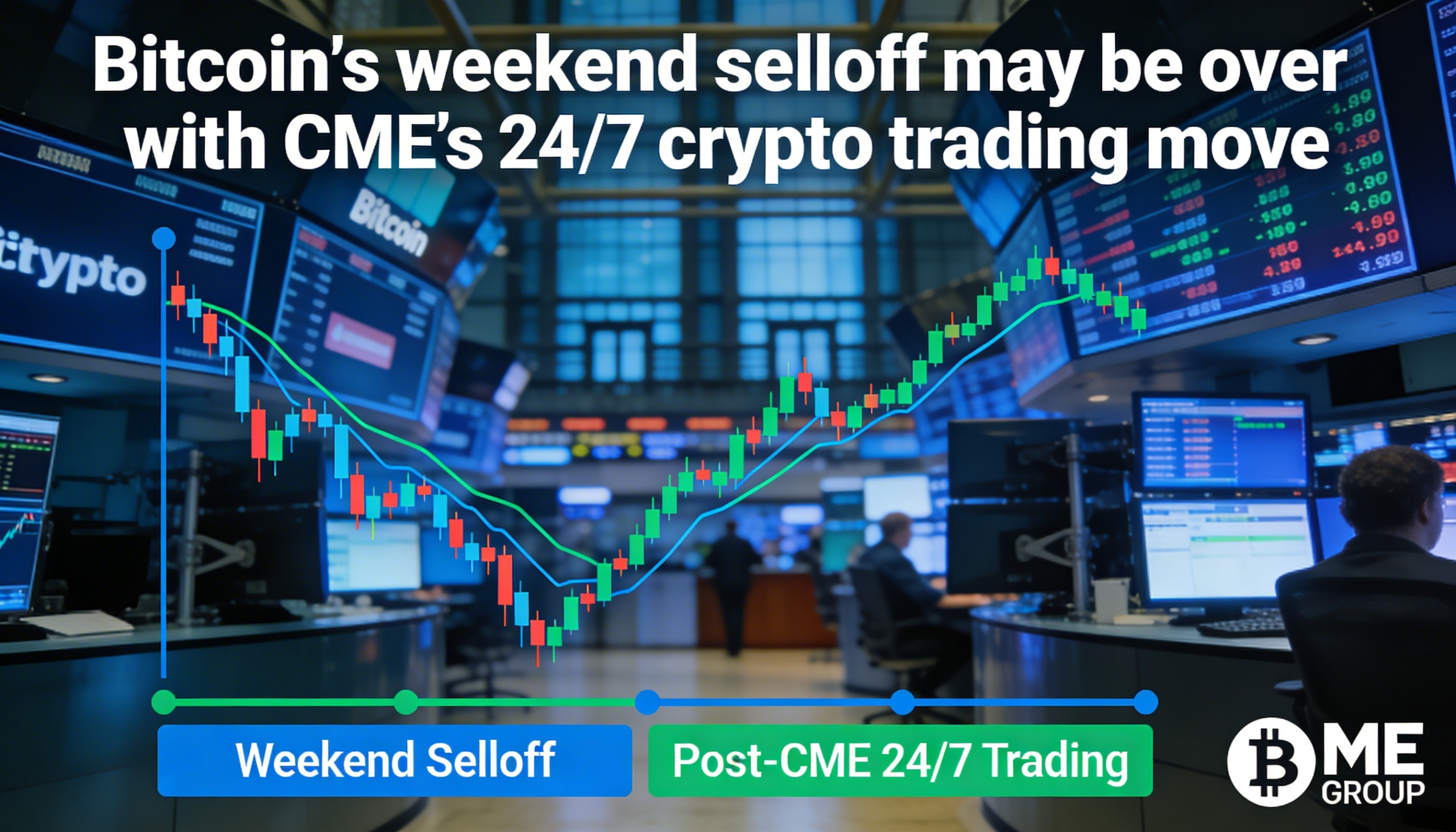
The U.S. derivatives exchange CME Group is set to introduce 24/7 trading for its cryptocurrency futures and options, a move analysts say could significantly alter weekend market dynamics across digital assets.
Beginning May 29, CME will allow continuous trading of its crypto derivatives suite, removing the long-standing halt between Friday evening and Sunday. The development marks another step in bridging traditional financial infrastructure with crypto’s always-on trading environment.
The exchange said the decision reflects growing demand from institutional investors seeking uninterrupted risk management tools. While spot crypto markets never close, regulated futures venues have historically operated on fixed schedules, leaving professional traders exposed to weekend volatility without the ability to hedge positions.
Tim McCourt, CME’s global head of equities and FX, said crypto derivatives activity has expanded rapidly, with notional volumes reaching $3 trillion last year. He described client demand for digital asset risk management as being at record levels.
Reducing weekend distortions
The shift is expected to address the so-called “CME gap” — price differences that emerge when futures close on Friday but spot markets continue trading through the weekend.
These gaps have often resulted in sharp reopen moves, as institutional investors were unable to adjust positions during periods of heightened volatility. Thin liquidity conditions on weekends have also contributed to outsized swings and liquidation cascades.
Bobby Ong, co-founder of CoinGecko, noted that some of the market’s most severe price moves have historically occurred when regulated derivatives venues were offline. Continuous access, he suggested, acknowledges the structural reality of crypto’s 24/7 market.
Toward smoother price action
Adam Haeems, head of asset management at Tesseract Group, said the move helps eliminate one of the last disconnects between crypto-native exchanges and traditional derivatives markets.
Allowing institutional flows to remain active over weekends could narrow spreads, reduce hedging costs, and compress volatility spikes that have been amplified by limited participation. However, he cautioned that simply keeping markets open does not guarantee deep liquidity. Institutional desks may not deploy the same capital or staffing levels outside regular business hours, meaning improvements could unfold gradually.
Retail traders may also experience fewer abrupt Monday price gaps — a pattern that has historically attracted significant attention among technical analysts. With futures trading continuously, those signals may diminish over time.
Expanding bitcoin’s macro role
Maxime Seiler, CEO of STS Digital, said the expansion provides institutions with a regulated venue that avoids some of the forced liquidation mechanisms common on crypto-native platforms.
He added that uninterrupted derivatives access could strengthen bitcoin’s function as a macro risk barometer. With equities, bonds, and other traditional markets closed on weekends, bitcoin may increasingly reflect global developments in real time.
By aligning regulated derivatives trading with crypto’s round-the-clock nature, CME’s 24/7 launch could gradually reshape liquidity patterns, volatility trends, and the broader process of price discovery beyond conventional market hours.