cpeditor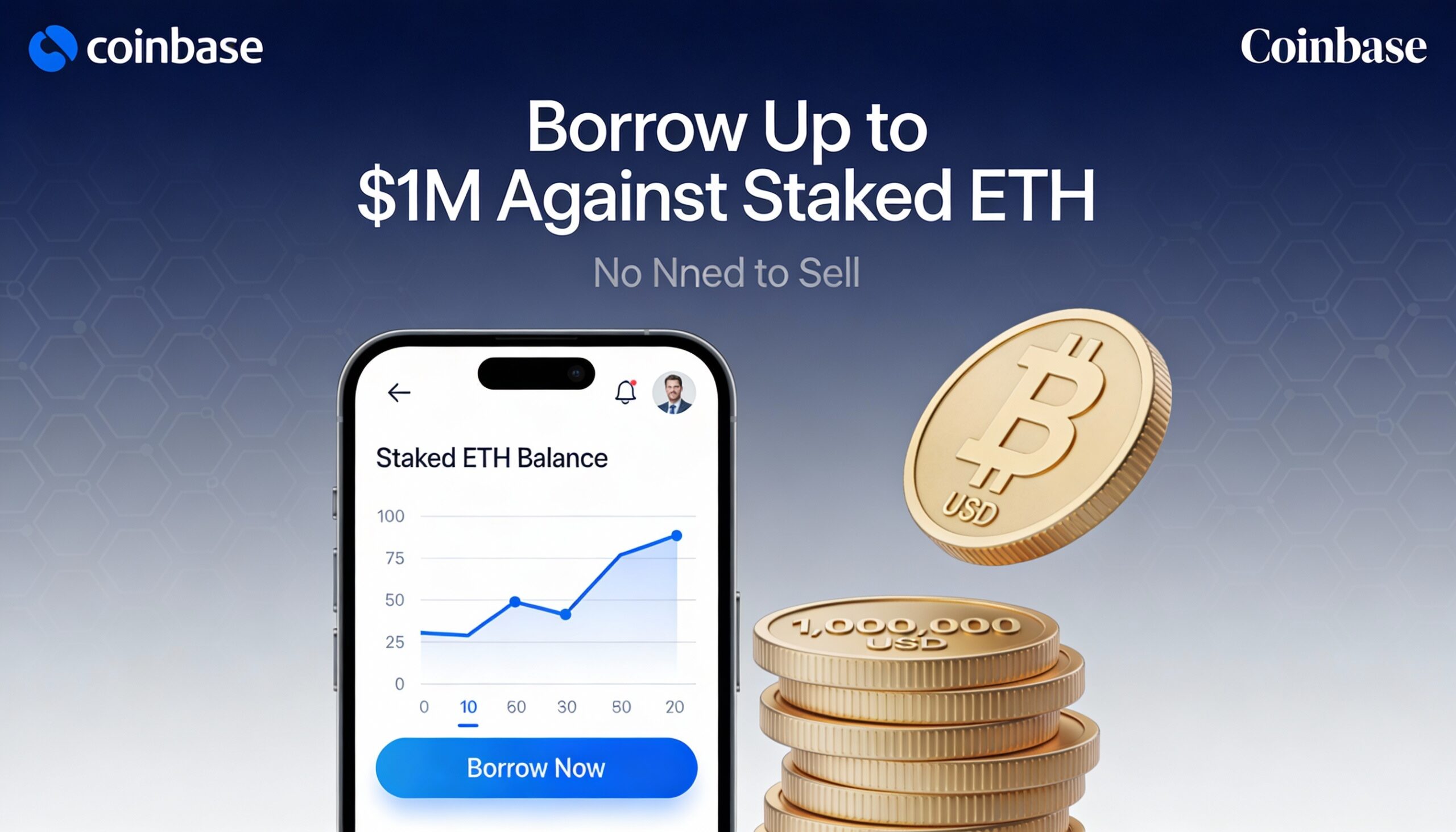
Coinbase has launched a new borrowing feature that lets U.S. users access up to $1 million in liquidity by using cbETH — its tokenized version of staked ether — as collateral. The product allows investors to raise cash without selling or unstaking their ETH.
Available now to eligible U.S. customers, excluding New York, the feature enables users to borrow USDC against cbETH held on Coinbase and convert it into dollars directly on the platform.
The move reflects rising demand for liquidity solutions tied to staked assets, as ether staking increasingly shifts from short-term yield strategies to long-term holdings.
Loans are powered by Morpho, an onchain lending protocol that supports overcollateralized borrowing via smart contracts. Rates are variable and market-driven, and borrowers can repay at any time with no fixed schedule.
Collateral management is the primary risk. Coinbase has advised borrowers to maintain a loan-to-value ratio below 86% to avoid automatic liquidation, a threshold that could be tested during volatile market swings.
By enabling cbETH as collateral, Coinbase allows users to retain exposure to ETH price movements and staking rewards while accessing liquidity for portfolio adjustments, large purchases, or other expenses.
The rollout comes as competition intensifies among exchanges and DeFi platforms offering capital-efficient borrowing tied to staked assets. Coinbase said the feature is part of a broader effort to make crypto holdings more flexible without forcing sales in volatile markets.