cpeditor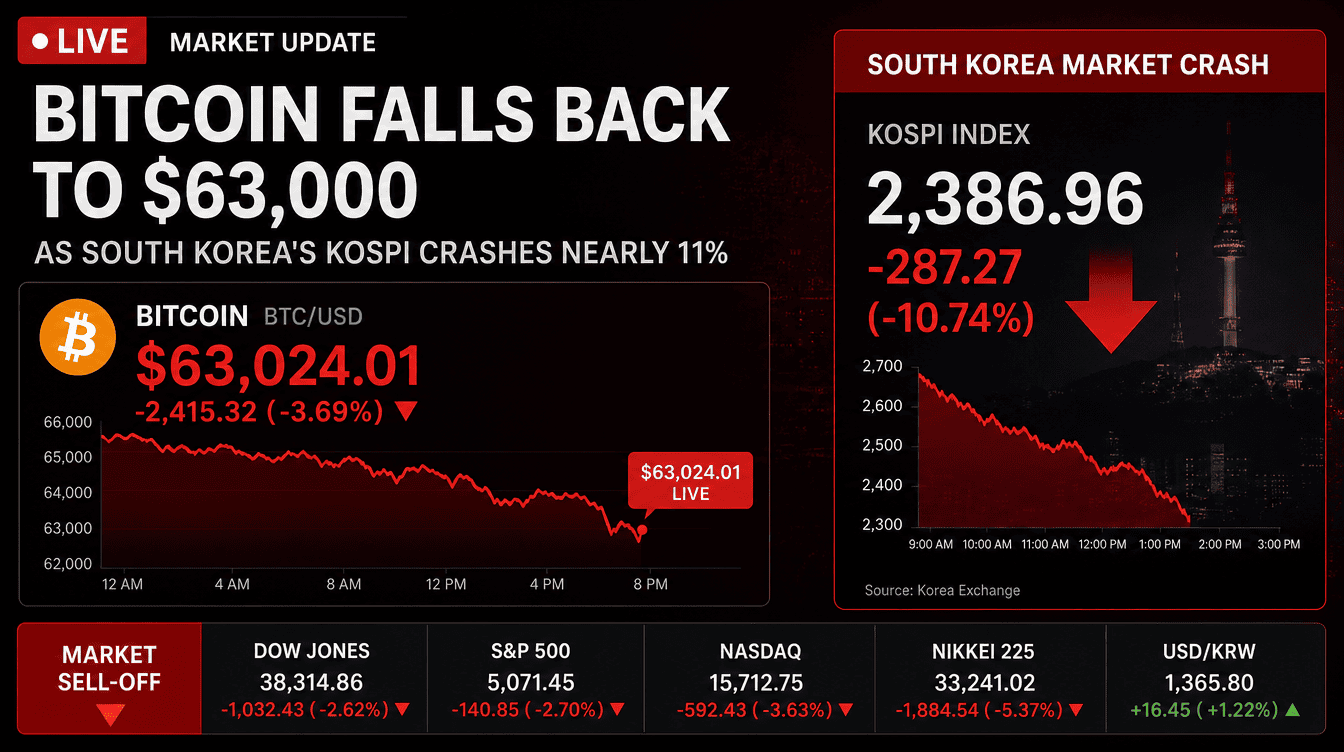
Markets entered a broad risk-off phase, but Bitcoin remained relatively resilient compared with major stock indexes such as the Nasdaq and several Asian equity benchmarks.
Ionic Digital makes Nasdaq debut following Celsius bankruptcy
Ionic Digital, the Bitcoin mining company created from the remaining assets of the bankrupt Celsius network and former CEO Alex Mashinsky’s crypto empire, is set to begin trading on the Nasdaq through a direct listing with a reference price of $53.
The company is highlighting its role as a digital infrastructure provider focused on supporting the growing energy requirements of artificial intelligence and high-performance computing, reflecting the current market shift toward AI-related infrastructure.
Although Ionic is expanding its focus beyond traditional mining, it continues to operate Bitcoin mining facilities and maintains a small BTC reserve.
Galaxy Digital strengthens data center expansion in Texas
Galaxy Digital, founded by Mike Novogratz, announced the acquisition of 500 acres of land in McGregor, Texas, along with a development agreement aimed at expanding its data center operations.
The first stage of the project is expected to provide 74 megawatts of capacity.
Novogratz said the expansion aligns with Galaxy’s broader multi-campus strategy, emphasizing that demand for computing power is undergoing a major structural transformation and the company is building infrastructure to meet future needs.
Galaxy shares fell 3% in pre-market trading as continued weakness in AI-related investments pressured data center companies.
Bitcoin slides toward $63,000 as South Korean stocks tumble
Bitcoin moved lower toward $63,000 as ongoing weakness in semiconductor stocks dragged Asian markets down, with South Korean giants Samsung and SK Hynix among the biggest contributors to the Kospi’s decline.
The Kospi index plunged 10.8% overnight, extending its losses to 34% from its recent peak one month ago.
The chip sector was also hit by renewed concerns over China’s semiconductor ambitions. Reports suggested a Beijing-backed company has started manufacturing deep ultraviolet (DUV) lithography machines similar to those produced by Dutch equipment maker ASML. ASML shares dropped 5.8% on Monday and fell another 4.7% in pre-market trading.
Although cryptocurrencies initially showed limited reaction to weakness in technology stocks, Bitcoin eventually moved lower alongside Asian equities. BTC declined more than 2% over the past day, trading near $63,400.
Other major digital assets also faced selling pressure, with Ethereum, XRP, and Solana falling between 3% and 4%.
Market participants are now watching the Federal Reserve’s two-day policy meeting, with uncertainty remaining over whether officials will deliver an interest rate hike on Wednesday.
Bitfinex identifies $68,500 as Bitcoin’s key breakout level
Bitfinex analysts said Bitcoin’s short-term holder cost basis near $68,500 is the most important level to monitor ahead of the Fed’s rate decision.
The level represents the average entry price of BTC held by investors who have owned their coins for less than 155 days and could act as a major resistance point for the next market trend.
Analysts warned that Bitcoin may encounter selling pressure around $68,500, as some holders could take profits or exit positions once they reach breakeven.
However, a confirmed move above that threshold could create room for a larger rally, with volume analysis pointing toward the next major resistance zone near $84,000. The setup resembles Bitcoin’s strong advance from approximately $67,000 to above $80,000 during the mid-May rally.
Bitcoin recovers from lows as broader markets remain under pressure
Bitcoin regained some ground after reaching its lowest point during the Asian trading session, despite continued weakness across global risk assets.
BTC was trading near $63,500 after recovering from an earlier low of $63,065, according to CoinDesk data. The cryptocurrency remained slightly lower since the start of the day and was down nearly 3% over the previous 24 hours.
Meanwhile, Nasdaq futures fell to their lowest level since May, reaching around 27,930 points. The contracts were down 1.2% for the week after touching nearly 31,000 in June. Nvidia shares, which have played a major role in the AI-driven market rally, dropped almost 5% on Monday.
South Korea’s Kospi led the regional market decline with a 10% drop, while other Asian indexes, including Japan’s Nikkei, also declined as investors reduced exposure to risk assets.