cpeditor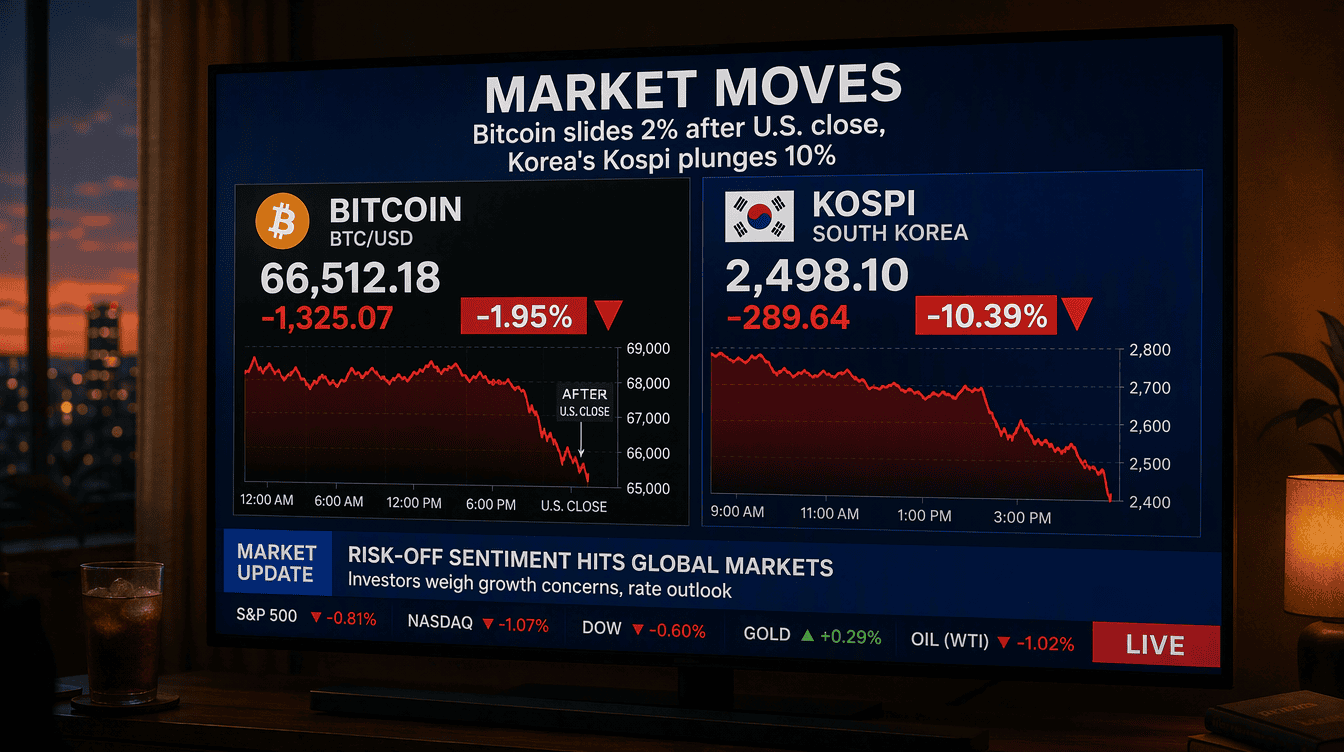
Bitcoin faced renewed downside pressure after Monday’s U.S. market close as weakness in South Korea’s stock market triggered a broader risk-off move across global markets and cryptocurrencies.
BTC declined from nearly $65,000 to about $63,200, a drop of roughly 2.7%. The decline affected the wider crypto market, with major assets including Ethereum (ETH), XRP, and Solana (SOL) also moving lower. The pullback reversed the earlier strength seen on Monday, when digital assets had remained relatively stable despite a sharp selloff in Nvidia shares.
Market sentiment was further weighed down by uncertainty around the Senate’s CLARITY Act. Lawmakers have shifted their immediate attention toward a Russia sanctions bill, pushing back the timeline for the closely watched crypto legislation. A vote now appears unlikely before next week, leaving limited time before the Senate’s August 8 recess. The delay adds uncertainty for an industry expecting the bill to deliver clearer regulatory guidelines and potentially encourage greater institutional participation.
Asian equities came under heavy pressure, with South Korea’s Kospi index plunging 10% to its lowest level since mid-April. The benchmark has now fallen 25% from its mid-June peak, driven by significant losses in major semiconductor firms such as Samsung and SK Hynix. Analysts highlighted weakening demand for chip stocks as a key factor behind the broader market decline.
Bitcoin has often reacted alongside equity markets during periods of heightened uncertainty, but the connection is not always consistent.
Bitfinex analysts said BTC tends to move in line with stocks when market stress is tied to broader macroeconomic concerns, especially interest rate expectations. However, Bitcoin can separate from equities when weakness is caused by sector-specific issues. They noted that current worries surrounding technology earnings and capital expenditure are more focused on the equity sector itself, meaning the perceived BTC-stock correlation may be stronger than the data suggests.
Investors are now watching a series of major events that could drive volatility across financial markets. The Federal Reserve’s interest rate decision is scheduled for Wednesday, followed by important economic indicators on Thursday.
Nexo analyst Dessislava Ianeva said the Fed announcement, core PCE inflation data, and GDP figures make the Wednesday-to-Thursday period the most important part of the week for potential changes in rate expectations and market positioning.