cpeditor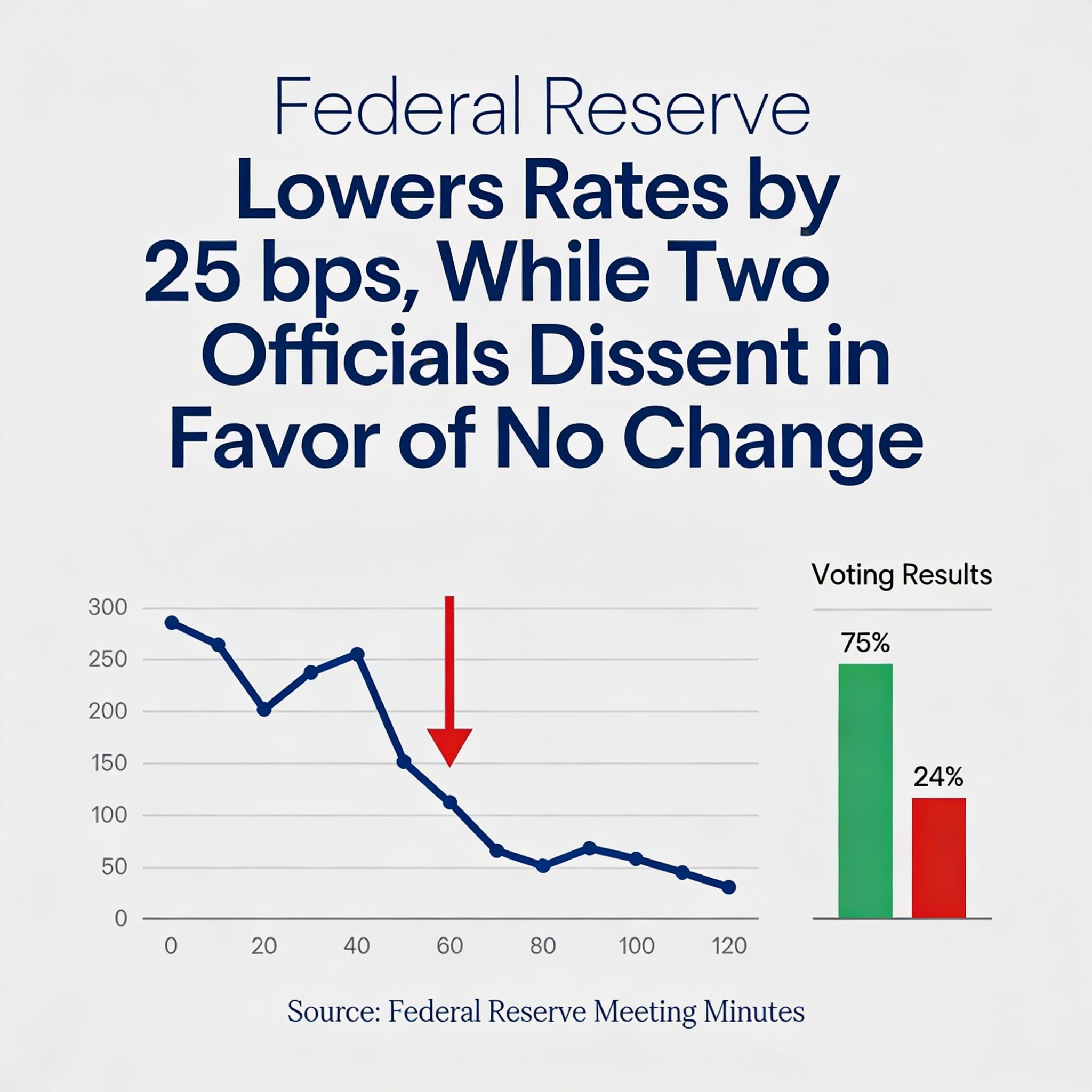
The Federal Reserve delivered a widely expected 25 basis point rate cut on Wednesday, lowering its benchmark federal funds target range to 3.50%–3.75%—the third consecutive quarter-point reduction and the lowest level for short-term borrowing costs since 2022. The move comes as policymakers continue operating without several major economic data releases that remain delayed or suspended amid the ongoing U.S. government shutdown.
“Uncertainty about the economic outlook remains elevated,” the Fed said in its policy statement. “The Committee is attentive to risks on both sides of its dual mandate and judges that downside risks to employment have increased in recent months.” The central bank also highlighted declining reserve balances and signaled it may resume purchases of shorter-term Treasurys as needed to maintain ample reserves in the banking system.
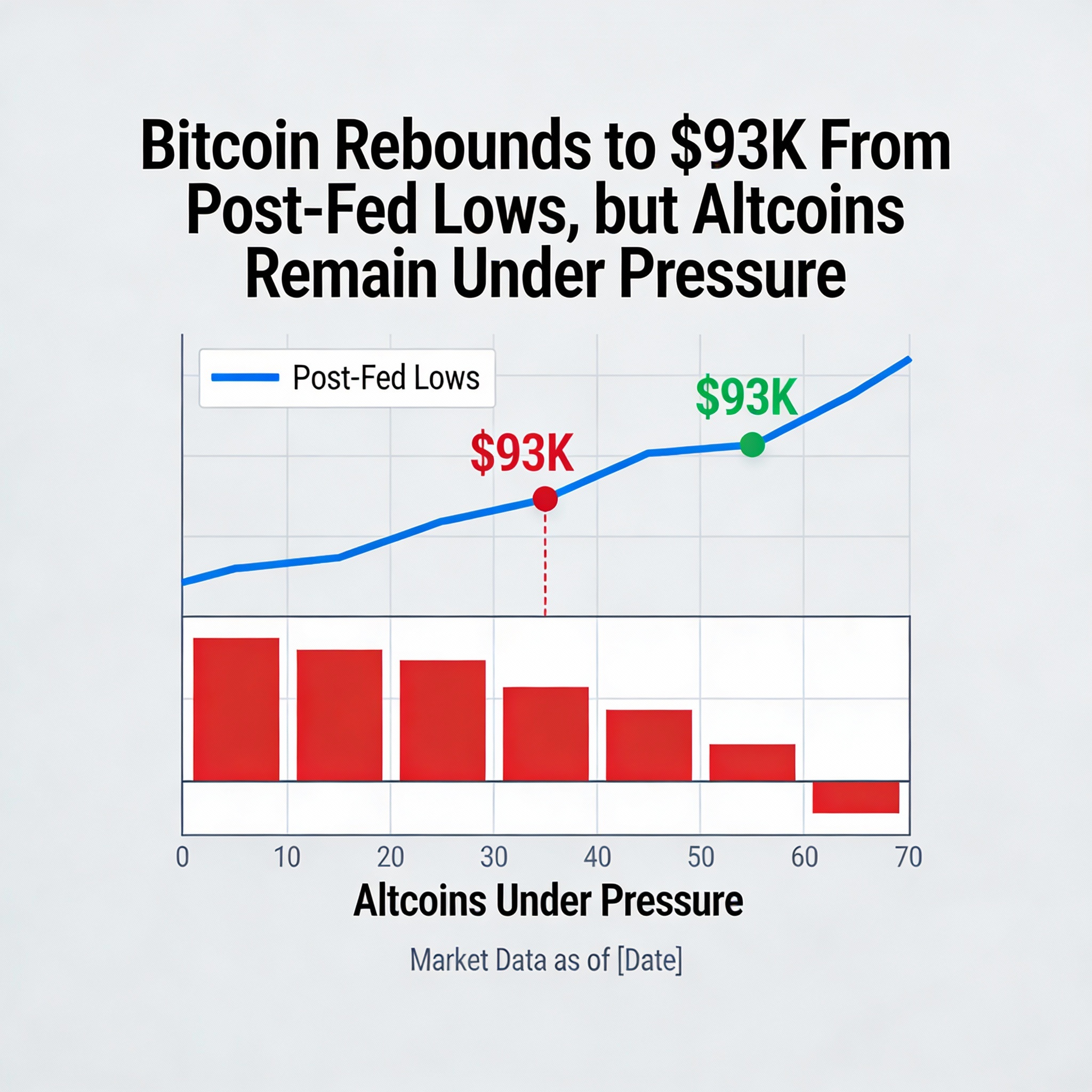
Bitcoin saw choppy price action immediately after the announcement but hovered near $92,400. U.S. equities edged higher, while the 10-year Treasury yield eased two basis points to 4.15%.
The decision stood out for its unusually vocal dissent. Several Fed officials had openly criticized the pace of easing in recent weeks, including the October rate cut. On Wednesday, Kansas City Fed President Jeffrey Schmid and Chicago Fed President Austan Goolsbee voted to keep policy unchanged, while Fed Governor Stephen Miran—appointed earlier this year—pushed for a larger 50 basis point reduction.
Updated Economic Projections
The meeting also included refreshed economic forecasts. Core inflation is now projected at 3% in 2025 and 2.5% in 2026, each 10 basis points lower than prior estimates. GDP growth forecasts were revised higher to 1.7% for 2025 and 2.3% for 2026, up from 1.6% and 1.8%, respectively. The latest dot plot remains largely unchanged, with officials still penciling in just one rate cut for 2026, even as markets anticipate two cuts next year.
The policy decision unfolded against a backdrop of incomplete economic data due to the federal shutdown and renewed political pressure, including President Trump’s criticism of Chair Jerome Powell and his ongoing search for a potential successor when Powell’s term ends next year.
Market focus now shifts to Powell’s press conference at 2:30 p.m. ET, where investors hope to glean more clarity on the Fed’s policy trajectory. Ahead of his remarks, CME FedWatch data shows traders pricing in a 24% probability of another rate cut in January.