cpeditor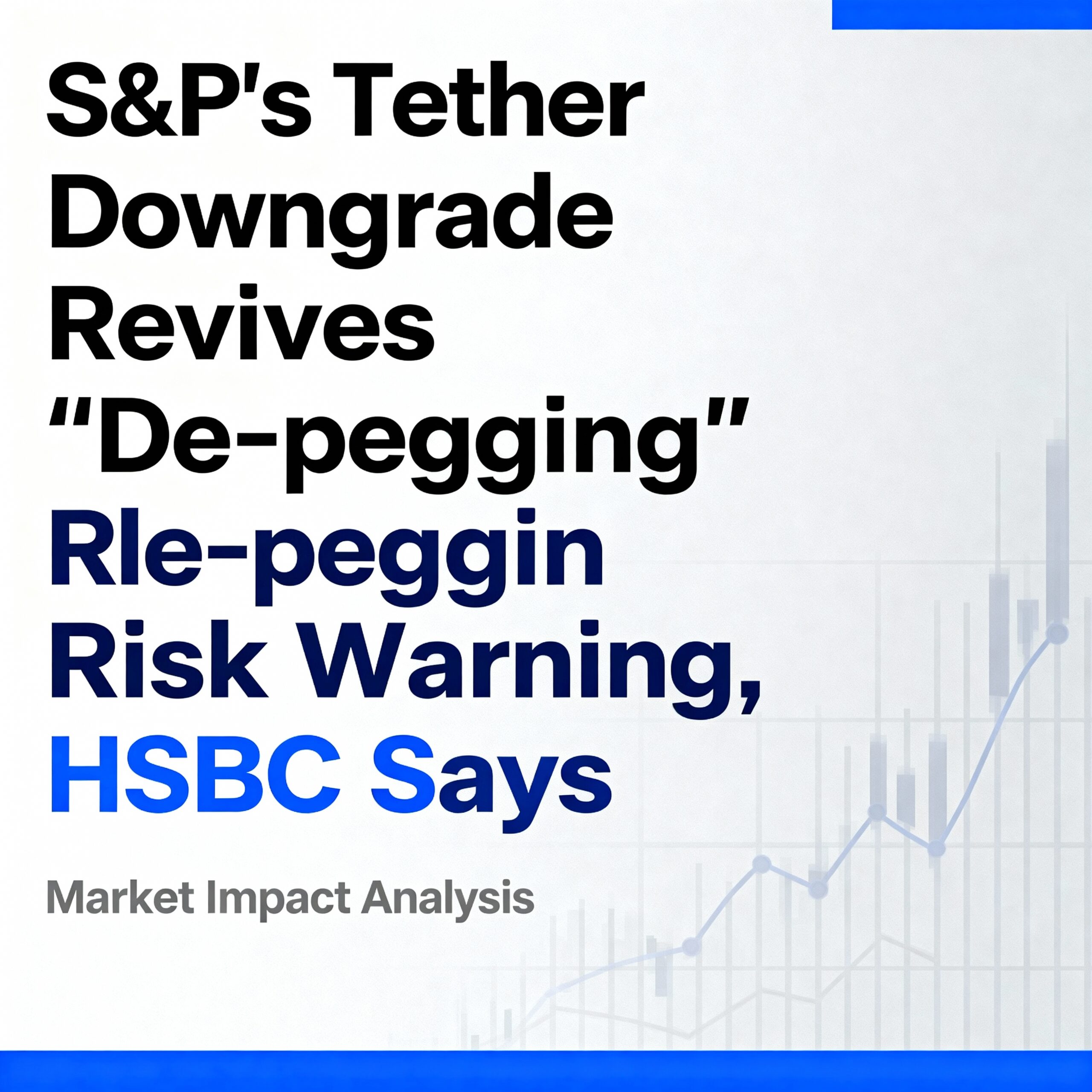
HSBC: S&P Tether Downgrade Highlights De-Pegging Risks, Boosts Appeal of Higher-Rated Stablecoins
HSBC said S&P Global Ratings’ decision to downgrade Tether’s reserve assessment to “weak” underscores the inherent “de-pegging” risk in stablecoins—a risk not shared by other tokenized forms of money.
The core concern is simple: if holders rush to redeem, a stablecoin issuer must maintain reserves that are unquestionably liquid and low-risk, or the token’s price could drift away from its intended peg, analysts Daragh Maher and Nishu Singla wrote in a Monday report.
Stablecoins, cryptocurrencies pegged to fiat or other assets, serve as key payment rails and facilitate cross-border transfers. Tether’s USDT is the largest, followed by Circle’s USDC. The analysts noted that the market often treats the largest stablecoins as infrastructural utilities, meaning changes in perceived reserve strength can have wide-ranging implications.
Tether’s downgrade is particularly notable given USDT’s dominant market position. Questions around its reserve composition and disclosure practices can ripple across exchanges, trading pairs, and DeFi protocols.
S&P ranks stablecoin reserves on a five-point scale from “very strong” to “weak,” emphasizing the growing importance of reserve quality, governance, and transparency for mainstream adoption and institutional settlement. Concerns center on Tether’s increasing exposure to higher-risk assets relative to cash, cash equivalents, and short-dated U.S. Treasuries.
HSBC said reserve composition is critical because it directly affects redemption capacity. While alternative assets can be part of a reserve, relying on instruments with higher price sensitivity, lower transparency, or unpredictable liquidity makes a stablecoin more like a balance-sheet trade than a simple, redeemable dollar proxy.
This aligns with regulatory trends in the U.S., Europe, and Hong Kong, which emphasize high-quality liquid assets and reliable reporting. Such standards create a clear signal for institutional investors and corporates, who typically prefer stablecoins with transparent and robust reserve frameworks.
The likely outcome, according to HSBC, is a shift toward higher-rated, regulated stablecoins as institutional adoption grows. Circle’s USDC, rated higher than USDT by S&P, exemplifies the type of positioning likely to benefit if ratings and regulations become central to stablecoin selection. Tether has indicated plans for a U.S.-based, dollar-backed stablecoin to meet stricter requirements, highlighting how issuers may segment products by jurisdiction and audience.