cpeditor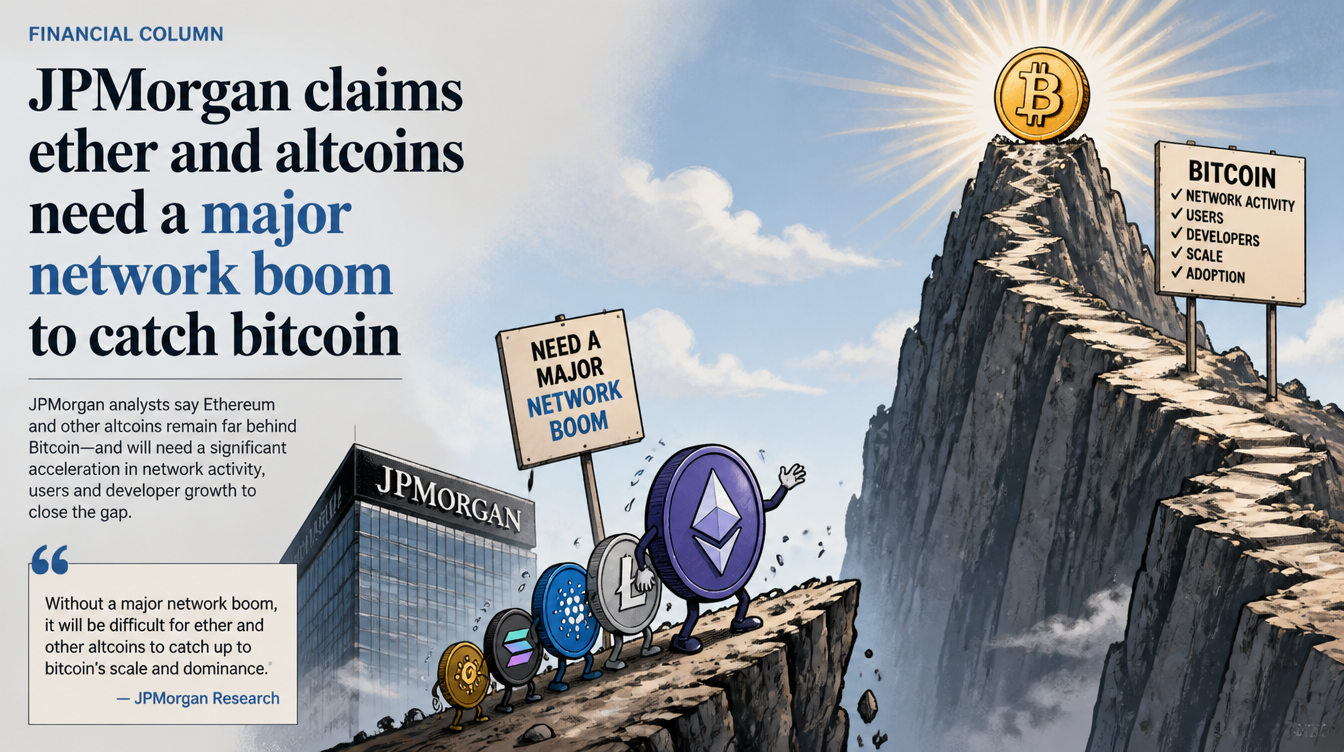
JPMorgan says ether and the broader altcoin market are likely to remain under pressure relative to bitcoin unless there is a meaningful pickup in network activity, DeFi expansion and real-world adoption.
In a recent report, the bank highlighted that ETH and other tokens continue to lag bitcoin, extending a multi-year trend driven by weak onchain usage and limited utility beyond trading.
Crypto markets have faced sustained headwinds over the past six months, as higher interest rates, sticky inflation and a cautious risk environment weighed on investor sentiment. Earlier in the year, both bitcoin and ether experienced sharp pullbacks alongside significant ETF outflows and widespread deleveraging.
Analysts led by Nikolaos Panigirtzoglou noted that even with some recovery following geopolitical tensions tied to the Iran conflict, ether and altcoins have failed to keep pace with bitcoin’s gains.
ETF flow data underscores this divergence. Spot bitcoin ETFs have clawed back roughly two-thirds of earlier outflows, while ether ETFs have recovered only about one-third, signaling weaker institutional demand for ETH.
Meanwhile, momentum-driven investors such as CTAs and crypto quant funds remain slightly underexposed to both bitcoin and ether, suggesting that speculative positioning has yet to fully rebuild.
Despite these challenges, the market has shown signs of stabilization. Around-the-clock trading access and renewed institutional interest have helped support prices, with bitcoin and ether at times outperforming traditional risk assets during periods of geopolitical stress.
Looking ahead, Ethereum’s upcoming upgrades—including Glamsterdam and Hegota, expected in 2026—aim to improve scalability and reduce transaction costs. However, JPMorgan cautioned that previous upgrades did not translate into stronger network activity.
Instead, earlier changes reduced Layer 2 fees and transaction costs, weakening Ethereum’s token burn mechanism and increasing overall supply, which in turn limited price support.
Altcoins have broadly struggled since 2023, weighed down by tighter liquidity, reduced market depth and sluggish DeFi growth. Repeated security breaches and hacks have further dented investor confidence.
High-profile exploits across DeFi platforms and trading systems have triggered capital outflows, raised concerns over infrastructure reliability and slowed institutional adoption—particularly in the altcoin segment.
According to JPMorgan, without a clear improvement in network usage and tangible real-world demand, ether and the wider altcoin market are likely to continue trailing bitcoin.