cpeditor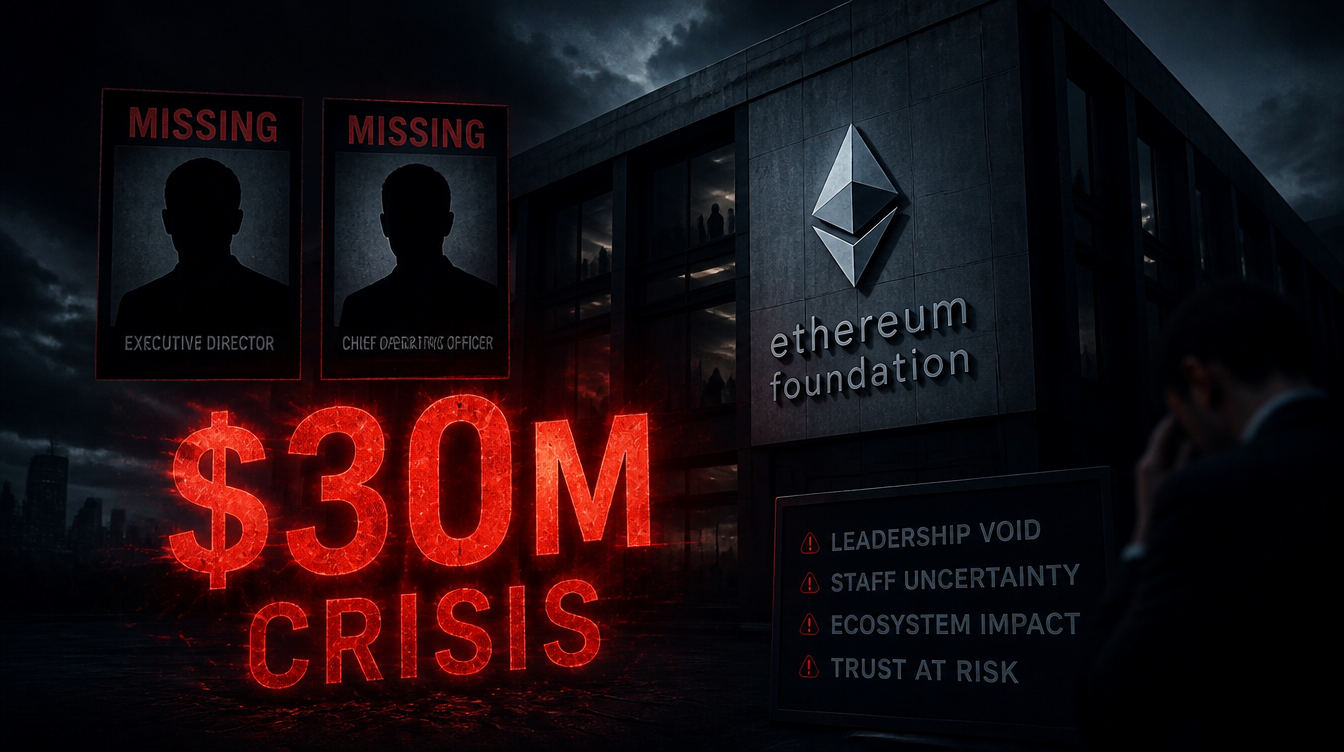
Hsiao-Wei Wang resigned as co-executive director and board member of the Ethereum Foundation on June 18, with the decision effective immediately. Her exit is the second co-ED departure in about four months, adding to concerns that the Foundation’s leadership structure is under strain as it approaches a critical protocol upgrade phase.
Her resignation coincided with a warning from former Ethereum Foundation contributor Trent Van Epps, who outlined a possible funding gap in Ethereum’s core development ecosystem. He projected that within three to nine months, the network could face an annual shortfall of roughly $30 million, with no established mechanism ready to replace it.
Wang expressed gratitude to Bastian Aue for overseeing the transition during her earlier sabbatical period. Aue previously served as interim co-executive director after Tomasz Stańczak stepped down in February and now effectively serves as the Foundation’s sole executive director. No replacement structure has been announced.
At the time of publication, ETH was trading near $1,690, down around 3.3% on the day, broadly in line with wider market movement rather than any specific reaction to Wang’s departure. The broader concern is not price action, but whether the Ethereum Foundation can stabilize leadership and funding arrangements before existing pressures deepen.
Van Epps, who worked at the Ethereum Foundation from May 2021 to April 2026, focused on core development coordination and Protocol Guild funding, giving weight to his assessment of internal funding dynamics.
He estimated a $30 million annual gap affecting client teams, researchers, and coordination groups responsible for Ethereum’s protocol development and network reliability. He attributed this pressure to two main changes.
First, the Client Incentive Program ended in April 2026 without a successor. Launched in 2021, it provided structured rewards for teams maintaining key Ethereum clients such as Geth, Erigon, and Lighthouse, with payments tied to continued contribution.
Its removal eliminated one of the few recurring and predictable funding sources outside Ethereum Foundation grants.
Second, the Ethereum Foundation has shifted toward a long-term treasury policy aimed at reducing annual spending from 15% of holdings to about 5% by 2030. While financially conservative over the long term, it creates a short-term funding gap until new systems are implemented.
Although Q1 2026 grants continued to support key infrastructure and research teams, Van Epps argues that periodic grants cannot fully replicate the stability of the former incentive program.
Without a replacement funding mechanism soon, teams maintaining execution and consensus clients may face tighter budgets, potentially affecting timelines for the upcoming Glamsterdam upgrade. He also notes that longer-term work such as quantum security and Layer 1 scaling is often the first to be reduced under funding pressure.
Wang and Stańczak were appointed co-executive directors in March 2025 following a governance restructuring after Aya Miyaguchi transitioned to a president role. Both have since left within roughly 15 months.
Reports indicate the Ethereum Foundation has seen around 19 departures in 2026, including several senior contributors connected to the Protocol Cluster such as Barnabé Monnot, Tim Beiko, and Alex Stokes. While each departure may have individual causes, the overall pattern suggests broader structural stress within the organization.
Ethereum co-founder Vitalik Buterin publicly acknowledged Wang’s resignation, describing her as a long-standing contributor and highlighting her work in Ethereum research, consensus development, and community coordination in Taipei.