cpeditor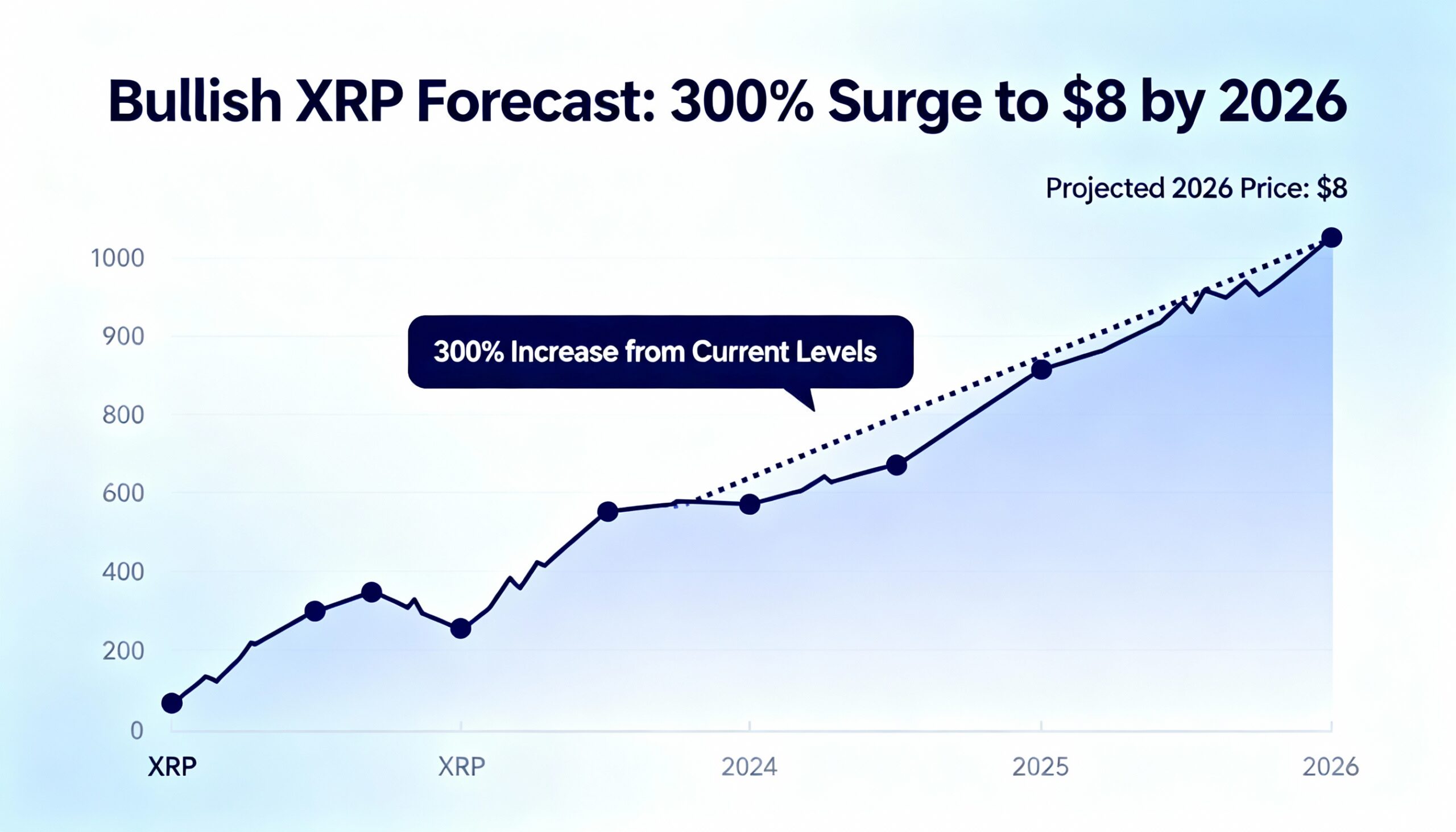
Standard Chartered has again flagged XRP as one of its highest-conviction crypto trades, forecasting a move to $8 by the end of 2026 as U.S. regulatory clarity improves and institutional interest builds. The projection, first laid out in an April research note, represents roughly 330% upside from current levels.
Market price action, however, remains subdued. XRP slipped to $1.87 even as trading volumes increased, leaving the token locked near the $1.85 support area. The divergence between rising volume and muted price movement points to positioning activity rather than outright selling pressure, a setup that often precedes a larger breakout or breakdown.
Geoff Kendrick, Standard Chartered’s global head of digital assets research, said easing regulatory uncertainty in the U.S. has removed a major constraint that weighed on XRP through much of the previous cycle. Clearer rules have lowered barriers for institutional participation and allowed Ripple and the broader XRP ecosystem to expand without persistent legal risk.
That shift is starting to show up in market structure. U.S.-listed spot XRP ETFs have attracted about $1.25 billion in net inflows since their November launch, marking a steadier allocation profile than the more uneven flows seen in bitcoin and ether products. At the same time, XRP balances held on exchanges have fallen toward multi-year lows, a trend often read by traders as a sign of tightening liquid supply. While that alone does not guarantee higher prices, it can magnify moves if demand remains steady.
Technically, XRP fell 0.79% on the session while volume ran roughly 20.8% above weekly averages, a configuration that typically reflects rotation or distribution rather than clean accumulation. The most active trading window occurred around 14:00, when roughly 57.2 million tokens changed hands as price failed to push through resistance near $1.8792, reinforcing that sellers continue to fade rallies.
The $1.85 level remains the key near-term battleground. Although price tested and held the zone, the broader trend remains heavy, with moving averages bearishly aligned and sloping lower. That setup continues to cap upside attempts and keeps the short-term bias tilted toward selling into strength.
Derivatives positioning adds another layer of risk. Open interest climbed to $3.43 billion even as spot netflows turned negative by about $10.7 million, suggesting leverage is building without confirmation from spot demand. That mix can compress ranges in the short term but raises the risk of abrupt price swings if positions need to unwind quickly.
Looking ahead, January’s scheduled release of 1 billion XRP from escrow stands out as the next potential catalyst. Even if a large portion is re-escrowed, the event often increases sensitivity around supply and liquidity — particularly with price already sitting on a major technical shelf.
For now, XRP remains in a support-defense phase with meaningful overhead supply. A sustained hold above $1.85 followed by a reclaim of the $1.88–$1.89 zone would put the $1.92–$1.93 area back in focus, where sellers have repeatedly stepped in. A close above that range would improve the near-term outlook and open a path toward $2.00 and the downtrend line near $2.08.
On the downside, a decisive break below $1.85 would likely shift attention to the next demand pocket around $1.77, with deeper support near $1.60–$1.55. In the near term, the combination of rising volume and tight price action suggests traders are positioning ahead of the January escrow event rather than committing to a clear directional trend — but the compression around $1.85 increases the likelihood that the next move will be sharp rather than gradual.