cpeditor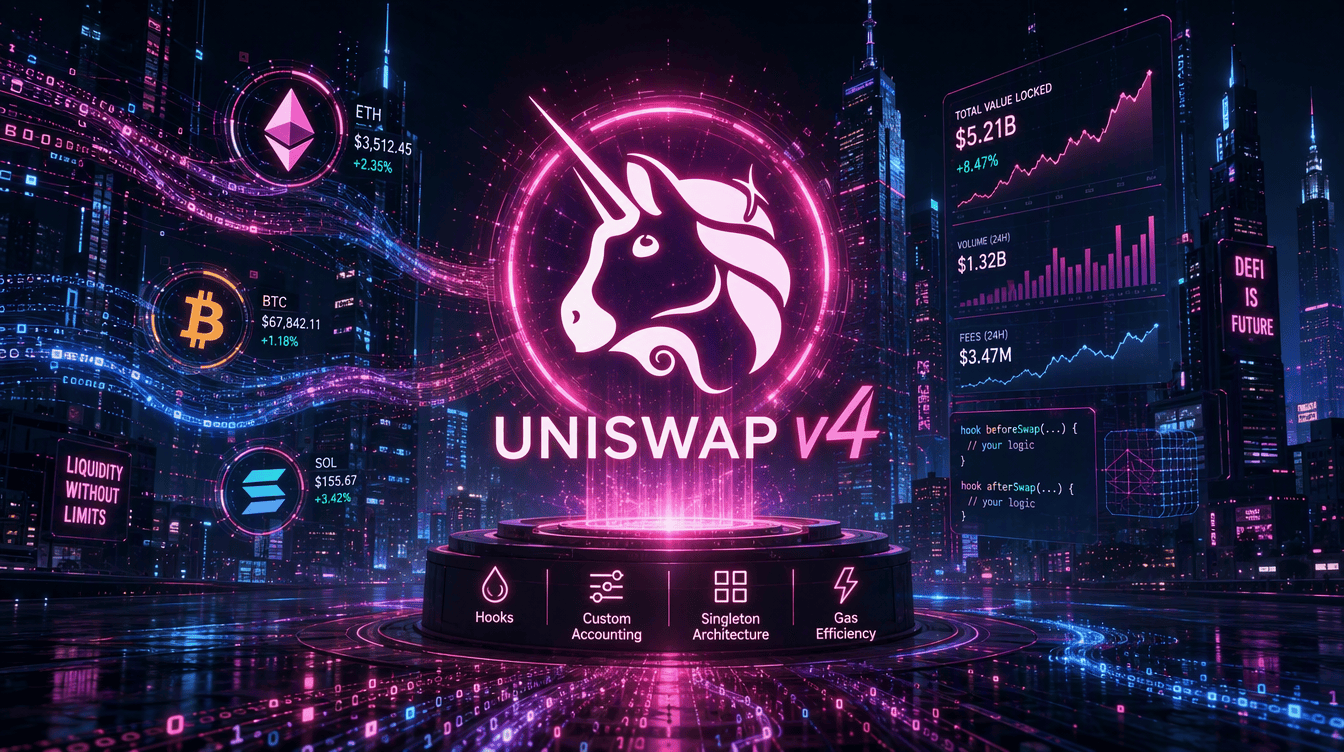
Uniswap founder Hayden Adams on Tuesday addressed growing criticism of the protocol’s newly activated v4 fee model, disputing claims that it cuts into liquidity provider (LP) returns. His response followed a governance decision to roll out protocol fees across selected v4 pools on multiple blockchains.
Adams pointed to a 30-basis-point pool as an example, arguing that a 5-basis-point protocol fee makes up roughly 14% of total swap fees and does not reduce LP earnings. He framed protocol fees as an addition to the existing structure, rather than a deduction from what LPs receive.
Debate Over Fee Mechanics
The disagreement centers on how fees are actually applied. Critics, including members of the DeFi governance community, highlight Uniswap’s v4 documentation, which describes a sequential process: the protocol fee is taken first, and the LP fee is then applied to the remaining amount.
Under this structure, adding a protocol fee reduces the base used to calculate LP returns, even if trading volume remains constant. This interpretation appears to conflict with Adams’ claim that fees are “additive,” creating a fundamental divide in how the system is understood.
Adams has not offered a detailed technical explanation to reconcile this difference, and his public comments do not go further into the mechanics. As a result, the key question remains unresolved—whether protocol fees have a meaningful impact on LP returns or only a marginal effect in practice.
There are also questions around Adams’ calculation. By simple math, 5 basis points out of 30 equals 16.7%, not 14%. The basis for his figure is unclear, as no further clarification has been provided in available reports.
Why It Matters
The stakes are significant. With approximately $3.06 billion in total value locked, Uniswap remains the largest decentralized exchange by TVL, according to DefiLlama. Any change to its fee structure directly affects LPs managing liquidity across its pools.
The issue also highlights a broader tension: UNI tokenholders benefit from protocol revenue, while LPs provide the liquidity that generates those fees.
As Ethereum’s dominant DEX, Uniswap now faces the challenge of increasing protocol revenue without weakening liquidity depth. For LPs, the central concern is whether their net returns will shift as protocol fees expand across more pools.
Adams maintains they will not, but the protocol’s own documentation suggests the outcome may be more complex. Ultimately, the debate is likely to be resolved not by statements, but by real-world LP performance data as v4 fees continue to roll out.