cpeditor
The S&P 500 has added around $2.1 trillion in value this month — nearly equal to the entire cryptocurrency market’s capitalization — but bitcoin has shown little reaction. The divergence highlights a deeper shift in market dynamics beyond the usual risk-on and risk-off trends.
U.S. equities have regained strength, while bitcoin has remained largely flat, continuing a pattern that has persisted throughout the year. The factors behind the gap between stocks and crypto go beyond simple investor sentiment.
The S&P 500 has advanced 3.12% this month, increasing its market capitalization by roughly $2.1 trillion and lifting its total valuation to a record $70.5 trillion. The index is trading near 7,723 points, while the Nasdaq 100 and Dow Jones Industrial Average have also posted gains, reflecting strong confidence in traditional markets.
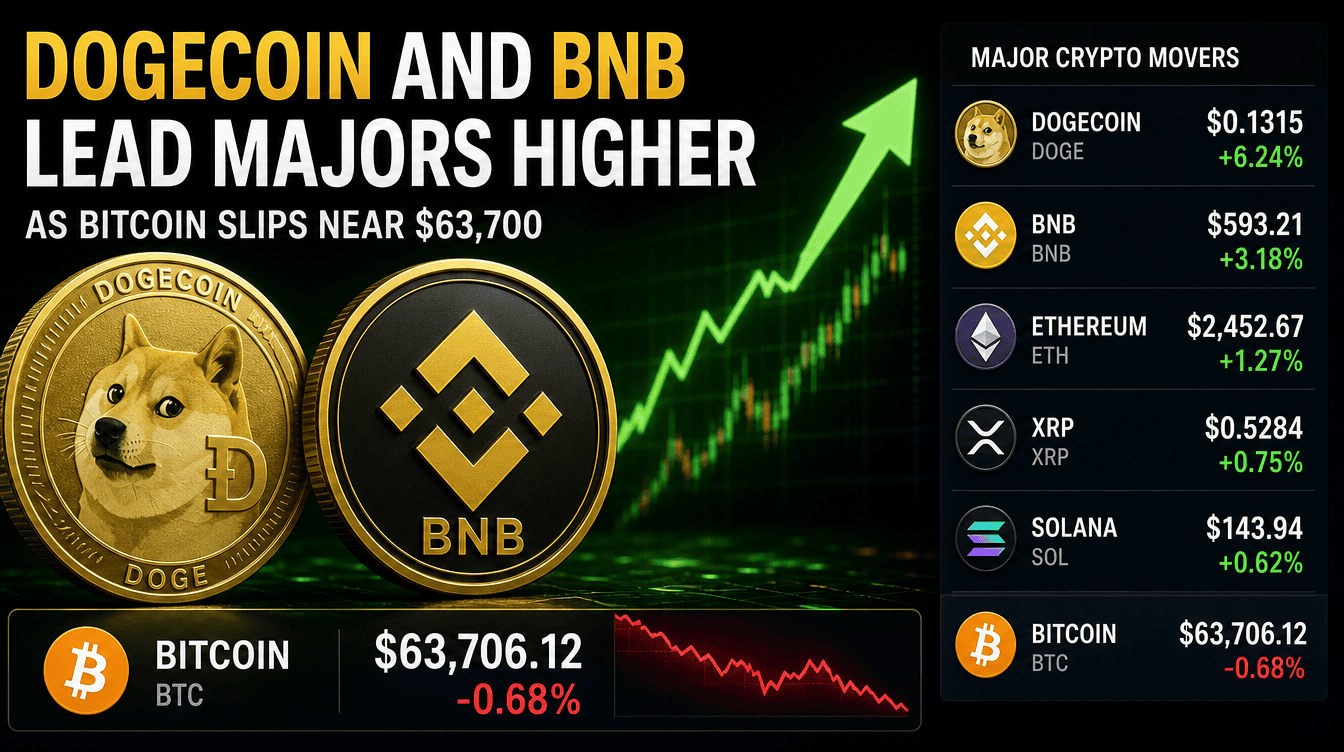
Bitcoin has not benefited from the equity rally. Although BTC has often tracked stocks since the 2020 pandemic-era market rebound, the cryptocurrency has gained only about 2% this month and remains near $64,600, staying within the same range it has traded for several weeks.
Analysts say the reason for bitcoin’s weaker performance is that the stock market rally is being driven by narrow themes rather than broad-based economic optimism. Artificial intelligence and semiconductor stocks have led the move higher, sectors where bitcoin has limited direct exposure.
Adam Haeems, head of asset management at Tesseract Group, said the current equity surge is concentrated in AI and chip-related companies, which does not necessarily create demand for bitcoin.
While some macroeconomic developments are supportive for risk assets, including falling oil prices and expectations of restored shipping activity through the Strait of Hormuz, the benefits are reaching equities faster than crypto markets.
Haeems explained that lower oil prices provide an immediate boost to companies by reducing costs, whereas bitcoin’s response depends on inflation trends and potential Federal Reserve policy changes. With uncertainty remaining around the Fed’s September decision, crypto markets have yet to see a similar boost.
Paul Howard, senior director at market maker Wincent, said the stock market rally’s focus on AI and mega-cap companies has not translated into significant crypto inflows.
He noted that bitcoin previously benefited from strong ETF-driven demand over the last two years, but that momentum has slowed as the market searches for new catalysts. Howard believes regulatory clarity and continued stablecoin growth could become important drivers for crypto later this year.
Crypto-specific factors continue to pressure bitcoin
Bitcoin is also dealing with several internal challenges that have weighed on sentiment. These include the $120 million Coldcard exploit, uncertainty around the Clarity Act, and reports that Strategy has reduced its bitcoin exposure.
Haeems said these developments have affected confidence but have not triggered a wider credit crisis or forced liquidation event across the market.
He also highlighted rising bond yields as another obstacle for crypto. Higher real yields have encouraged investors to keep capital in traditional markets rather than moving funds into digital assets.
Stablecoin liquidity has also declined. Haeems pointed out that USDT supply has fallen from about $190 billion in April to $183 billion, while USDC supply has dropped from around $79.5 billion to $72 billion. With Treasury yields at their highest levels since 2008, investors are receiving attractive returns without taking crypto-related risks.
Traders wait for cycle signals and stronger ETF demand
Bitcoin’s four-year halving cycle is another factor shaping investor behavior.
Markus Thielen, founder of 10x Research, said many traders are holding back because they expect historical cycle patterns to point toward a possible bottom in October. This belief has reduced urgency among buyers despite continued strength in stocks.
Thielen said bitcoin traders have increasingly embraced the halving-cycle narrative, leading many to wait for a clearer market signal before increasing exposure.
He also argued that investors may be overlooking a positive sign: bitcoin has remained stable despite a more restrictive Federal Reserve environment.
According to Thielen, the possibility of a less aggressive Fed and the chance that bitcoin has already reached its cycle low could provide upside potential.
Other analysts believe inconsistent ETF demand has contributed to bitcoin’s lack of momentum. Spot bitcoin ETFs in the U.S. recorded $61.53 million in outflows, ending a weak three-week period of inflows, according to SoSoValue data. Although ETF products attracted $626 million this week, analysts say sustained inflows will be needed to confirm stronger institutional demand.
Vikram Subburaj, CEO of FIU-registered crypto platform Giottus.com, said several consecutive days of ETF inflows would be required to confirm a meaningful recovery. He highlighted support levels around $63,000-$63,400 and resistance between $64,500 and $66,000.
Market maker Wintermute also cautioned that ETF activity may not represent outright bullish positioning, as some inflows could be linked to arbitrage strategies rather than long-term accumulation.
The firm said ETF demand has been absorbed without creating significant upward price movement, suggesting that spot buyers remain cautious. Instead, traders have shifted toward individual crypto assets, with ZEC gaining 10.9% over the week and HYPE rising 5% during a period of weak market breadth.
Wintermute said a broader crypto recovery may require bitcoin volatility to ease and BTC to establish a stronger trend before wider investor participation returns.