cpeditor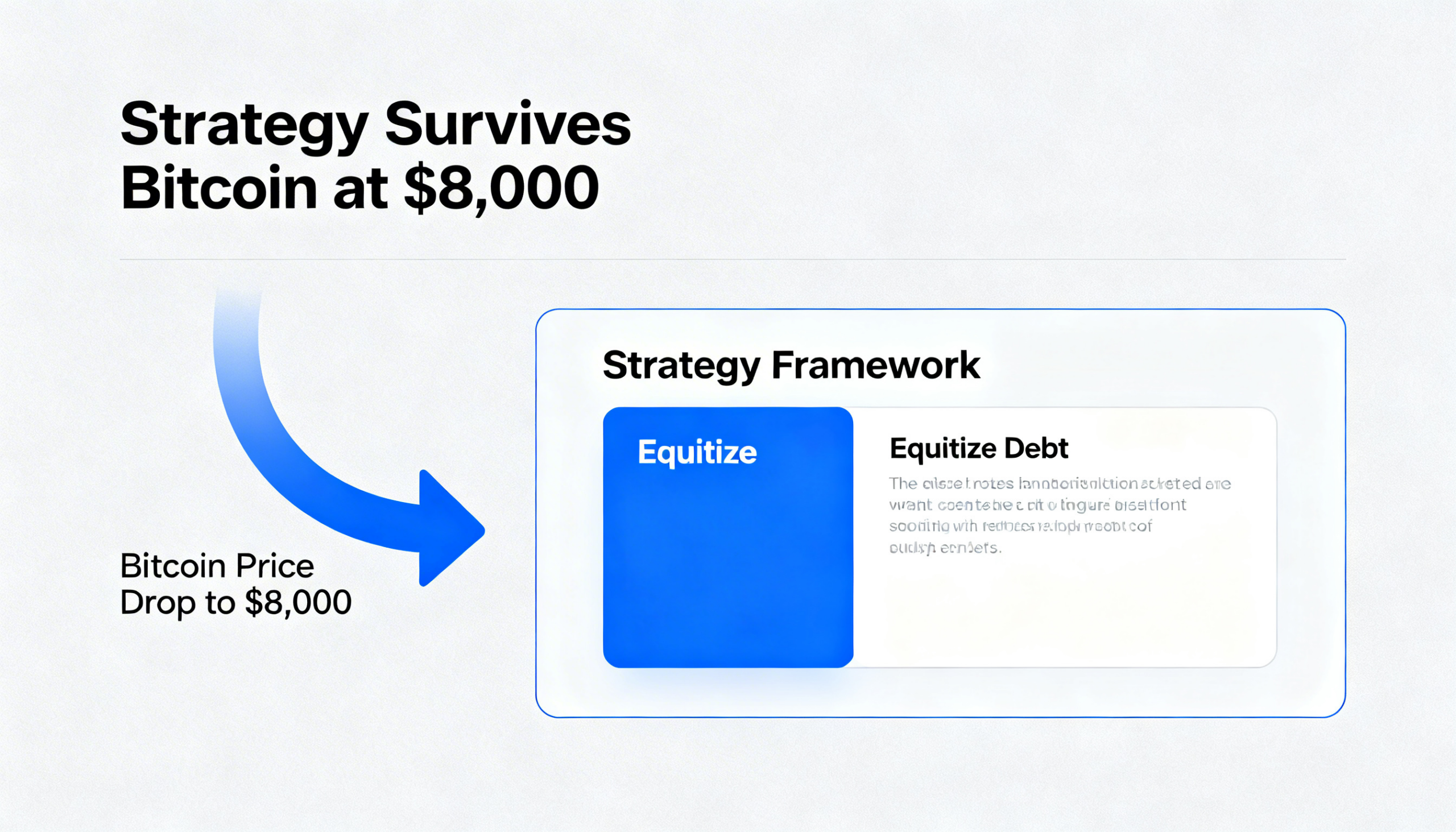
Strategy (MSTR) said it would be able to withstand a dramatic collapse in bitcoin’s price to $8,000 while still covering its approximately $6 billion in net debt.
In a message posted on X, the firm led by Michael Saylor said its bitcoin holdings would remain sufficient to meet outstanding obligations even under an extreme downside scenario.
Strategy owns 714,644 BTC, currently valued at roughly $49.3 billion, making it the largest publicly traded corporate holder of bitcoin. Since adopting the cryptocurrency as its primary treasury reserve asset in 2020, the company has accumulated coins aggressively, frequently using debt financing to fund purchases.
That leveraged strategy — also mirrored by companies such as Japan-listed Metaplanet — drew widespread praise during bitcoin’s rally to an October high above $126,000. However, as prices retreated toward $60,000, concerns resurfaced about the risks tied to debt-funded accumulation.
Strategy’s outstanding debt totals about $6 billion, equivalent to roughly 86,956 BTC at current levels — far smaller than its overall stash. The company argued that even if bitcoin fell to $8,000, the value of its holdings would still approximate $6 billion, enough to match its net liabilities.
It also emphasized that its debt maturities are spread between 2027 and 2032, limiting near-term repayment pressure. To further strengthen its capital structure, Strategy said it intends to convert portions of its existing convertible notes into equity rather than issue additional senior debt. Convertible bonds allow lenders to swap their holdings for company shares under certain conditions, potentially reducing leverage without increasing cash obligations.
Skeptics question how such a scenario would look in practice. According to critics including Capitalists Exploits, Strategy has spent about $54 billion building its bitcoin position, at an average cost near $76,000 per coin. A drop to $8,000 would represent an unrealized loss of roughly $48 billion — technically leaving assets equal to debt, but potentially leaving the balance sheet strained in the eyes of lenders and investors.