cpeditor
Digital assets retreated at the start of the week as investors prepared for a string of key U.S. macroeconomic releases, including the Federal Reserve’s January meeting minutes and the core personal consumption expenditures (PCE) price index.
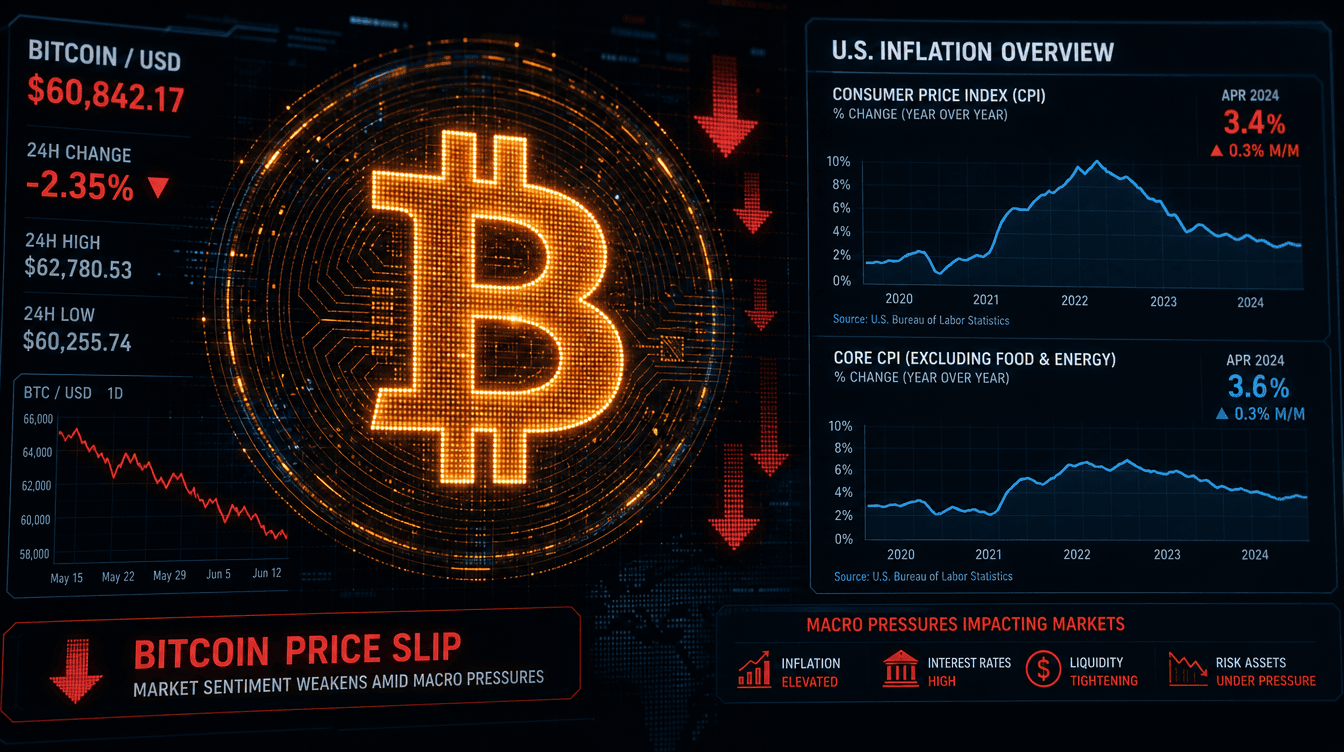
Bitcoin (BTC) changed hands near $68,200, down about 3% over the past 24 hours. Losses were heavier across the altcoin complex, with XRP, ether (ETH) and dogecoin (DOGE) all posting sharper declines.
The weakness was broad-based, with roughly 85 of the top 100 cryptocurrencies by market capitalization trading lower. Privacy-focused tokens such as monero (XMR) and zcash (ZEC) recorded notable drops, while smart contract platforms also came under pressure. The CoinDesk Smart Contract Platform Select Capped Index slid nearly 6%, pushing its year-to-date decline to 28%.
The pullback follows last week’s softer U.S. inflation report, which initially boosted expectations for interest-rate cuts. Annual consumer price index (CPI) inflation slowed to 2.4% in January from 2.7% in December, reinforcing bets that the Federal Reserve could deliver at least two quarter-point rate reductions this year. The benchmark 10-year Treasury yield fell to 4.05%, its lowest level since early December.
Bitcoin rallied in response, climbing from around $66,800 late last week to briefly surpass $70,000 over the weekend. However, the move proved short-lived, with the cryptocurrency unable to maintain momentum above that threshold.
Vikram Subburaj, CEO of India-based exchange Giottus, said selective risk appetite and ongoing deleveraging in derivatives markets are limiting upside follow-through.
“Macro cross-currents are keeping traders cautious,” Subburaj said. “The derivatives market still appears to be reducing leverage aggressively. Rallies are fading quickly, and dip buying is concentrated only near well-defined support levels.”
Investors are now awaiting fresh signals from policymakers and inflation data. The Fed’s meeting minutes may offer insight into officials’ thinking, while the core PCE index — the central bank’s preferred inflation gauge — is expected to be the week’s pivotal release. Market participants will closely watch both the monthly reading and the year-over-year trend for clues about the path of monetary policy.
In currency markets, attention has turned to the Japanese yen after Mark Nash of Jupiter Asset Management shifted from a bearish to a bullish stance, projecting an 8–9% appreciation, particularly against the Swiss franc.
The move is significant for crypto traders because bitcoin has shown a strong positive correlation with the yen in recent months. Sustained strength in the Japanese currency could therefore provide a supportive backdrop for bitcoin, even as macro uncertainty continues to weigh on broader digital asset markets.