cpeditor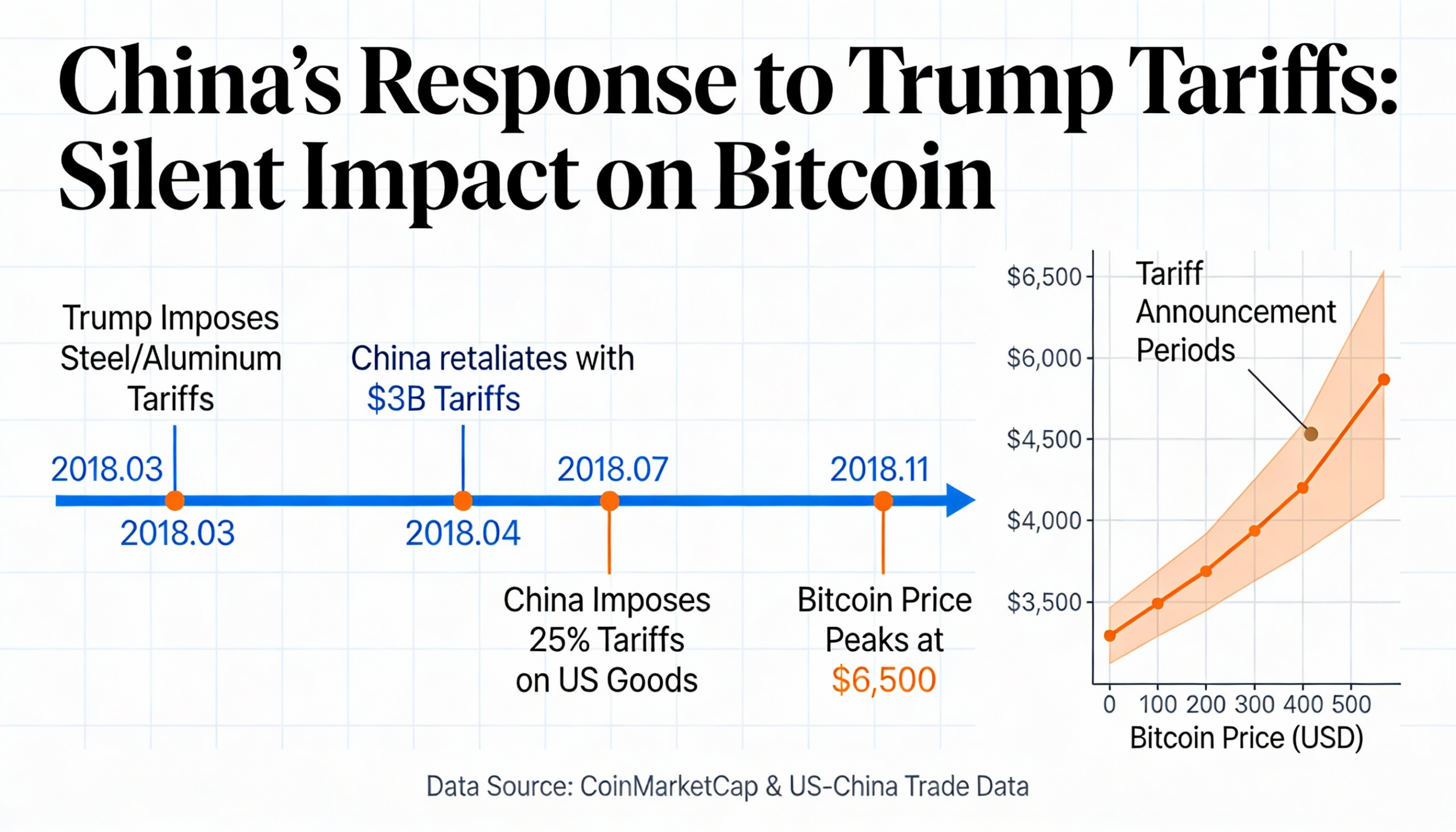
China’s managed response to U.S. tariffs is stabilizing exports while quietly influencing the liquidity backdrop for bitcoin.
China has responded to President Donald Trump’s renewed trade pressure not with dramatic countermeasures, but with a familiar and tightly controlled strategy: managing its currency. That approach has helped sustain exports despite elevated U.S. tariffs—and is now shaping global liquidity conditions that matter for crypto markets.
Since returning to office early last year, Trump has imposed broad tariffs on most imports entering the United States, including goods from China, the world’s second-largest economy and a central hub of global manufacturing. By January 2026, the average U.S. tariff on Chinese imports had risen to around 29.3%.
Beijing’s answer has focused on exchange-rate stability. Rather than allowing the yuan to strengthen or weaken sharply, policymakers have kept it tightly managed, limiting volatility and shielding exporters from the full impact of higher trade barriers.
A recent JPMorgan analysis argues that this currency discipline has helped China preserve export competitiveness while containing domestic deflationary pressures. At the same time, it has reinforced dollar-led liquidity cycles during periods of heightened trade stress.
When tariffs rise and uncertainty escalates, managed FX regimes tend to amplify the global effects of a stronger dollar. Instead of absorbing the shock, they can intensify liquidity tightening, contributing to risk-off conditions across financial markets.
That dynamic has implications for bitcoin, which has increasingly traded in line with macro liquidity trends. The asset tends to weaken when tariff-related uncertainty tightens dollar liquidity and recover when those pressures ease. This pattern was visible during March and April last year, when escalating trade tensions coincided with a sharp pullback in bitcoin, followed by a rebound as conditions stabilized.
China’s influence on crypto prices is largely indirect. Rather than flowing through direct capital movements, it operates through currency management and the transmission of global liquidity—unlike the U.S., where bitcoin pricing is increasingly driven by institutional flows into exchange-traded funds and other regulated investment products.
This view echoes arguments from Arthur Hayes, who has characterized U.S.–China trade disputes as largely political theater. In his framework, tariffs and negotiations dominate headlines, while the real economic adjustment occurs through less visible channels such as foreign-exchange policy, capital-account tools, and dollar liquidity management.
JPMorgan’s outlook supports that interpretation. While China is unlikely to allow meaningful appreciation of the yuan, the interaction between tariffs, managed FX policy, and dollar liquidity continues to define the macro environment in which bitcoin trades.
Exports hold up, yuan stays constrained
According to JPMorgan Private Bank’s latest Asia outlook, China’s export sector remains resilient. Real exports are expected to grow by about 8% in 2025, lifting China’s share of global trade to roughly 15%, despite the persistence of U.S. tariffs. Exports to the U.S. now account for less than 10% of China’s total shipments.
That resilience reflects both diversification toward ASEAN and other regions, and a deliberate policy choice to keep the yuan tightly controlled rather than allow sustained appreciation.
Although the yuan has strengthened roughly 4% from its 2023 lows, it is only marginally higher against the dollar on a calendar-year basis in 2025. This underscores the extent to which the currency remains range-bound under China’s low-volatility management framework.
JPMorgan notes that recent yuan strength is likely seasonal, with policymakers expected to maintain a stable trading range over the medium term as they prioritize export competitiveness and contend with entrenched deflationary pressures.
The bank also cautioned that the threshold for meaningful yuan appreciation remains high, with exchange-rate movements still largely dictated by shifts in the dollar.
For crypto markets, the takeaway is not a stronger yuan, but a continued focus on liquidity transmission. As long as trade tensions interact with managed FX regimes to influence global dollar conditions, bitcoin will remain sensitive to the macro forces unfolding beneath the surface.