cpeditor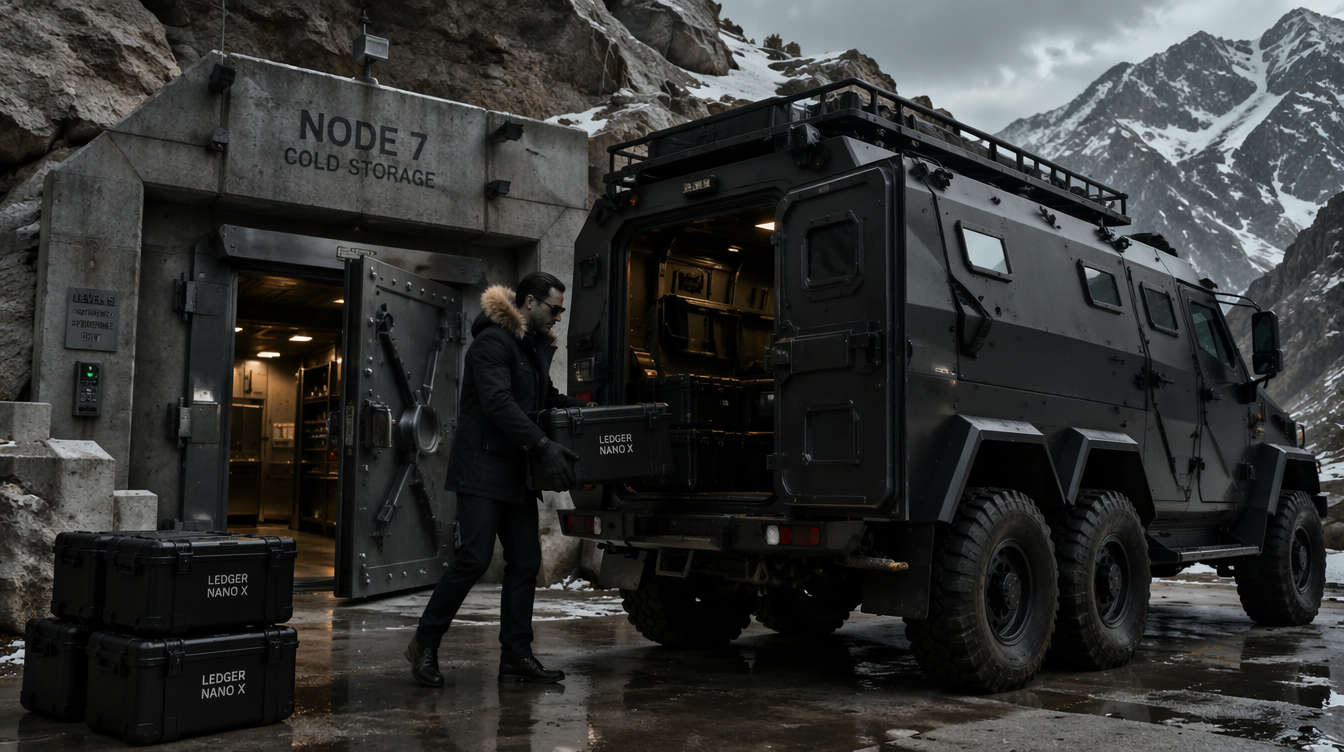
Bitcoin OGs Are Turning Crypto Wealth Into Armored Vehicles and Underground Bunkers
As Bitcoin fortunes swell, a growing number of crypto veterans are investing in something beyond digital assets: physical security.
Marathon Digital Holdings (MARA) recently disclosed in its latest proxy filing that it spent $869,160 on armored vehicles for CEO Fred Thiel and CFO Salman Khan. The expenditure included $430,780 for Thiel and $438,380 for Khan, pushing their total annual security-related compensation to $4.3 million and $3.9 million, respectively.
The disclosure highlights a new reality for high-profile crypto executives. Holding large amounts of Bitcoin no longer presents only cybersecurity risks—it increasingly comes with real-world security concerns.
MARA’s spending is part of a broader trend among early Bitcoin adopters and crypto whales who have spent recent years converting portions of their digital wealth into hard assets designed to improve resilience and protection. Armored SUVs are often just the starting point.
Many wealthy Bitcoin holders are now purchasing fortified compounds, underground shelters, off-grid properties, second passports, and alternative residency options. What was once dismissed as extreme preparedness has gradually entered the mainstream among some of the industry’s wealthiest participants.
The roots of this movement stretch back to Bitcoin’s cypherpunk origins. Early Bitcoin advocates frequently discussed financial sovereignty, privacy, and reducing dependence on centralized institutions. Conversations about economic instability, jurisdictional mobility, and self-custody were common long before Bitcoin became a global asset class.
Those ideas have become increasingly influential as Bitcoin’s value has risen. Concepts such as “Bitcoin citadels”—once little more than forum memes imagining self-sufficient communities for Bitcoin holders—are now inspiring real-world investments in secure real estate and private infrastructure.
MARA justified its security spending by pointing to the unique risks associated with cryptocurrencies. Unlike traditional assets, digital holdings can be transferred almost instantly, meaning that a compromised wallet or coerced credential handover can result in irreversible losses within minutes.
Other crypto firms have reached similar conclusions. Coinbase disclosed $7.6 million in personal security expenses for CEO Brian Armstrong last year, covering executive protection, secure transportation, family security, and residential safeguards.
Together, public disclosures from MARA and Coinbase reveal more than $16 million spent on executive security in a single reporting cycle, underscoring how the industry’s risk calculations are evolving.
Outside the public markets, demand for luxury bunkers and fortified residences is also climbing. Companies specializing in underground shelters and survival-focused real estate report growing interest from ultra-high-net-worth individuals concerned about geopolitical tensions, civil unrest, cyber threats, and broader systemic risks.
For many early Bitcoin investors who accumulated BTC when prices were below $1,000, allocating a small fraction of their holdings toward physical security is increasingly viewed as a practical hedge. If major disruptions never occur, they gain secure properties and enhanced protection. If the risks they have long anticipated emerge, the investment could prove invaluable.