cpeditor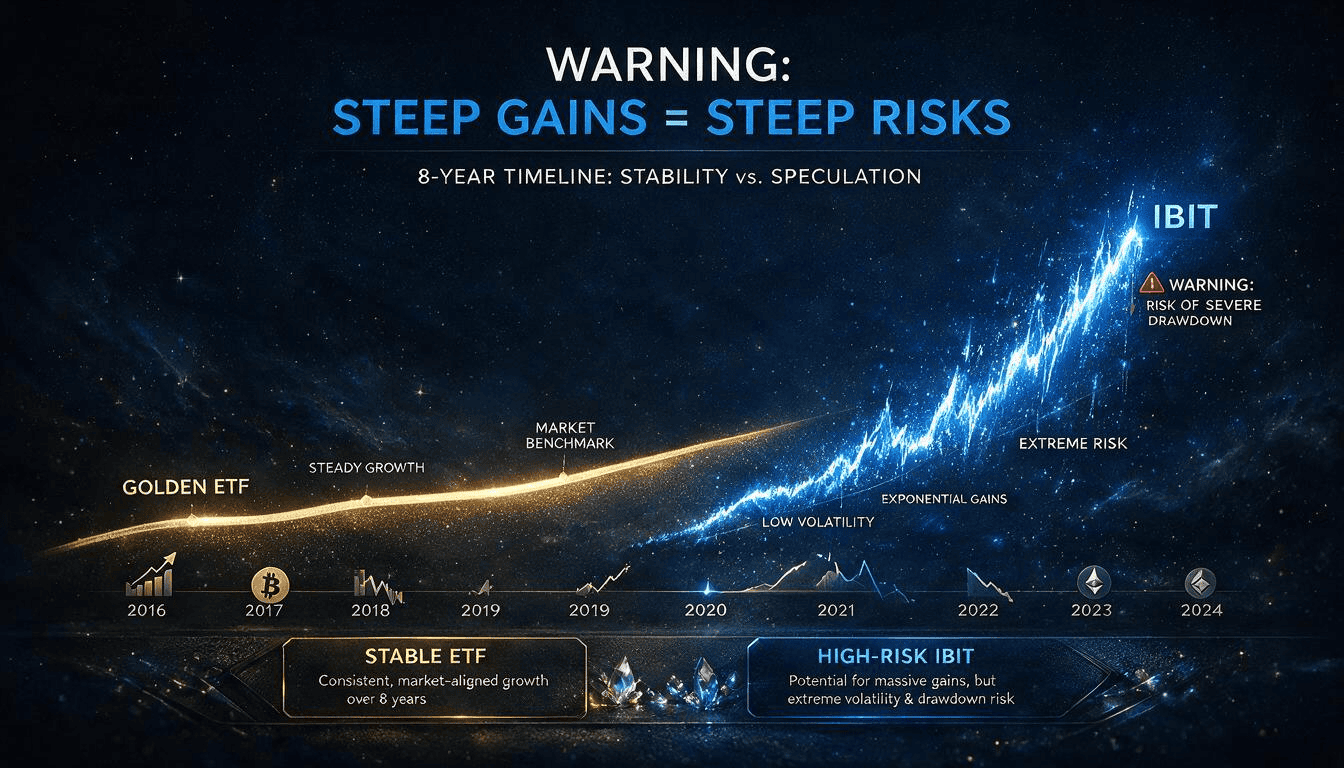
Eric Balchunas argues that the clearest guide for Bitcoin ETF investors lies in the history of gold ETFs — a journey that included nearly eight years of stagnation before a return to new highs.
BlackRock’s IBIT has offloaded close to 100,000 BTC in recent months to meet redemption demand, bringing its holdings to just above 733,000 BTC. This comes as Bitcoin has rebounded nearly 10% after falling below $57,000 in early July 2026, a drop that marked more than a 50% decline from its October 2025 peak above $126,000.
Rather than viewing this as a short-term disruption, Balchunas, a senior ETF analyst at Bloomberg Intelligence, frames it as a structural pattern. He points to the two-decade track record of gold ETFs as the most relevant comparison for understanding how Bitcoin ETF cycles may develop.
At the core of his argument is the nature of these products. Both gold and Bitcoin ETFs are tied to assets that generate no income, meaning their valuations are driven primarily by investor sentiment instead of cash flows or traditional fundamentals.
This structure makes them inherently volatile. Prices can rise or fall sharply as demand shifts, without the stabilizing influence of yield. Gold’s flagship ETF, GLD, briefly became the largest ETF in the world in 2011, but then spent years losing ground before eventually regaining strength.
Balchunas sees a similar dynamic playing out in Bitcoin ETFs. Since launching in January 2024, U.S. spot Bitcoin ETFs have attracted roughly $38 billion in net inflows, ranking among the fastest-growing ETF categories. However, demand has proven uneven, reinforcing the idea that sentiment remains the dominant driver.
Even so, the long-term picture remains constructive. Gold’s market value has expanded to nearly $28 trillion since the introduction of ETFs in 2004, showing that prolonged periods of stagnation can still lead to meaningful growth over time.
Flows, Redemptions, and Market Pressure
The recent redemptions from IBIT highlight how sensitive these products are to shifts in sentiment. The sale of nearly 100,000 BTC underscores how quickly outflows can translate into market pressure, particularly in uncertain macro conditions. Analysts at Bitfinex warn that continued redemptions could weaken the ongoing recovery.
At the same time, institutional demand appears more resilient than headline figures suggest. According to Simon-Peter Massabni of XS.com, steady inflows from larger investors have helped absorb selling pressure during recent pullbacks.
This supports Balchunas’ broader view that institutional participation may act as a stabilizing force, potentially limiting the depth and duration of downturns compared with gold’s prolonged stagnation. However, IBIT’s current redemption cycle has yet to fully validate that assumption.
A Cycle of Higher Highs
Despite near-term volatility, Balchunas maintains a positive long-term outlook. He notes that each cycle in gold ETFs has ultimately produced higher peaks, suggesting that Bitcoin’s fall from above $126,000 may represent a correction rather than a lasting decline.
For Bitcoin ETF investors, the key question is whether the current slowdown in demand will reverse due to a macro catalyst — such as a shift in Federal Reserve policy — or lead to a longer phase of consolidation similar to gold’s post-2012 period.
While Bitcoin’s rebound from sub-$57,000 levels fits within this framework, it does not yet confirm it. The takeaway from gold is that the absence of yield is not a fatal flaw — but sentiment-driven assets demand patience, as recoveries tend to unfold gradually over time.