cpeditor
Market uncertainty continues as internal divisions within the Federal Reserve and an unclear rate path weigh on risk assets, including bitcoin.
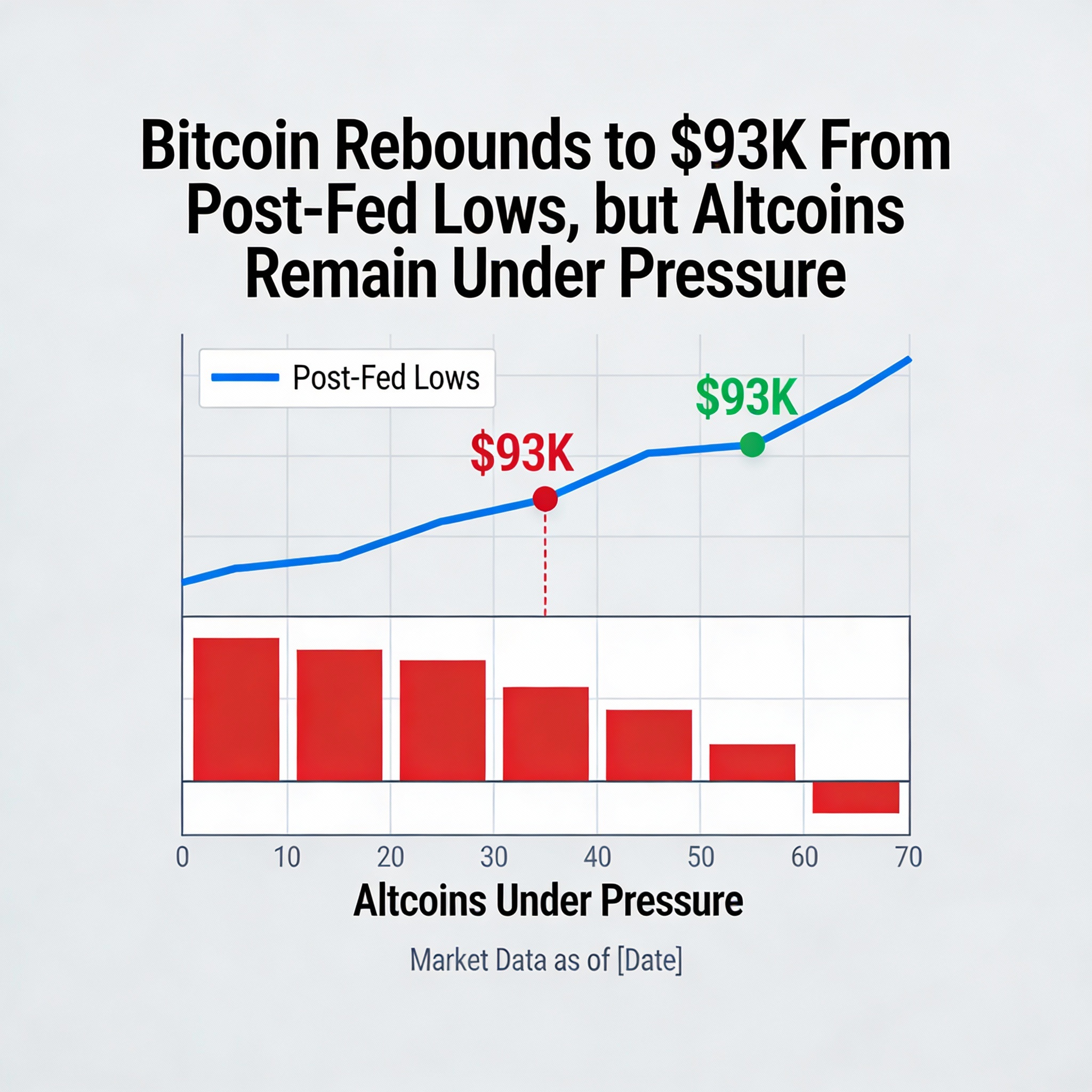
Bitcoin (BTC) traded below $90,000 following the Fed’s overnight 25-basis-point rate cut to 3.25%, marking a roughly 2.4% decline since early Asian trading hours, according to CoinDesk data. Ether fell 4% to $3,190, with the CoinDesk 20 Index down more than 4%.
The muted market reaction reflects skepticism over the Fed’s messaging, which dampened enthusiasm for future easing. On Wednesday, the central bank also announced it would begin purchasing short-term Treasury bills to manage liquidity in the banking system.
Market participants are focusing on signs of internal Fed discord. Two members voted against the rate cut, while forecasts indicated six FOMC members felt a cut was “not appropriate.” In addition, the Fed signaled only one additional cut in 2026, falling short of market expectations for two to three reductions.
“The Fed is divided, and the market has no clear line of sight on the path of rates until May 2026, when Chairman Jerome Powell will be replaced,” said Greg Magadini, director of derivatives at Amberdata. He noted that the most likely near-term scenario is a “deleveraging” or down-market move to convince the Fed that lower rates are warranted.
Shiliang Tang, managing partner at Monarq Asset Management, said bitcoin is following equities lower. “Crypto initially spiked on the news but has steadily moved lower with stock futures, with BTC testing but unable to break the local high of $94k for the third time in two weeks,” he said. Tang also highlighted that implied volatility continues to drift lower now that the year’s last major catalyst is behind markets.
Liquidity management, not QE
Some in the crypto community have likened the Fed’s reserve management program to the quantitative easing (QE) of 2020-21. But analysts say the comparison is misleading. The current program involves $40 billion in short-term Treasury purchases aimed at addressing liquidity strains in money markets, rather than a broad balance-sheet expansion or yield suppression.
Traditional QE targeted long-duration Treasuries and mortgage-backed securities to aggressively lower long-term yields and inject liquidity directly into markets, fueling risk-taking.
“This is sadly not Lambo QE. More like ‘my Uber is 7 minutes away’ QE,” Steno Research founder Andreas Steno Larsen wrote on X.
Observers say the program is a preemptive move to avoid instability similar to 2019. “Instead of risking a 2019-style scramble, the Fed is quietly buying a cushion now. It’s simply ensuring the financial system has enough breathing room to get through the spring without snapping,” noted pseudonymous analyst EndGame Macro.