cpeditor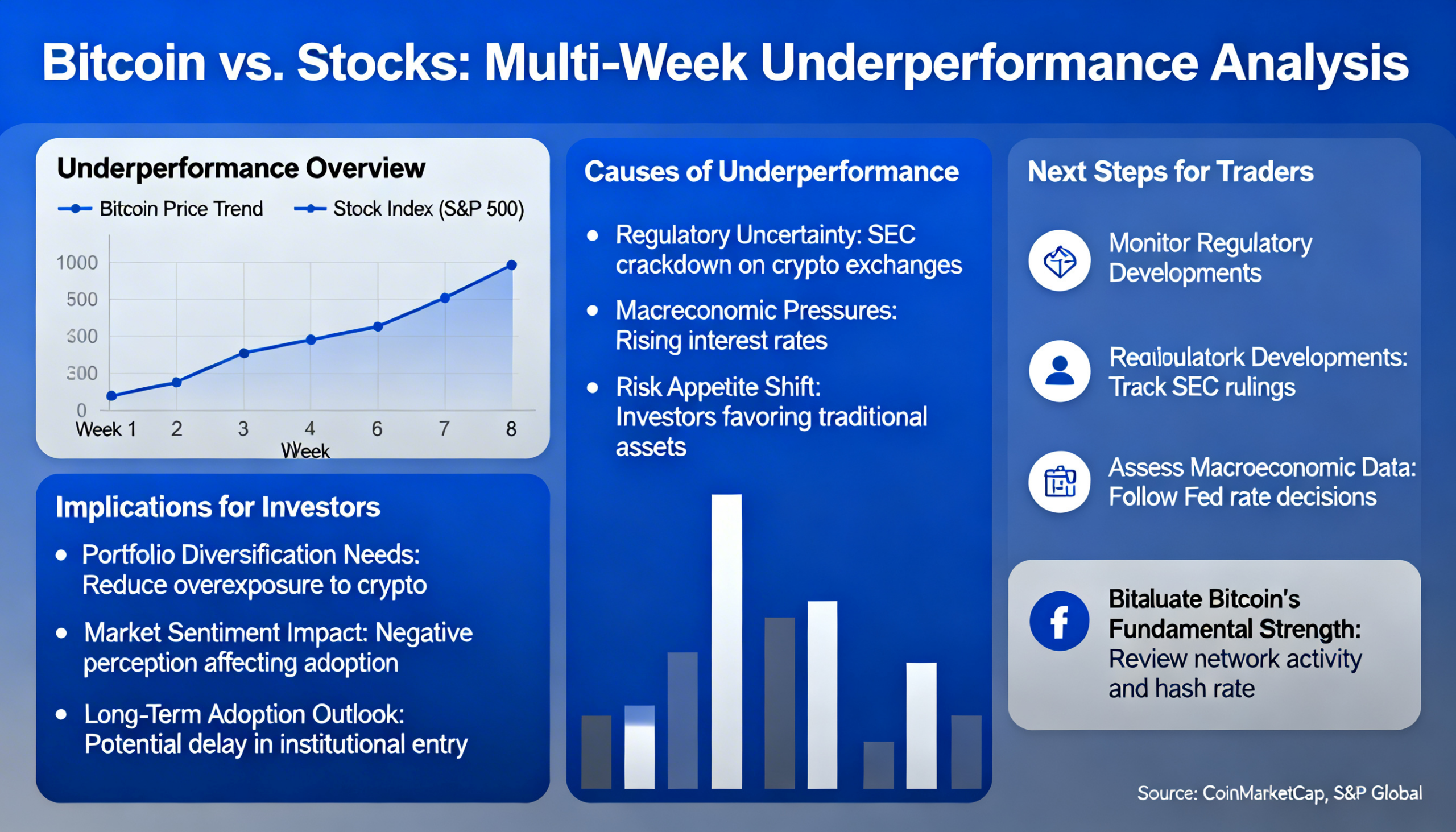
Bitcoin’s Unprecedented Lag Behind Stocks Extends Into 2026
Bitcoin is closing out the first quarter with significant losses, capping an unusually long stretch of underperformance relative to U.S. equities.
The cryptocurrency has declined roughly 22% in the first quarter, following a 25% drop in the final three months of 2025. Over the same period, the S&P 500 has posted comparatively smaller losses, leaving a persistent gap in performance.
Mark Connors, founder of Risk Dimensions, said the duration of bitcoin’s lag is without precedent. Data shows the asset has trailed equities consistently since early October — far longer than in previous cycles, where drawdowns tended to be shorter despite sometimes being more severe.
The weakness has unfolded alongside broader market pressure. U.S. equities have recorded their worst quarterly performance in four years, with the Nasdaq down more than 10% from recent highs. Combined declines across stocks and crypto have erased much of the rally that followed the 2024 election.
Policy developments have been mixed. A more constructive regulatory stance has supported progress on crypto ETFs, while lawmakers continue advancing measures such as the GENIUS Act. An executive order signed by President Donald Trump in August also aims to expand access to alternative assets, including cryptocurrencies, within retirement portfolios.
Despite the negative backdrop, bitcoin showed relative resilience in March.
Geopolitical tensions between the U.S. and Iran early in the month drove oil prices and the U.S. dollar higher, triggering volatility across global markets. Gold, typically seen as a safe haven, declined sharply as liquidity pressures forced selling.
Bitcoin, however, avoided similar stress. The asset rose about 1% during the month, while gold fell roughly 11%. Connors attributed this stability to earlier deleveraging in crypto markets, which may have reduced the risk of forced liquidations. Bitcoin’s digital structure may also limit the kind of selling pressure seen in physical assets.
Looking ahead, bitcoin’s extended underperformance could become a key driver of future price action. Rolling 63-day data shows the asset has lagged the S&P 500 since October — the longest such stretch on record — a pattern that has historically preceded reversals.
If that relationship holds, bitcoin may be approaching a phase of renewed demand, particularly as macro pressures tied to rising debt levels and currency expansion continue to build.
Still, the timing remains uncertain. The path forward is likely to depend heavily on geopolitical developments, particularly the trajectory of the Iran conflict and its impact on energy markets, liquidity and overall risk sentiment.
As Connors put it, the recovery could take time — or arrive quickly: “It’s either two months or two years.”