cpeditor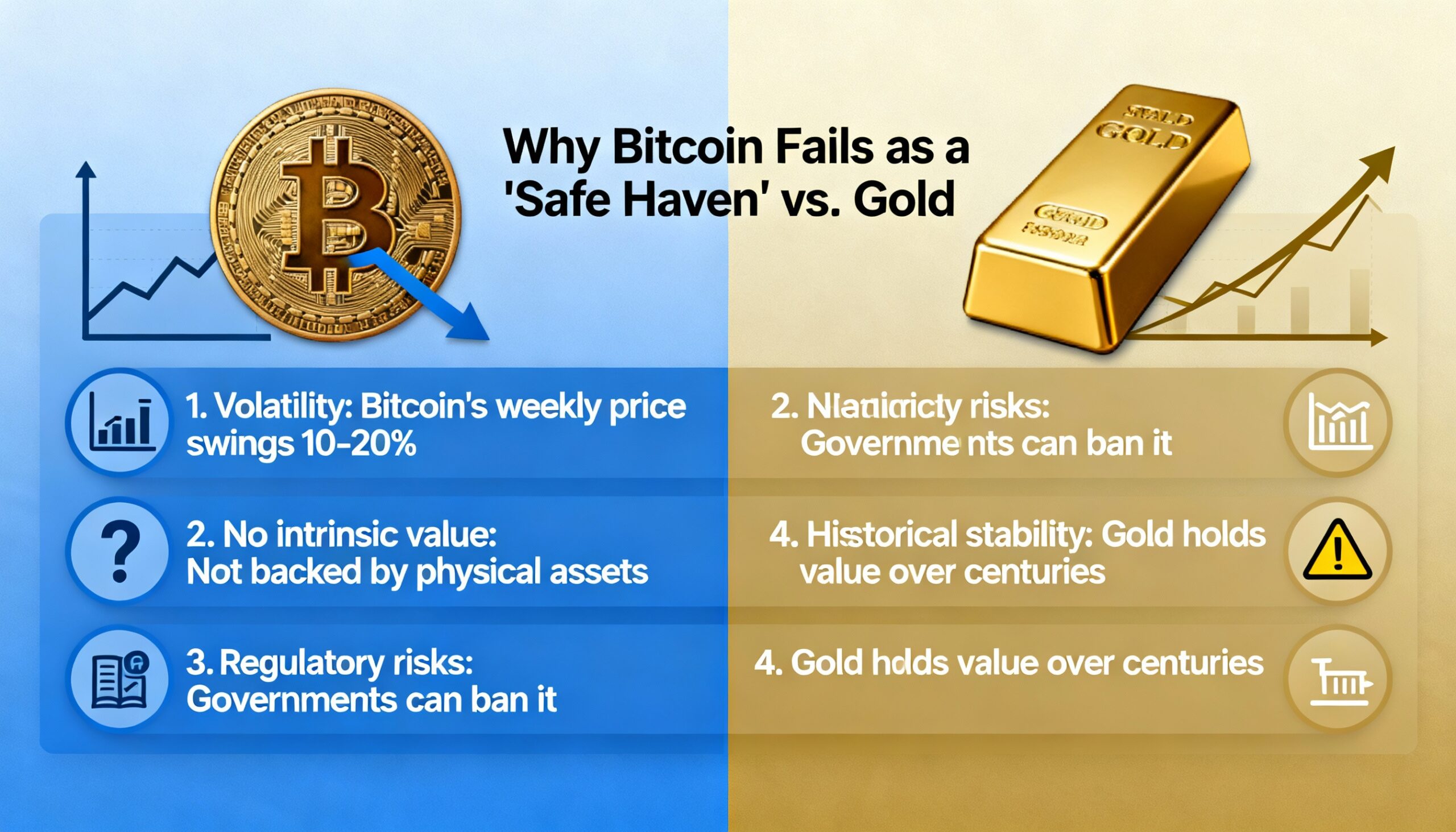
Bitcoin Acts Like an “ATM” While Gold Holds Steady
Bitcoin, often called “digital gold” for its censorship-resistant, sound-money properties, is behaving more like an “ATM” during periods of market stress—investors sell it quickly to raise cash.
Recent geopolitical tensions, including Trump’s threats of tariffs on NATO allies over Greenland and speculation of possible military action in the Arctic, spurred volatility. Since January 18, Bitcoin has fallen 6.6%, while gold has surged 8.6% to nearly $5,000 an ounce.
The difference lies in how each asset functions under stress. Bitcoin’s 24/7 trading, deep liquidity, and instant settlement make it easy to offload, whereas gold, though less liquid, tends to be held. “Liquidity preference dominates in times of uncertainty, and this hurts Bitcoin more than gold,” said Greg Cipolaro, NYDIG’s Global Head of Research. “Bitcoin is often sold reflexively as leverage is unwound, while gold acts as a true liquidity sink.”
Large holders reinforce the divergence. Central banks continue to accumulate gold, while long-term Bitcoin holders are moving coins to exchanges, creating a steady supply of selling that limits price support.
Risk perception also plays a role. Gold remains the preferred hedge against immediate shocks like war, tariffs, or market panic. Bitcoin, in contrast, is better suited for long-term risks such as fiat debasement or gradual erosion of trust. “As long as current threats are temporary, gold remains the go-to hedge,” Cipolaro said.
In short, Bitcoin provides liquidity in crises, but gold continues to dominate as a safe-haven asset.