cpeditor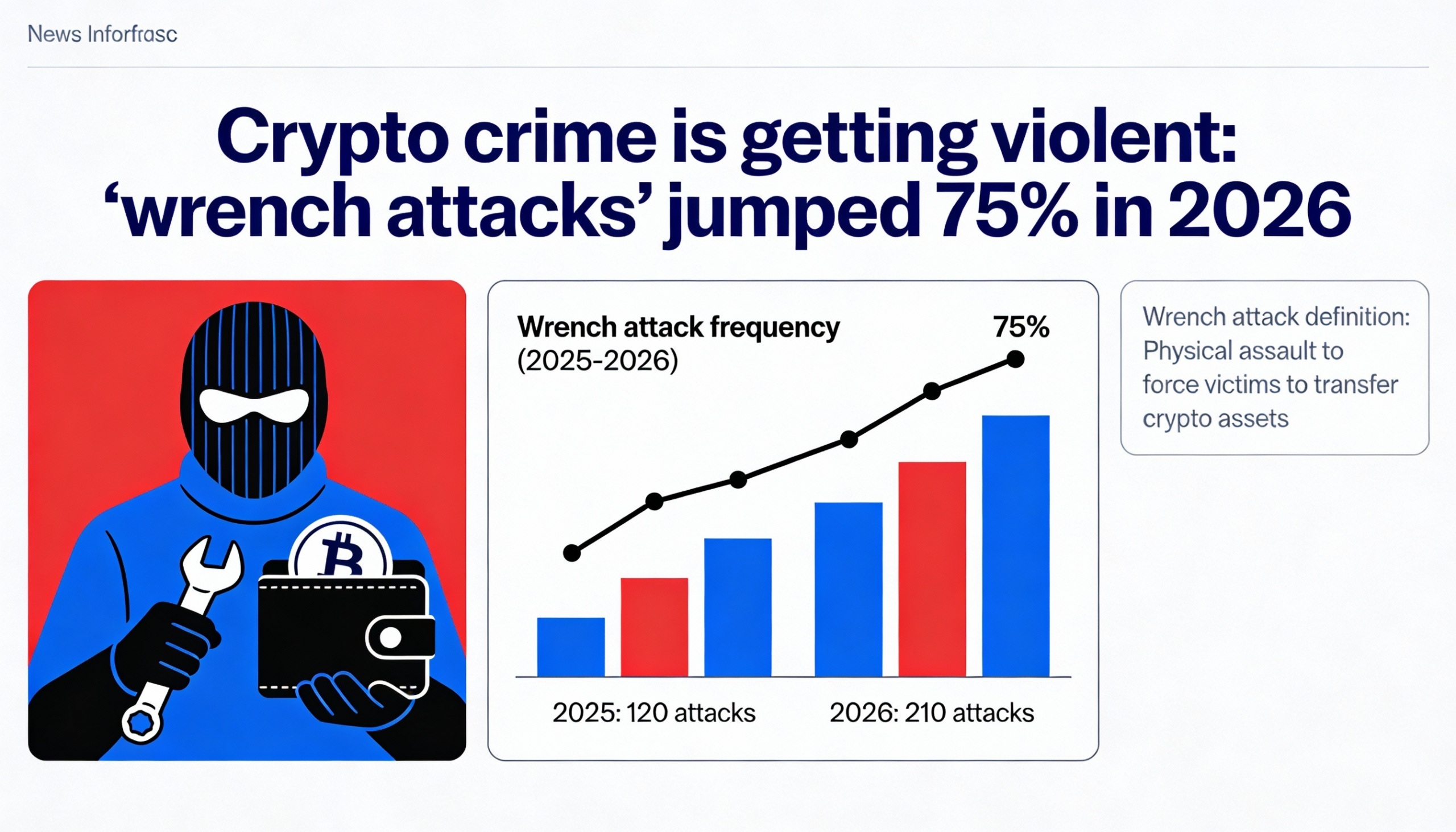
Crypto-related crime became increasingly violent in 2025, as physical attacks targeting digital asset holders surged, according to a new report from blockchain security firm CertiK.
So-called “wrench attacks,” in which victims are physically coerced into handing over private keys, rose 75% from the previous year, with 72 confirmed incidents recorded worldwide. CertiK said the data underscores a shift in the threat landscape, where real-world violence is now a central risk for crypto holders.
The report found a 250% increase in physical assaults linked to crypto theft, ranging from home invasions and kidnappings to at least one fatal attack. Europe emerged as the most affected region, accounting for more than 40% of global incidents, nearly double its share in 2024.
France recorded the highest number of attacks at 19—more than twice the total seen in the United States—while Spain and Sweden also experienced sharp increases. CertiK attributed the surge to organized crime groups increasingly targeting individuals known or suspected to hold significant cryptocurrency assets.
Attack tactics varied widely. In some cases, criminals forced entry into victims’ homes. In others, they targeted family members, including spouses, children, or elderly parents, to pressure victims into compliance. The report also cited “honeypot” schemes, in which attackers built fake romantic relationships before carrying out assaults.
CertiK linked the rise in physical violence to advances in digital security that have made traditional cyberattacks more costly and less effective. The firm described this dynamic as the “Technical Paradox,” noting that while technology has strengthened, the human element remains vulnerable.
Confirmed losses from wrench attacks exceeded $40 million in 2025, with CertiK warning that the true figure is likely higher due to underreporting. As a result, the firm said personal safety has become an integral part of the crypto risk equation.
In response, parts of the crypto industry are moving to mitigate the threat through insurance and risk-management strategies. Several insurers, including Lloyd’s of London, have begun offering policies that explicitly cover losses related to wrench attacks.