cpeditor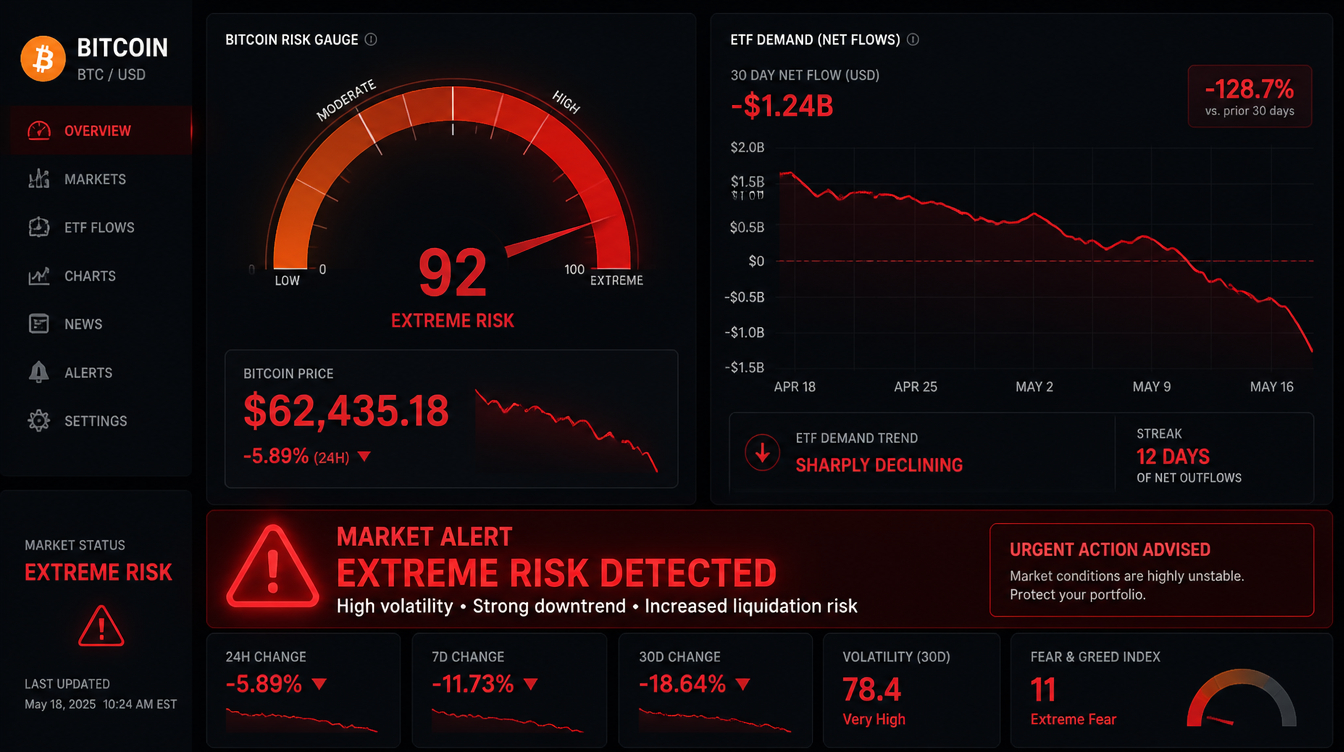
U.S. spot bitcoin ETFs have recorded net inflows of just 4,500 BTC in 2026, highlighting a sharp slowdown in institutional demand after stronger accumulation earlier in the year, according to data from Swissblock.
The shift follows consistent buying in March and April, when ETF inflows helped lift bitcoin from around $65,000. That trend has reversed in May, with flows turning negative as the month approaches its close.
Swissblock said the change is pushing its Risk Index into high-risk territory. The metric, which tracks the balance between selling pressure and demand absorption, suggests ETFs are no longer effectively offsetting supply entering the market.
The development is notable because ETF inflows have been a key driver of bitcoin’s recent rallies, absorbing selling from miners, long-term holders, and profit-taking traders. As that demand weakens, prices may need to adjust lower or attract new buyers to stabilize.
Bitcoin traded near $75,800 during Asian hours, down about 2.6% over the past month and hovering near the bottom of its May range. The cryptocurrency briefly rose above $82,000 earlier in the month before falling back below $80,000 amid renewed macroeconomic pressure.
Broader market weakness was also evident, with ether, XRP, and solana all trading lower. Zcash led declines, dropping roughly 9% on the day.
On-chain indicators are reinforcing the softer outlook. Apparent demand has fallen to its lowest level since December, signaling reduced absorption of new supply.
Meanwhile, CryptoOnchain reported approximately $1.74 billion in outflows from U.S. spot ETFs over the past two weeks. At the same time, retail traders have increased leverage in anticipation of a rebound, a positioning dynamic that has historically preceded sharp liquidation events if the market turns lower.
It remains unclear whether the current trend represents a temporary pause or a more sustained shift. ETF demand has weakened at times during this cycle without triggering deeper corrections.
At the same time, global equity markets continue to trade near record highs, and technical indicators point to a potential “golden cross” forming in bitcoin, as the 50-day moving average approaches a crossover above the 200-day average—a signal typically viewed as bullish.
Still, ETFs have been a primary channel for new capital entering the market. If flows remain in distribution, the foundation supporting bitcoin’s rally since April could continue to erode.