cpeditor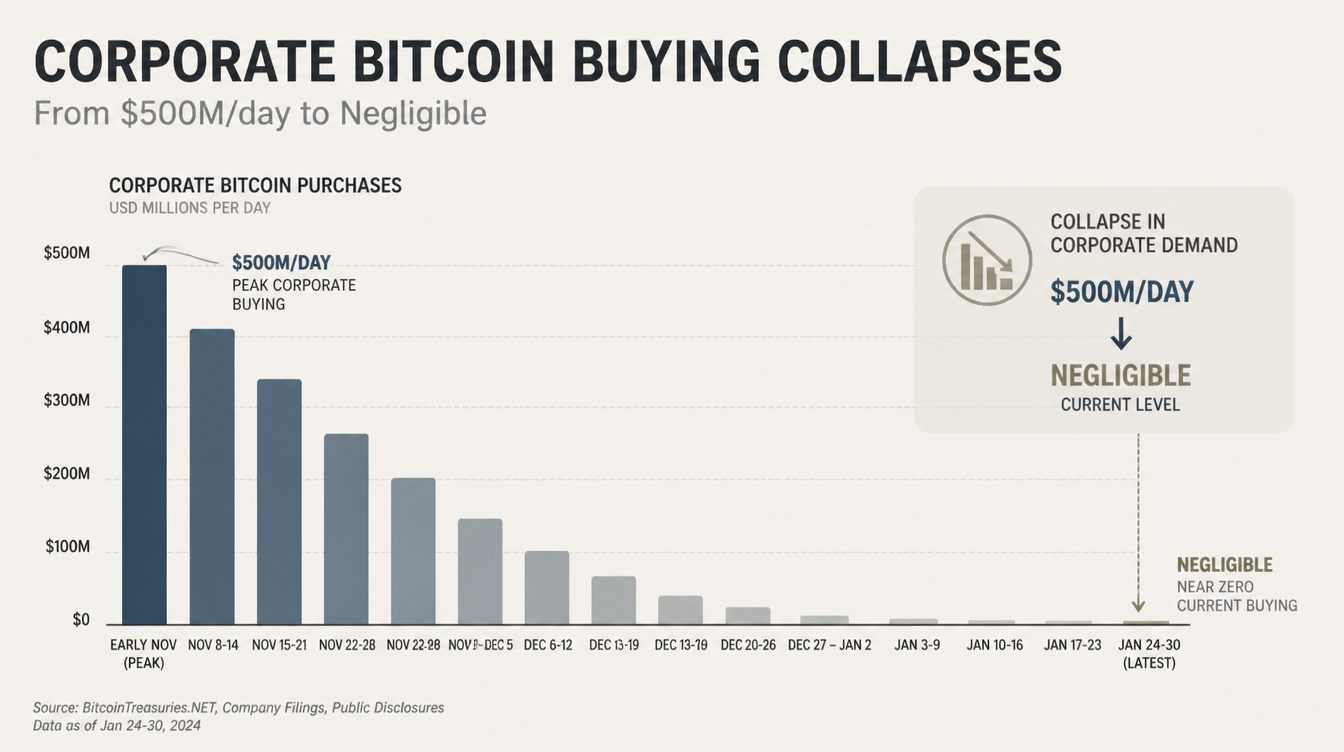
ETF outflows have dominated the recent narrative around Bitcoin’s weakness, but a quieter shift in corporate demand is also weighing on the market.
Bitcoin has effectively lost support from two major sources of buying pressure.
While heavy redemptions from spot ETFs are widely cited as a key driver of the recent decline, less attention has been paid to the sharp slowdown in purchases from digital asset treasury (DAT) firms—companies that accumulate Bitcoin as part of their corporate balance sheet strategy.
Analysts at Glassnode note that as Bitcoin fell from the mid-$70,000 range toward $60,000, net inflows from corporate treasury buyers dropped sharply. Daily accumulation has slowed to a fraction of the levels seen in recent months.
Although these firms remain net buyers overall, the pullback suggests growing caution within the cohort, removing an important marginal source of demand at a time when broader sentiment is already fragile.
On-chain data shows that DAT inflows have largely dried up this month, marking a steep reversal from April and May, when several sessions recorded more than $500 million in daily corporate buying.
This collapse in demand helps explain the rapid slide from around $74,000 to below $60,000 last week.
Some market observers have also pointed to activity from Strategy, the largest publicly listed corporate Bitcoin holder, after it disclosed the sale of 32 BTC in late May. Although the firm later returned to the market with roughly $100 million in new purchases during the downturn, it was not enough to prevent further price weakness.
At the time of writing, Bitcoin was trading near $62,500.
At the same time, U.S.-listed spot Bitcoin ETFs continue to exert pressure on the market. The 11 funds recorded $213.85 million in net outflows on Wednesday alone, according to SoSoValue, extending a broader trend of persistent redemptions. Since the second week of May, total outflows have exceeded $5.72 billion, limiting the market’s ability to mount a sustained recovery.