cpeditor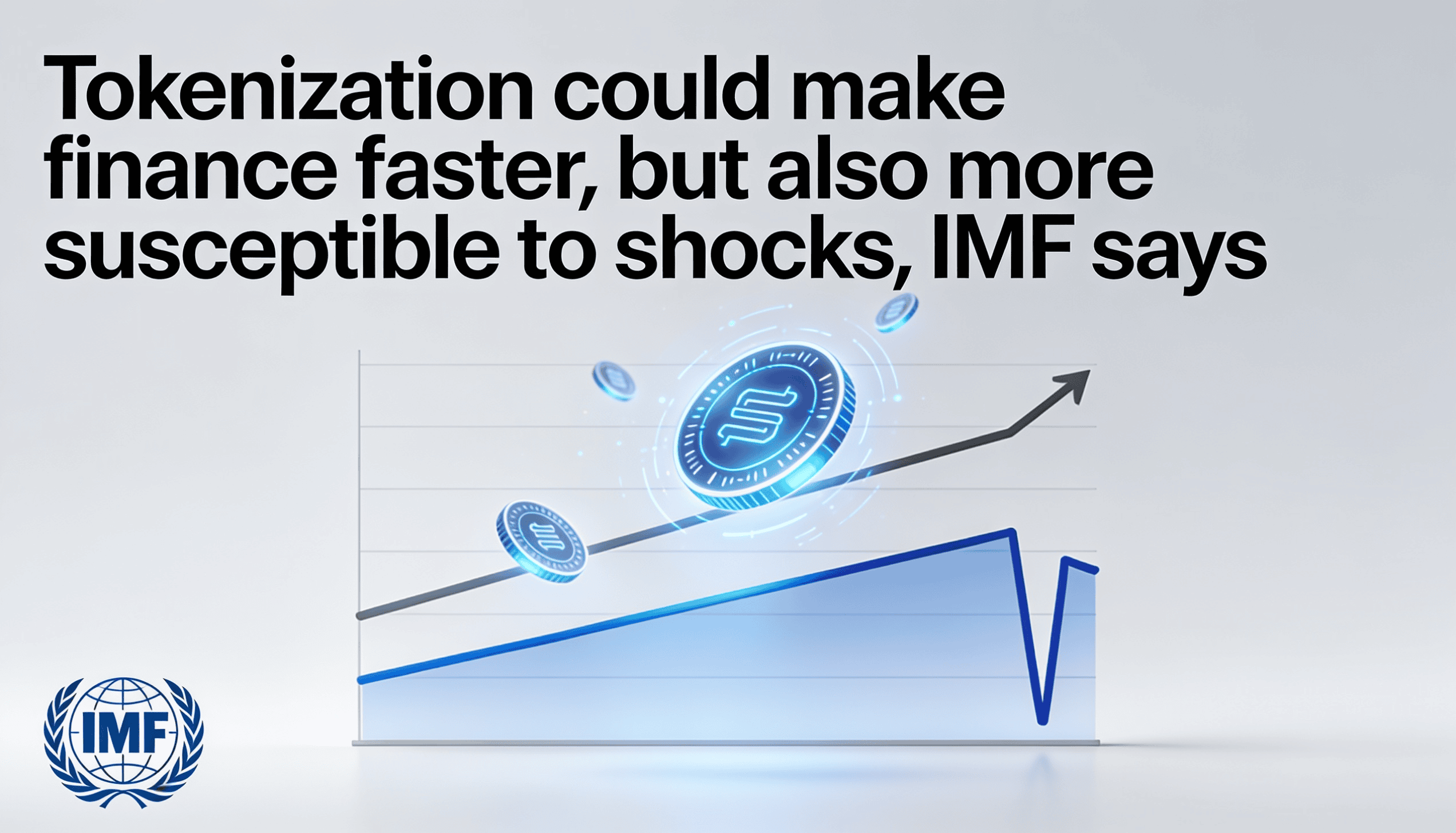
The IMF cautioned that tokenization could significantly improve the speed and cost of financial markets, but it may also increase their vulnerability to abrupt shocks.
Tokenization refers to the process of representing traditional assets on blockchain infrastructure. While it promises efficiency gains, the IMF said it could also make markets more fragile in times of stress.
“Frictions disappear — but so do buffers,” wrote Tobias Adrian, head of the IMF’s monetary and capital markets division, in a blog post.
Under tokenization, assets such as equities, bonds, and bank deposits are issued on shared digital ledgers, where smart contracts automate trading, transfers, and settlement—reducing processes that normally take days to just seconds.
In traditional finance, transactions pass through multiple steps including execution, clearing, settlement, and reconciliation, each handled by separate intermediaries. This structure often results in settlement delays of two or more days. Tokenization collapses these stages into near-instant finality on a unified ledger.
Adrian noted that tokenization could also enable interoperability between different forms of digital money, including tokenized bank deposits, stablecoins, and central bank reserves. It may also improve efficiency in collateral usage by allowing assets to move more freely across platforms.
However, the IMF emphasized that these gains come with structural risks.
Adrian explained that the delays eliminated in tokenized systems also function as a stabilizing buffer in traditional markets, giving institutions time to identify and mitigate emerging risks before they spread.
Without this buffer, shocks such as coding errors, liquidity stress, or algorithmic selling could transmit through markets at much higher speed, reducing the window for intervention.
He added that liquidity demands could appear instantly, collateral calls could be automated, and market failures could cascade faster than regulators or institutions can respond. Risks previously spread across individual balance sheets could instead become concentrated within the platforms and code governing transactions.
The IMF also highlighted concentration risk, warning that tokenized systems may increasingly cluster around a small number of dominant platforms, where operational or governance failures could quickly escalate into systemic crises.
Cybersecurity was another key concern, as shared infrastructure increases dependence on operational resilience and effective crisis management.
Finally, the IMF said regulation has not yet adapted to the pace of innovation. Existing legal frameworks were designed for slower financial systems and may not clearly define ownership rights, settlement finality, or jurisdictional authority in tokenized markets.
Without clearer regulatory clarity, Adrian warned tokenization could remain fragmented. He also noted that in emerging markets, faster cross-border capital flows could heighten volatility, weaken monetary control, and increase risks of currency substitution.