cpeditor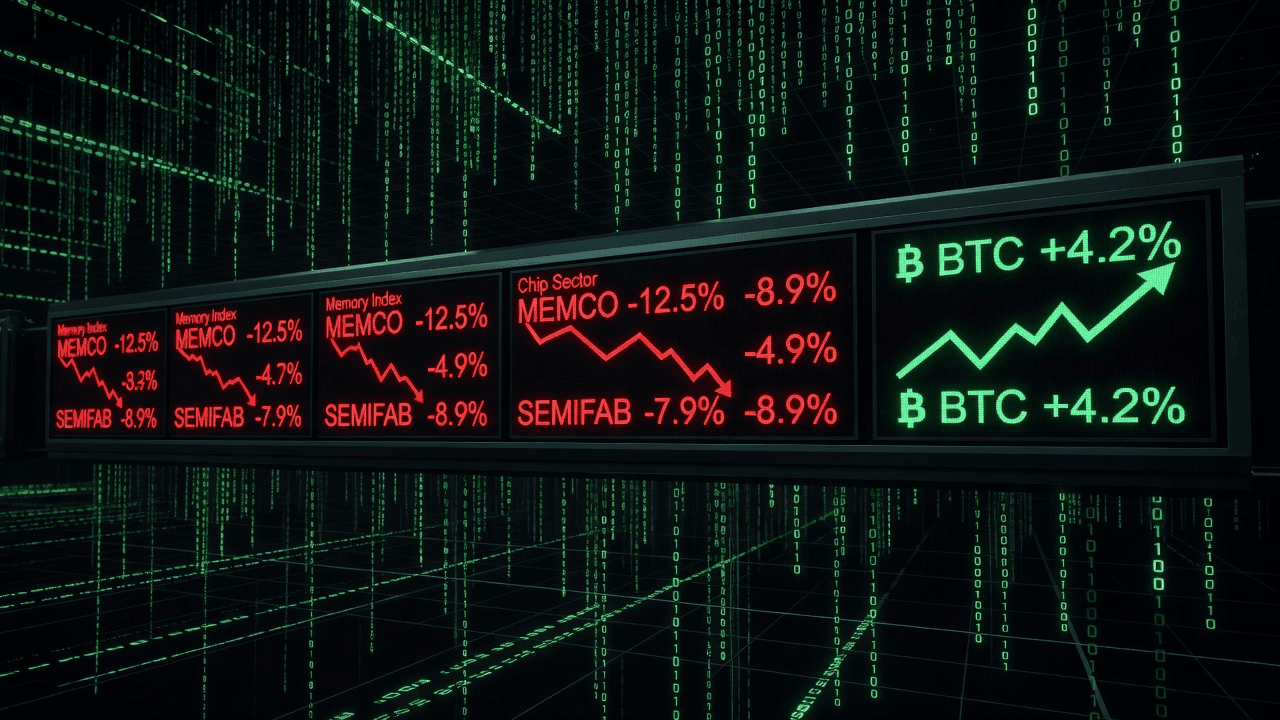
After dominating markets in 2026, AI-linked memory and semiconductor stocks are beginning to lose momentum, sparking debate over whether capital is starting to rotate back into bitcoin.
The year’s strongest equity performers have been chipmakers and memory companies tied to the AI boom, which attracted heavy inflows as investors chased the dominant theme and largely sidelined crypto.
That leadership now appears to be fading as semiconductor stocks cool and bitcoin rebounds from levels near a two-year low.
ETF performance shows the divergence clearly. The Roundhill Memory ETF (DRAM) more than doubled in the first half of the year, while the VanEck Semiconductor ETF (SMH) rose around 60%, both driven by demand for AI computing infrastructure. Meanwhile, BlackRock’s iShares Bitcoin Trust (IBIT), the largest bitcoin ETF, has dropped roughly 30%, tracking bitcoin’s weakness.
The AI rally has been led by names such as Sandisk (SNDK), which has surged more than 530% on demand for NAND flash memory used in AI servers and data centers, and Micron Technology (MU), up over 230% as a key supplier of DRAM and high-bandwidth memory for AI systems.
In recent sessions, however, momentum has started to fade.
The Roundhill Memory ETF has pulled back about 25% from its June 22 peak, while the VanEck Semiconductor ETF has fallen roughly 12%. At the same time, bitcoin briefly slipped below $58,000 on July 1 before recovering above $61,000.
The downturn in AI-linked equities accelerated after reports that Meta Platforms (META) is forming a “Meta Compute” unit to sell excess GPU capacity, raising questions about the durability of AI infrastructure demand.
The development hit “neocloud” providers especially hard—firms offering GPU-based computing services, including former bitcoin miners such as IREN, Cipher Digital (CIFR), and TeraWulf (WULF), all of which have dropped at least 20% from recent highs.
While it remains early to call a structural shift, the simultaneous weakness in semiconductor leaders and rebound in bitcoin may be an early signal that investors are beginning to rebalance exposure between AI infrastructure and digital assets.