cpeditor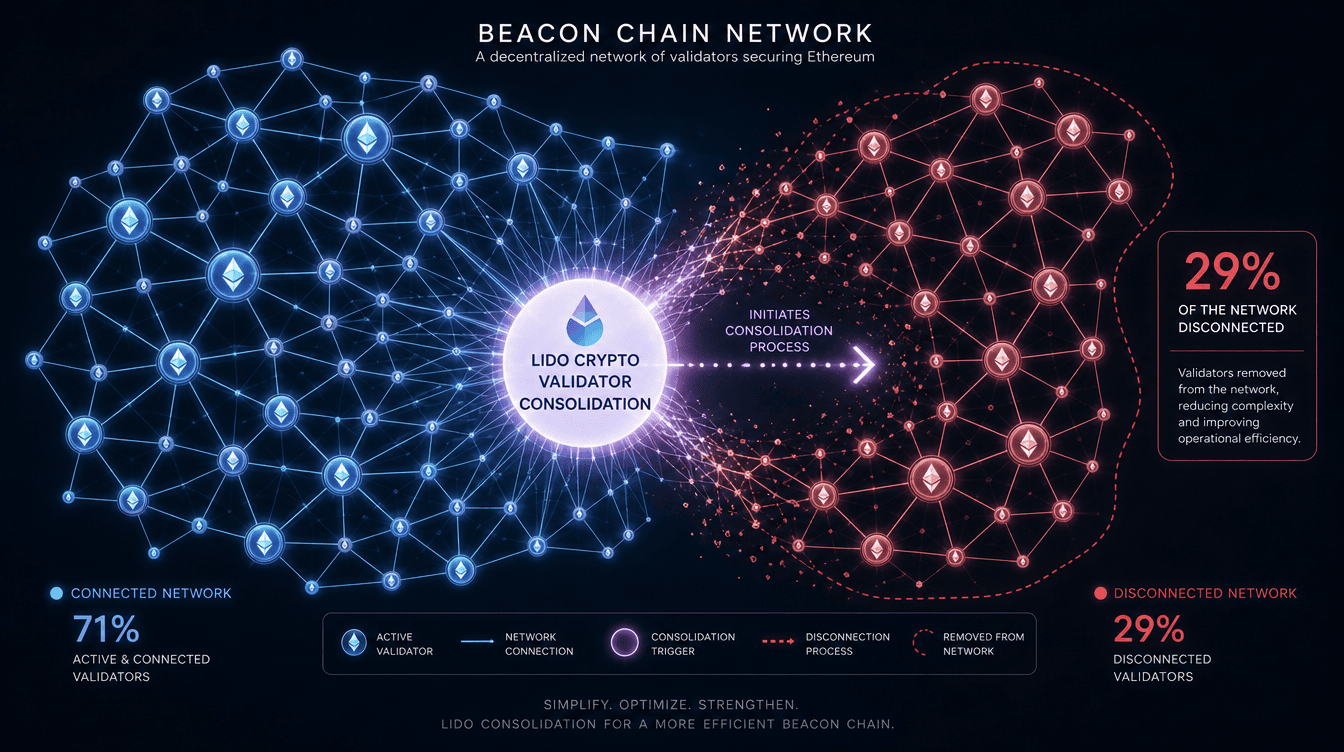
Lido has rolled out its Core 2026 upgrade, bringing native 0x02 validator support to its main staking module, reshaping node operator incentives with ETH-backed bonds, and launching a consolidation process that could shrink Ethereum’s validator set by nearly one-third.
Stakers don’t need to do anything, as all updates are implemented directly at the protocol level.
The upgrade arrives at a crucial point for Ethereum. The Pectra hard fork introduced EIP-7251, which increased the maximum effective validator balance from 32 ETH to 2,048 ETH via 0x02 withdrawal credentials. However, rolling this out at scale required significant coordination across staking infrastructure.
Lido’s upgrade marks the largest deployment of this new validator design to date.
Curated Module v2: A Structural Overhaul
Since its launch in 2020, Lido’s Curated Module has accounted for roughly 90% of all ETH staked through the protocol. With the introduction of Curated Module v2 (CMv2), native 0x02 support is now live, allowing more than 265,000 validators to migrate from older 0x01 credentials through consolidation.
This shift increases the share of ETH secured by compounding validators from 32.06% to 52.21%. At the same time, Ethereum’s validator count is expected to fall from about 880,000 to around 628,000—cutting attestation messages per epoch by roughly 29%.
This reduction has broader implications for the network. Fewer attestations mean less computational and networking strain across the consensus layer, improving efficiency for all validators—not just those within Lido.
Put simply, a smaller validator set results in a more streamlined beacon chain.
The rollout is happening in two stages. Phase 1, now live, includes 0x02 support, operator classification, bonded security mechanisms, and simplified governance. Phase 2, still in development, will introduce flexible stake allocation, customizable operator fees, and a performance-based strike system.
Operator Model: From Trust to Collateral
One of the most significant changes in CMv2 is how node operators are incentivized and held accountable. Previously, the system relied largely on reputation, with no requirement for locked collateral.
The new model introduces ETH-backed bonds, ensuring operators have financial exposure tied directly to their performance. These bonds cover risks such as downtime, underperformance, slashing events, and execution-layer reward violations.
In addition, Lido has introduced a Node Operator Type Framework, categorizing operators based on their roles. These include Decentralization Operators, who improve geographic and client diversity; Extra Effort Operators, who contribute capital and participate in governance and security roles; and Public Good Operators, such as developers working on Ethereum clients.
Seven client teams have already been added as curated node operators. As of July 1, 2026, they had collectively earned 8,710 stETH—worth approximately $21 million—in staking rewards.
Governance has also been streamlined. Routine updates that previously required DAO-wide votes can now be handled by operators and the Curated Module Committee. However, the DAO still retains control over major decisions, including operator selection and key protocol parameters, along with the ability to override or veto changes if necessary.