cpeditor
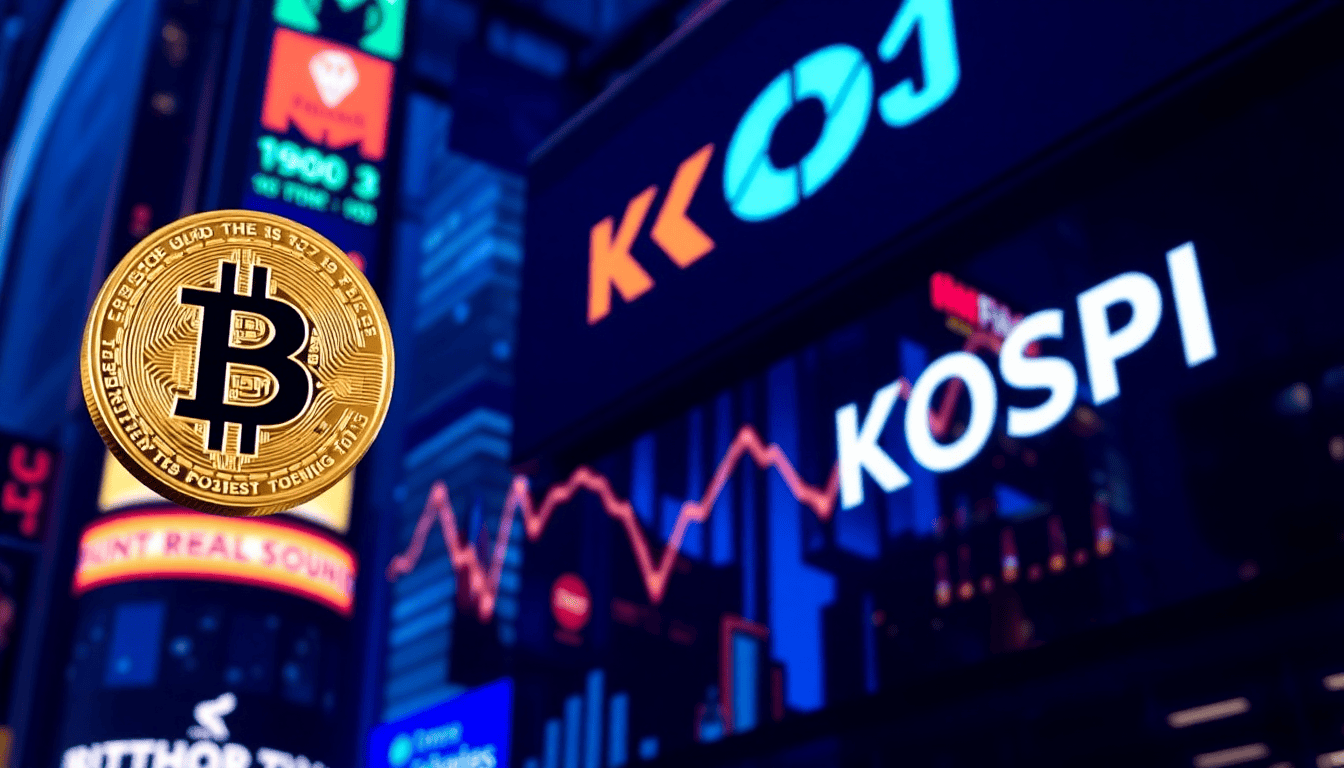
Bitcoin has climbed nearly 2% toward $81,000 as investors return to the market ahead of the Federal Reserve’s latest FOMC policy decision. The rebound comes after BTC recently fell below $80,000, with uncertainty over the interest-rate outlook weighing on cryptocurrency prices.
Global stock markets have also strengthened. The Nasdaq Composite gained 1.18%, while the S&P 500 advanced 0.60% at Tuesday’s close. In Asia, South Korea’s KOSPI surged 6.63%, reclaiming the 6,000-point mark as stronger semiconductor sentiment lifted regional equities.
Despite the recovery, investors remain cautious ahead of the Fed announcement. Markets largely anticipate an interest-rate pause, but persistent inflation and rising Treasury yields have kept the possibility of another hike on the table. Bitcoin’s next move may hinge on whether policymakers offer a reassuring outlook or signal that monetary conditions could remain restrictive.
Bitcoin Price Recovers as Nasdaq and KOSPI Rally
Bitcoin’s rebound comes alongside renewed strength in technology stocks across major markets. The Nasdaq Composite closed Tuesday at 26,477.81, while the S&P 500 finished at 7,722.60. Both indexes advanced as investors increased their exposure to technology shares, particularly companies benefiting from artificial intelligence demand.
South Korea’s stock market delivered a more substantial rally. The KOSPI climbed 6.63% to close at 6,012.44, supported by record quarterly earnings from SK Hynix and its plans to return capital to shareholders. The gains also reflected improving confidence in the semiconductor sector as demand for AI-related products expands.
A broader recovery in equities could help Bitcoin if investors continue shifting toward riskier assets. However, BTC remains below $82,000, leaving the market without a clear breakout to confirm a stronger recovery.
Discover: Crypto Presales to Watch in Q4 2026
FOMC Decision Approaches as Traders Assess Rate-Hike Risks
The Federal Reserve’s upcoming announcement remains a central driver of Bitcoin’s short-term outlook. Although a rate hold is widely expected, the risk of further tightening continues to influence market sentiment.
Polymarket data show a 95% probability of unchanged rates, compared with approximately 4% for a 25-basis-point hike. CME FedWatch likewise indicates that traders favor a pause, with the probability of rates remaining steady at 91%.
Investors will also focus on Federal Reserve Chair Kevin Warsh’s comments for indications of what could happen in December. Annual inflation reached 3.7% in September, while energy costs associated with the Iran war have complicated efforts to bring inflation lower.
A decision to maintain rates may not be enough to sustain Bitcoin’s gains. If the Fed signals that borrowing costs could stay elevated for longer or that another increase remains possible, Treasury yields and the U.S. dollar could rise. That would potentially reduce the appeal of speculative investments and place pressure on BTC.
A less hawkish message could have the opposite effect. If policymakers leave rates unchanged and suggest that additional tightening is becoming less necessary, investors may interpret the announcement as supportive of risk assets.
Bitcoin Faces a Crucial Test at $82,000
Bitcoin now needs to maintain its recovery above $80,000 and build enough momentum to challenge higher resistance levels. The $82,000 area is a key threshold that could help determine whether the current bounce develops into a broader upward move.
A sustained breakout above $82,000 could put $84,000 in focus. However, if sellers prevent BTC from clearing resistance, the price could fall back toward $80,000, testing the strength of recent buying activity.
The FOMC decision could produce significant short-term volatility, although its effect on Bitcoin’s medium-term trajectory is difficult to predict. Financial markets often account for anticipated policy decisions before their release, leaving unexpected changes in the Fed’s guidance as a potentially more important catalyst.
If the central bank holds rates steady as expected, Bitcoin could see sharp intraday fluctuations without establishing a clear trend.
Historical price action, as illustrated in the chart above, also shows that Bitcoin does not react uniformly to FOMC decisions. BTC has declined after some rate holds before recovering, while other meetings have been followed by gains despite unchanged rates or tighter policy conditions.